Free Diamond Pendant · with every order of $1,000 or more Free U.S. shipping · 30-day returns Lifetime limited labor warranty · financing available
0 0

Learning Center Guide

Diamond Shapes

Ten shapes cover nearly every diamond sold: round, princess, cushion, oval, emerald, asscher, pear, marquise, radiant and heart. Shape sets the ring's whole personality before metal or setting says a word. Here's what each one gives you, and what it asks in return.

Factory direct since 2001 Every shape cut in-house Natural & lab-grown
Ten loose diamonds of different shapes arranged in rows on a studio surface

First, One Distinction

Diamond Shapes and Cuts Are Not the Same Thing

Shape is the outline you see from above: round, square, teardrop. Cut is how well the facets were carved into that outline, and cut is what decides the sparkle.

Every shape below can be cut brilliantly or badly, so hold cut quality high and then pick the outline you love. One thing to know before you compare reports: GIA assigns a cut grade to standard round brilliant diamonds and grades the fancy shapes on polish and symmetry instead, which is why two ovals with identical paperwork can still look different face up. That's the gap our cutters work in every day: on a fancy shape the only real proof is the stone in front of you.

The Ten

What Are the Different Diamond Shapes Called?

Round, princess, cushion, oval, emerald, asscher, pear, marquise, radiant, heart. Round is one shape; the other nine are what the trade calls fancy shapes.

Fancy shape is simply the trade's word for anything that is not round, and GIA's shape guide uses the same names. We have cut and set all ten in our own US factory since 2001.

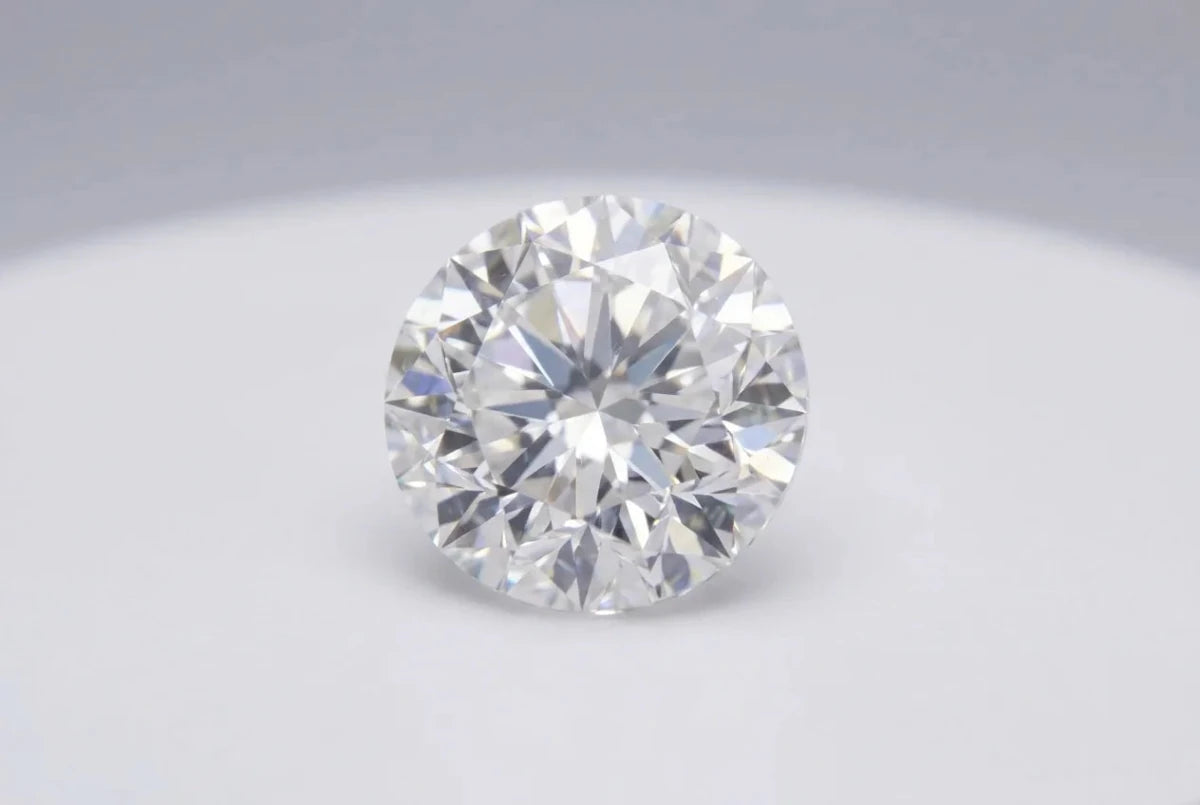
A loose round brilliant cut diamond

Round Brilliant

Fifty-seven facets, fifty-eight if the cutter leaves a culet, all engineered for one job: maximum light return. It's the brightest shape there is, and the standard every other shape gets measured against. It also costs the most per carat, because cutting a round throws away more of the rough crystal than any other shape.

Suits: the classic, when sparkle settles the argument.

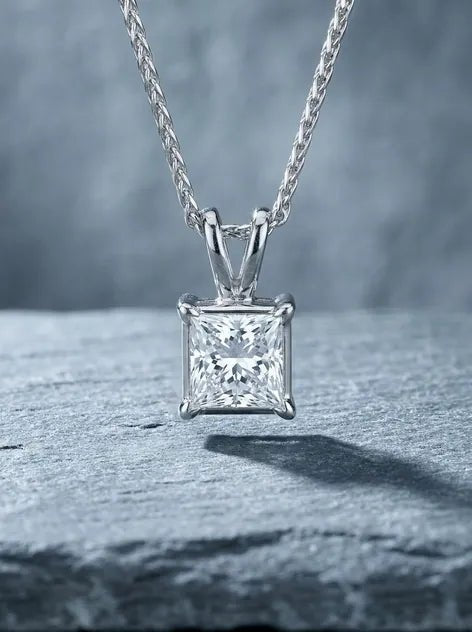
A loose princess cut diamond with a sharp square outline

Princess

A sharp modern square with close to round-brilliant fire. Cutters keep more of the rough making one, so it delivers the most sparkle per dollar of any shape. The four corners are its one weak point, and they belong in protective prongs.

Suits: modern taste, sharp lines, smart budgets.

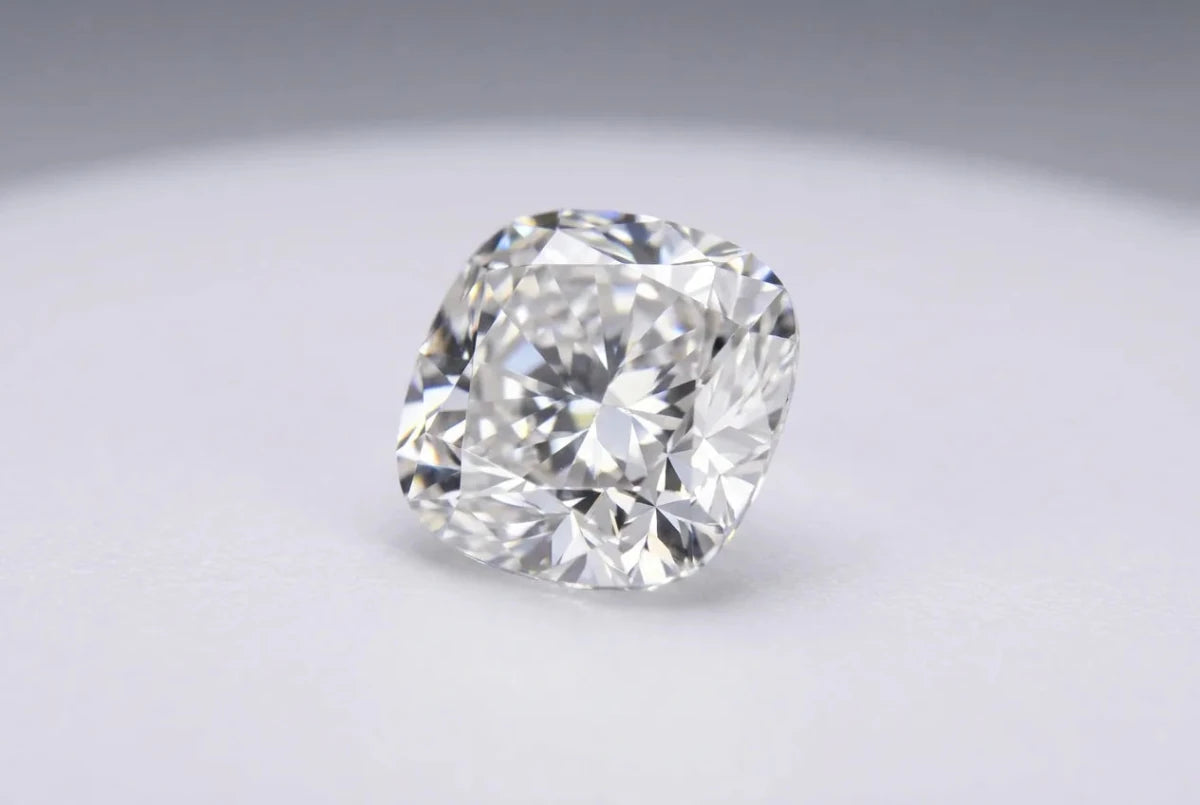
A loose cushion cut diamond with softly rounded corners

Cushion

A pillow-soft square that people have worn since the 1800s. Its larger facets throw warm, romantic light instead of icy fire, which is vintage character straight off the cutter's wheel.

Suits: romantics; pairs beautifully with halos and rose gold.

A loose oval cut diamond

Oval

A round stretched into elegance. Face up it shows more surface than a round of the same weight, so it reads larger, and its length flatters the finger. Check the center for the faint bow-tie shadow ovals can carry; a good cut keeps it subtle.

Suits: bigger look per carat without leaving classic taste.

A loose emerald cut diamond with long stepped facets

Emerald

Long stepped facets that flash in broad planes instead of glittering, the hall-of-mirrors look. Quiet, architectural, unmistakably elegant. Those open planes hide nothing, so buy an emerald a grade or two higher in color and clarity.

Suits: understated luxury; the connoisseur's shape.

A loose asscher cut diamond with a windmill pattern of square step facets

Asscher

The emerald cut's square sibling, with clipped corners and a windmill of concentric facets. Pure Art Deco, a 1920s shape that never stopped looking modern. Like every step cut, it rewards higher color and clarity.

Suits: vintage souls and geometry lovers.

A loose pear cut diamond in a teardrop outline

Pear

A teardrop, one end rounded and one end pointed, that elongates the finger like nothing else. Traditionally worn point out, toward the fingertips. The point needs a protective prong, and symmetry is everything: the two halves should mirror.

Suits: distinctive taste that still reads romantic.

A loose marquise cut diamond pointed at both ends

Marquise

Pointed at both ends, the marquise carries the largest face-up spread of any shape. Carat for carat, nothing looks bigger. Both points want protective prongs, and like the oval, a good cut keeps its bow-tie faint.

Suits: maximum presence per carat; dramatic hands.

A loose radiant cut diamond, a rectangle with trimmed corners

Radiant

An emerald cut's outline with a brilliant cut's engine: a trimmed-corner rectangle that blazes. Those clipped corners also make it one of the most durable shapes for everyday wear.

Suits: wanting the elegant outline and the fire.

A loose heart cut diamond with two rounded lobes and a single point

Heart

Take a round brilliant's facet engine, cut it to two lobes and a point, and you have a heart, what cutters call a modified brilliant. It lives or dies on symmetry: matching lobes, and a cleft between them that reads crisp rather than shallow. Like the pear and marquise, it gathers a little color at the point, so buy a grade up and set that point in a protective prong. Below half a carat the outline stops reading at arm's length, so that's a sensible floor.

Suits: romance said out loud, with nothing left to interpret.

At a Glance

Diamond Shapes Chart: All Ten Side by Side

Round sparkles brightest. Marquise reads largest at the same carat. Emerald and asscher are the quiet ones. All ten, on those axes, below.

Face-up size is compared at equal carat weight, because weight and visible size aren't the same thing. A 0.80ct marquise looks bigger than a 0.80ct round, and it's the shape doing that, not the carat.

ShapeCharacterSparkle styleFace-up sizeWatch for
RoundTimelessMaximum brillianceStandardHighest price per carat.
PrincessModernBright, crushed fireSlightly smallProtect the four corners.
CushionRomanticWarm, broad flashesSlightly smallFacet pattern varies, so view the exact stone.
OvalElegantBrilliantLooks largerBow-tie shadow in poorer cuts.
EmeraldArchitecturalBroad mirror flashesLooks largerShows color and clarity, so buy grades up.
AsscherArt DecoWindmill flashesSlightly smallSame open-window honesty as emerald.
PearDistinctiveBrilliantLooks largerPoint needs a prong; check symmetry.
MarquiseDramaticBrilliantLargest of allTwo points to protect; faint bow-tie.
RadiantBoldIntense fireLooks largerDepth varies, so compare face-up sizes.
HeartSentimentalBrilliantStandardUneven lobes or a shallow cleft; protect the point.

The Short Answer

Which Diamond Shape to Choose, by What You Want Most

There's no prettiest diamond shape. Choose by what you want most: maximum sparkle, the biggest look per carat, or quiet architectural lines. Each answer is one shape away.

Playing it timeless

Choose round. It has never once gone out of style, and nobody second-guesses it. Choose cushion for the same instinct in a softer voice.

Biggest look for the budget

Choose marquise, oval, or pear. Same carat, more surface on the finger. Choose princess for the most sparkle per dollar.

Quiet luxury

Choose emerald or asscher. Step cuts don't glitter for attention; they flash once and let the room come to them. Put the savings into color and clarity, which is exactly where a step cut needs them.

Ready to Look

Diamond Shapes for an Engagement Ring

Any of the ten works in an engagement ring. Pick round for sparkle, oval or marquise for size on the finger, emerald or asscher for quiet lines.

Quick Answers

Asked every day at our counter

Which diamond shape sparkles the most?
Round brilliant, by design. Its facets were engineered over a century specifically for light return, and no other shape returns as much. Princess and radiant come closest among the fancy shapes. The quietest are the step cuts, emerald and asscher, and that's deliberate: they trade glitter for broad mirror flashes, which is the whole point of owning one.
Which diamond shape looks biggest for the money?
Marquise first, then pear and oval. Elongated shapes spread the same weight across more visible surface, so they read larger face up. And because every fancy shape costs less per carat than a round, the same budget buys more stone in any of them.
Which diamond shape is the most expensive, and which is the cheapest?
Round is the most expensive per carat, every time. Cutting a round throws away more of the rough crystal than any other shape, and the price carries that loss. The fancy shapes all cost less per carat, with the step cuts and the elongated shapes usually sitting lowest, because a cutter keeps more of the crystal making them. Cheapest per carat isn't the same as cheapest ring: a step cut needs higher color and clarity to look right, so some of that saving goes back into the stone.
What is a "bow-tie" and should I worry?
A dark bow-tie-shaped shadow across the middle of ovals, pears and marquises, where light escapes instead of coming back to your eye. Every elongated stone has a trace of one; a well-cut stone keeps it faint. Judge it on a photo of the actual stone rather than a catalog image of the shape, because a bow-tie shows up instantly in a real photograph and never in a stock one. If you're not sure what you're looking at, contact us and we'll tell you straight.
Are pointed shapes fragile?
The points are the only vulnerable spots. Diamond is the hardest natural material there is, but a sharp corner concentrates any impact into one place. A V-shaped protective prong over each point removes the worry, and that's how pointed shapes get set here. More on that in the Setting Styles guide.
What is the rectangular diamond shape called?
Emerald and radiant are the rectangles: emerald with long stepped facets, radiant with a brilliant-cut engine and trimmed corners. Asscher is the square version of the emerald cut. The long, pointed shape people usually mean by "the long one" is the marquise, and oval and pear are the other elongated outlines. Ten names, five silhouettes: round, square, rectangle, elongated, heart.

Still Deciding?

Ask the people who cut the stones

Shapes read differently on every hand. Tell us the look you're after and the budget, and we'll tell you plainly which shape gets you there. Have something of your own in mind? Send an idea or a sketch and our jewelers will design it from scratch.

PrimeStyle, Luxury You Can Afford
1557 NE 164th Street, Suite P
North Miami Beach, FL 33162
888-532-9440 · Toll Free sales@primestyle.com
© 2026 Primestyle.com