



Buying Guide
Engagement Rings by City
The city you buy in doesn't change the ring. It changes the rent, the markup and the number of hands between the diamond cutter and the counter. This page walks through twelve cities, what their jewelry trade actually is, and what ordering direct from a US factory does instead.

Part One
How a Ring Gets From the Cutter to the Case
A diamond passes through three or four sets of hands between the cutter and the ring in the window, and each pair adds a margin. That's the whole story of why one stone costs one thing on 47th Street, another in a mall, and another from the workshop that made it.

What a Jewelry District Actually Is
A jewelry district is a few blocks of independent dealers, setters, polishers and brokers renting counters in shared buildings. Walk in, and the case in front of you often holds stock the seller doesn't own. Much of it sits on memo, the trade's word for consignment: the stone belongs to a dealer upstairs, and the counter takes a cut when it sells. You're seeing real inventory. You're also seeing a chain of people who each need paying.

The Markup Chain Between the Cutter and the Case
Rough gets cut and polished, sold to a dealer, sold on to a wholesaler, then placed with a retailer who sets it into a mounting somebody else cast. Every step is a real business with rent, insurance, staff and a margin to make. By the time the ring reaches a lit case on a shopping street, you're paying for all of it, plus the street. None of that markup went into the diamond.

What Ordering Direct From a US Workshop Changes
We make the ring after you order it, in our own US factory in Miami, and it goes from the bench to your door. There's no showroom floor, no counter rent, and no dealer holding the stone on memo. Standard orders take 5 to 7 business days to make. US shipping is 1 to 3 business days after that, and it's upgradable at checkout. Custom pieces take 7 to 9 days on the bench.
At a Glance
District, Chain Store, or Direct: The Same Specs, Three Prices
Same center stone, three routes to your hand. The difference isn't quality. It's who else got paid, and what you could actually inspect before the money moved. The four Cs sitting behind all three columns are explained in the Learning Center.
| City jewelry district | Chain store | Direct from the manufacturer | |
|---|---|---|---|
| Where the ring comes from | A dealer's stone, often on memo, set into a mounting bought in | A distributor's stock, built to the chain's spec | Cast, set and polished in our own US factory in Miami |
| What you can see before you buy | The stone in your hand, under the seller's light | What's in the case that day, plus a catalog | Full specs on the listing: metal, shape, carat, color, clarity |
| What you pay for | The stone, the counter rent, and every hand it passed through | The stone, the lease, the brand and the advertising | The stone and the work, up to 78% off retail |
| How long it takes | Off the tray today, or weeks if it has to be ordered in | In stock now, or a special order on the store's date | 5 to 7 business days to make, then 1 to 3 business days US shipping |
City by City
The Twelve Cities, and What Buying a Ring There Really Looks Like
Here's what each city's jewelry trade actually is, in plain terms, and what it means for what you pay. Nine of the twelve are US cities, so a standard order processes in 5 to 7 business days and ships in 1 to 3. Toronto, London and Sydney are international: we ship there too, transit runs 2 to 7 business days after dispatch, and duties and taxes are set by the destination country, not by us.
Engagement Rings inNew York
West 47th Street between Fifth and Sixth Avenues is New York's diamond district, and it's less a row of shops than a stack of them: exchange buildings full of independent dealers renting booths. Prices there are negotiable because the markup is negotiable, and the markup is what you're haggling over, never the stone. Buying direct prices it once. To a New York address that's 5 to 7 business days on the bench, then 1 to 3 in transit.
Pick the stone yourself in our loose diamonds, EGL certified unless the listing says otherwise.
Engagement Rings inLas Vegas
Vegas is a wedding town first and a jewelry town second, so a lot of rings get bought in a hurry, at resort-corridor prices, by people who decided last night. The trade does come to town: JCK Las Vegas is the industry's annual show, and it's trade-only, so none of those prices reach the public. Plan a week ahead instead.
Two bands, one order. See the wedding bands.
Engagement Rings inHouston
Houston buys retail: the rings sit in the Galleria and along the big shopping corridors, in cases stocked by distributors, under leases that get paid whether or not you buy. A walk-in shopper is buying at the last link in the chain, which is where the margin sits thickest, and factory-direct removes that link instead of haggling with it.
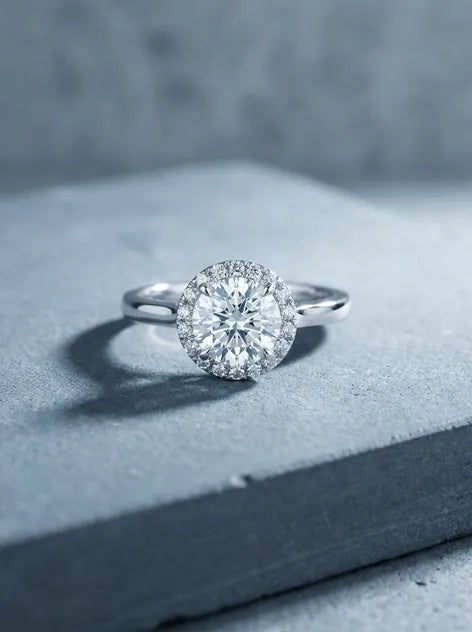
Start with the diamond engagement rings.
Engagement Rings inBoston
Boston's jewelers have clustered in Downtown Crossing for generations, in and around the Jewelers Exchange Building on Washington Street, with trade floors sitting above the street-level shops. It's a genuine trade address, and it's also expensive square footage in a very old downtown. That rent is inside every price quoted on the block. Ours isn't.
White metal that stays white: platinum diamond rings.
Engagement Rings inPhiladelphia
Philadelphia's Jewelers Row, on Sansom Street between 7th and 8th, is widely described as the oldest diamond district in the United States, and it's still working: cutters, setters and dealers in narrow buildings that have done this since the 1800s. The history is real. It doesn't lower a markup. What lowers a markup is buying from the workshop instead of the row.
Warm metal, vintage feel. See the yellow gold diamond rings.
Engagement Rings inChicago
Chicago's jewelers row runs along Wabash Avenue in the Loop, under the L tracks, anchored by the Mallers Building: floor after floor of independent dealers, setters and repair benches. It's a real trade building and it's worth walking through. Then compare what the same specs cost made to order.
The crisp option: white gold diamond rings.
Engagement Rings inLos Angeles
Downtown Los Angeles has a jewelry district of its own, centered on Hill Street near Pershing Square, where whole buildings are subdivided into small independent counters. Volume is high and turnover is faster than almost anywhere, so prices move week to week and quality moves with them. A listing with the specs printed on it doesn't move.
High color and clarity, consistently: lab-grown diamond jewelry.
Engagement Rings inSan Francisco
San Francisco's ring shopping happens mostly around Union Square, which is prime luxury retail before it's a jewelry trade: a shopping district, not a cutting district. The rent on those blocks is inside every ticket price, and buying from the workshop takes that line out of the math entirely.
Compare the specs, not the storefronts: diamond engagement rings.
Engagement Rings inPortland
Oregon charges no sales tax, and that's the one genuine price advantage on this list: a ring bought in Portland carries no state sales tax line. Worth knowing, and worth checking against the markup it's sitting on, because a tax-free retail price can still be the bigger number. We charge sales tax in Florida only.
The pair, made to match: wedding bands.
Engagement Rings inToronto
Ships internationalCanada mines diamonds; Toronto sells them. The Northwest Territories mines put Canadian-origin stones into the market, and Toronto is where a lot of them get traded and retailed, usually with an origin premium attached. Origin is a story, not a grade, and it won't show up on the report. We ship to Toronto: transit is 2 to 7 business days after dispatch, and Canadian duties and taxes are set at the border, not by us.
Judge it on the four Cs. See the diamond engagement rings.
Engagement Rings inLondon
Ships internationalHatton Garden is London's jewelry quarter and has been for well over a century: dealers, bench workshops and bespoke makers packed into a few streets in central London. UK law also requires most gold jewelry to be hallmarked by an assay office, which is real consumer protection the US doesn't have. Hatton Garden prices still carry Hatton Garden rents. We ship to London, and duties and VAT are assessed on arrival rather than by us.
Buy the stone on its grades: loose diamonds.
Engagement Rings inSydney
Ships internationalAustralia used to produce diamonds at scale. The Argyle mine in Western Australia is widely credited as the source of most of the world's pink diamonds, and it closed in 2020. Sydney today is an import market, so finished jewelry reaching a case in the CBD has already carried freight, duty and GST. Shipping direct removes the retail layer, though not the border: duties and delivery times are the destination's.
Size and grade in one budget: lab-grown diamond jewelry.
The Short Answer
What the City Changes, and What It Doesn't
It changes the price, not the ring. Here's the short version of all twelve entries above, in three answers.
Does the city change the ring?
No. A G color, VS2, 1.50ct round is that same stone in Boston, in Sydney, or on a bench in Miami. What changes city to city is the rent, the number of hands it passed through, and the sales tax. The stone doesn't read the address.
What actually moves the price
Cut, color, clarity and carat set what the stone costs. Everything stacked on top is distribution: dealer margin, wholesale margin, retail margin, rent, advertising. Taking that layer out is how our catalog runs up to 78% below retail without touching a single spec.
What to check before you order online
Read the specs on the listing: metal, shape, carat, color, clarity. Then get the size right, because you can't try it on. Our ring size guide walks through it, quarter sizes are orderable, and the chart runs to size 13. Check the return window before you pay.
Wherever you're reading this from: diamond engagement rings, wedding bands, natural loose diamonds and lab-grown diamonds, all made to order in our own US factory. Want something the catalog doesn't have? Our jewelers will design it from scratch.
Quick Answers
Asked every day at the factory
What is a realistic price for an engagement ring?
How much should I spend on an engagement ring if I make $100,000 a year?
What does a $5,000 engagement ring get you?
Is a 2 carat ring considered big?
Is $3,000 too little for an engagement ring?
Still Comparing?
Price it from the bench instead
Send us the specs you're comparing and we'll price the same piece made to order in our own US factory, and show you where the rest of the money was going. If what you want isn't in the catalog, bring us an idea or a sketch and our jewelers will design it from scratch.