



Learning Center Guide
Lab-Grown Diamonds
A lab-grown diamond is a real diamond: the same carbon, the same crystal, the same fire, grown in weeks instead of a billion years. Here's how it's made, what the price gap buys, and the honest trade-offs nobody prints on the tag.

Part One
Are Lab-Grown Diamonds Actually Real Diamonds?
Yes. Lab-grown diamonds are real diamonds: pure crystallized carbon, graded on the same 4Cs as natural stones. The only difference is where it formed. These three facts are what the decision actually rests on.
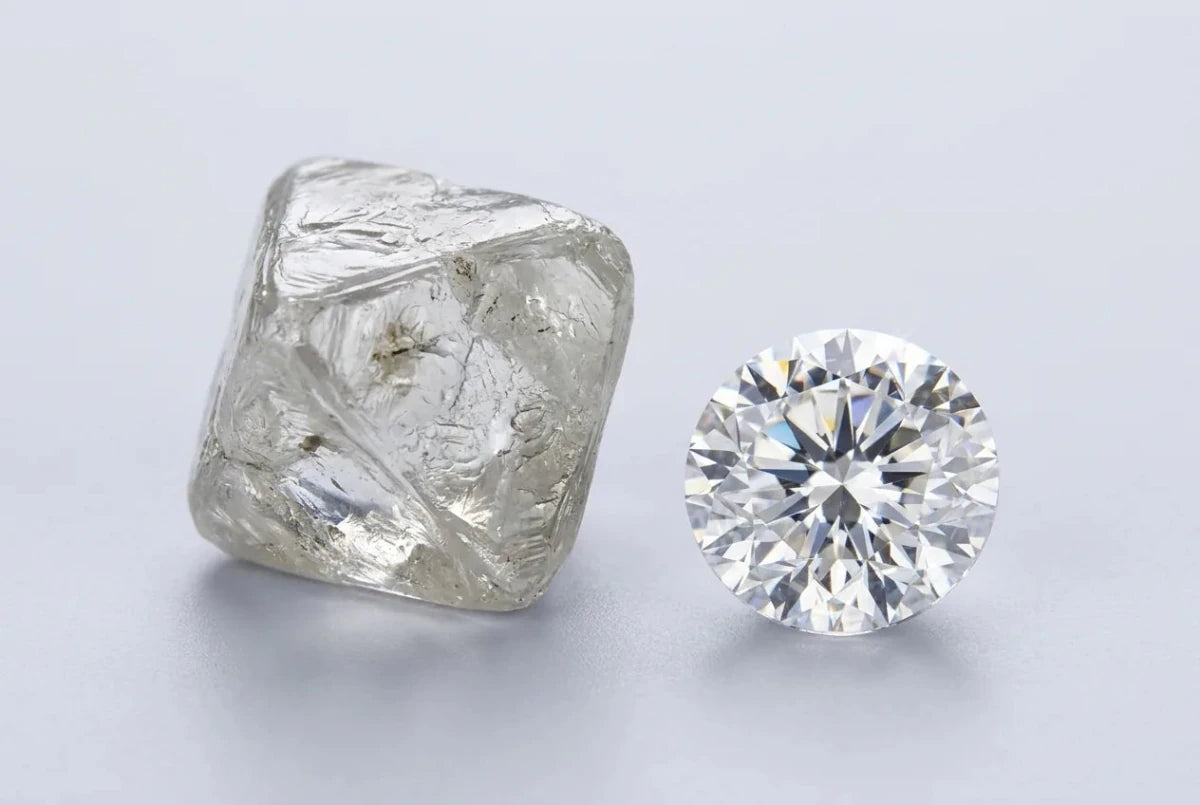
Grown, Not Manufactured
A sliver of diamond seed goes into a chamber, and carbon crystallizes onto it layer by layer until, in a matter of weeks, there is a rough diamond crystal. One method (HPHT) uses immense heat and pressure; the other (CVD) grows it from a carbon-rich gas. From there its life is identical to a natural stone's: cut, polished, graded, set.
Identical, By Every Measure
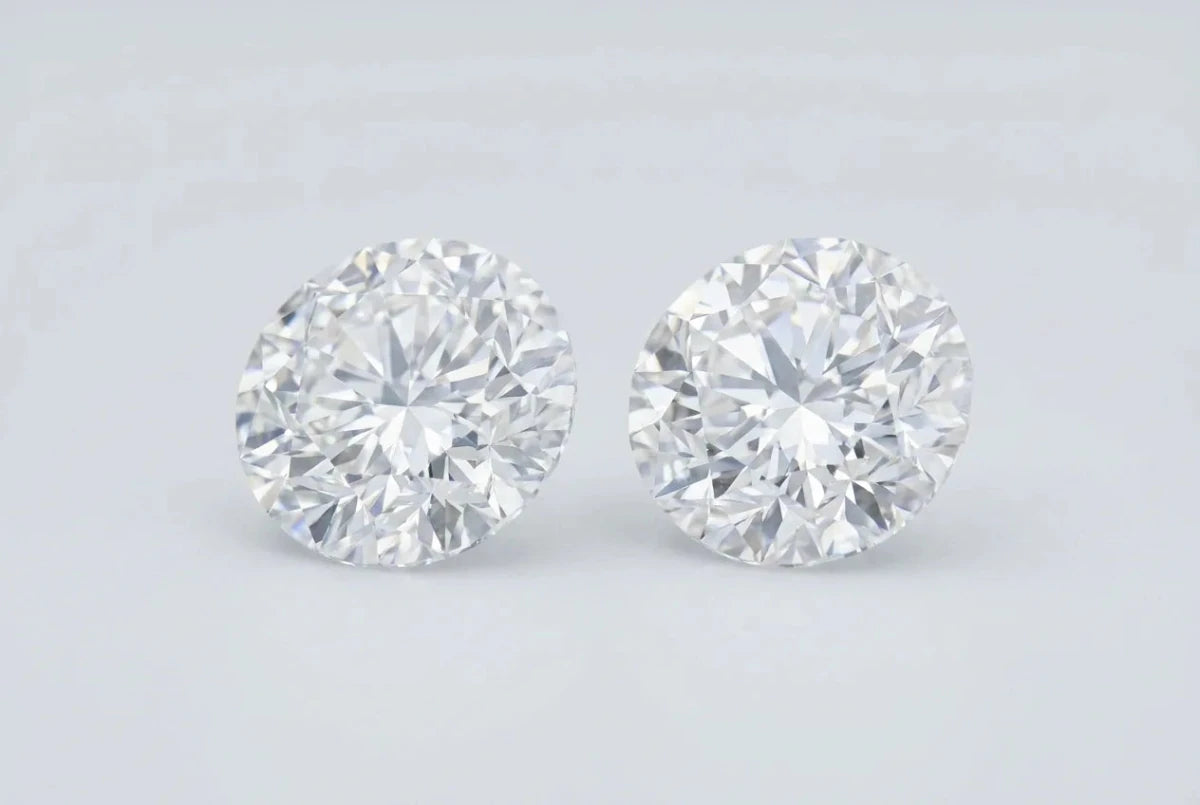
Chemically, optically, physically the same stone: pure crystallized carbon, hardness 10 of 10 on the Mohs scale, the same fire and brilliance, the same forever. The FTC settled the naming in 2018: a diamond is a diamond, whichever way it formed. Jewelers cannot tell them apart by eye or loupe; it takes specialized laboratory instruments. The same laboratories assess both. IGI still grades lab-grown stones on the full cut, color, clarity and carat scales, while GIA moved its lab-grown reports to descriptive ranges in 2025. Lab-grown stones also carry a microscopic girdle inscription saying what they are. Our setters handle both every day, and the paperwork is the only way they know which is which.
The Lab-Grown Diamond Price Gap Is Real, So Is the Trade
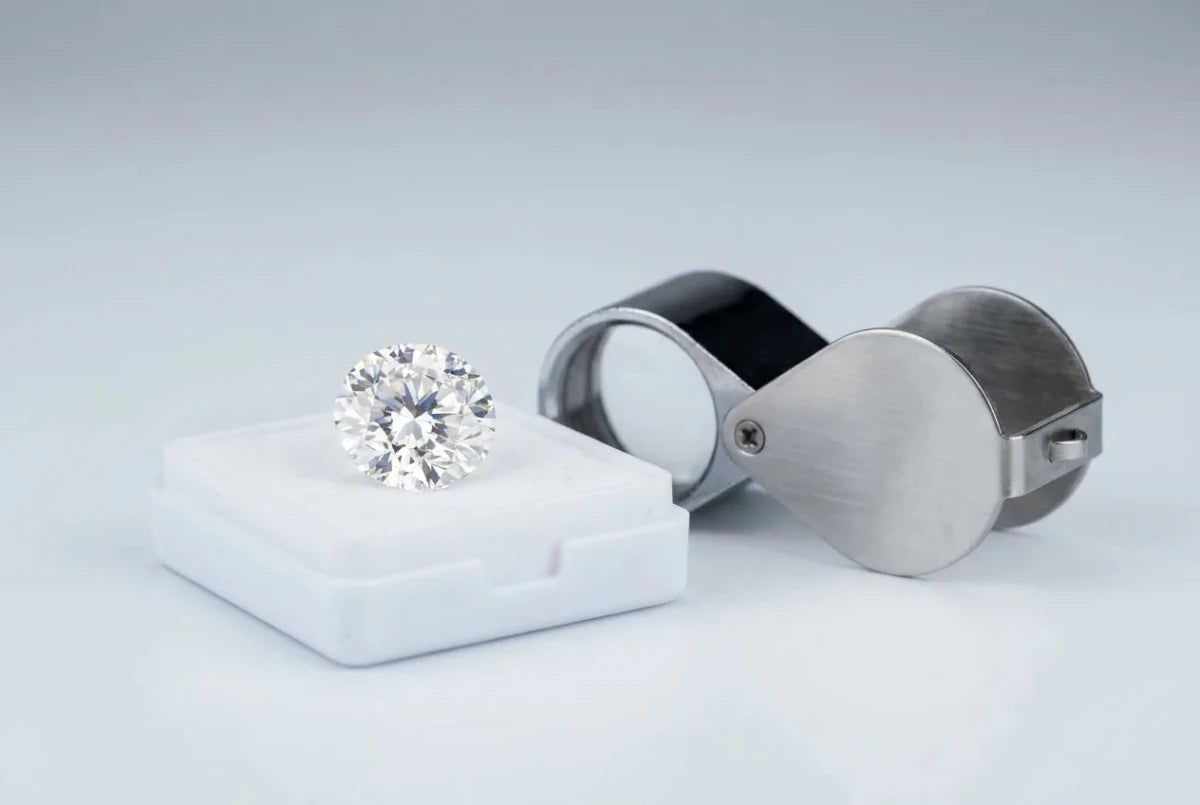
A lab-grown diamond costs a fraction of an equivalent natural stone, so the same budget buys visibly more size, or better cut and color. The honest other side: natural diamonds carry rarity, and rarity holds value over time. Lab-grown prices are still falling as production scales, so they may not. Buy lab for the finger, not the vault.
At a Glance
Lab Grown Diamonds vs Real Diamonds, at a Glance
| Lab-grown | Natural (mined) | |
|---|---|---|
| What it is | Crystallized carbon. A diamond | Crystallized carbon. A diamond |
| Origin | Grown from a seed in weeks | Formed in the earth over roughly a billion years |
| Hardness & wear | 10 of 10. A forever stone | 10 of 10. A forever stone |
| Grading | IGI: full 4C grades, inscribed girdle. GIA since 2025: descriptive ranges (“premium” / “standard”) instead of specific grades | GIA & IGI: full 4C grades |
| Price per carat | A fraction of the natural price | Carries the premium of rarity |
| Long-term value | Prices still falling as supply grows | Rarity supports value over time |
| Traceable origin | Fully traceable: grown in a known facility | Certified conflict-free through the supply chain |
The Look-Alike
Moissanite vs Diamond: Not a Lab-Grown Diamond, Not a Diamond at All
Moissanite is not a lab-grown diamond, and it is not a diamond at all. It is silicon carbide, a different mineral; a lab-grown diamond is pure crystallized carbon, the same material as a natural diamond. Both are made by people and both sparkle, so the mix-up is common. Side by side, the difference shows fast. Put moissanite next to a diamond under store lighting and moissanite flashes rainbow where a diamond flashes mostly white; that is double refraction (the stone bends light twice), and it is the quickest tell. Moissanite also sits slightly below diamond in hardness, and a handheld diamond tester identifies it in seconds. At our bench the rainbow flash gives moissanite away before the tester does. None of this makes moissanite a bad stone. It makes it a different stone at a different price, and it should always be sold under its own name. Everything we sell as a diamond, lab-grown or natural, is diamond.
The Short Answer
When Buying Lab-Grown Is Worth It, and When Natural Wins
The most stone for the budget
Choose lab-grown. The savings move you up in size, cut, and color at once, the three things the eye actually sees across a dinner table.
An heirloom with rarity
Choose natural. A billion years in the earth is part of what you're giving, and rarity is what holds worth across generations.
Genuinely torn
Put them side by side. We sell both and will show you the same size in each; most people know their answer within a minute of looking. Contact us and we'll set it up.
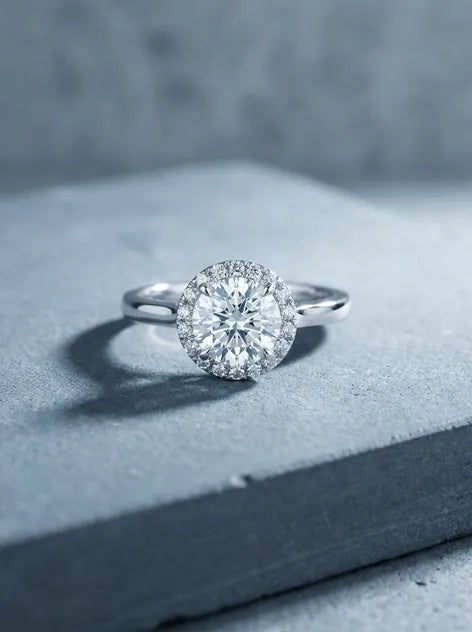
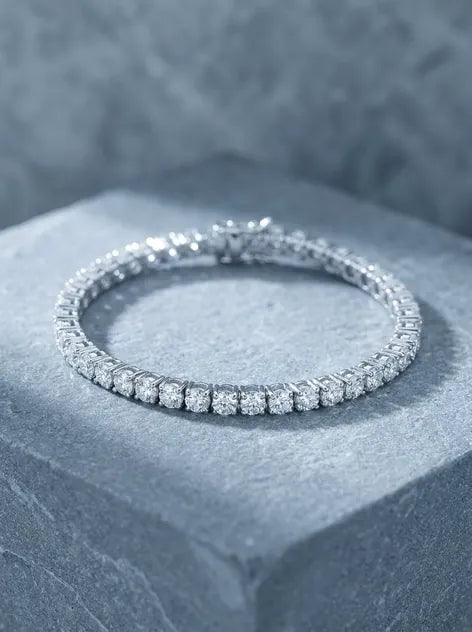
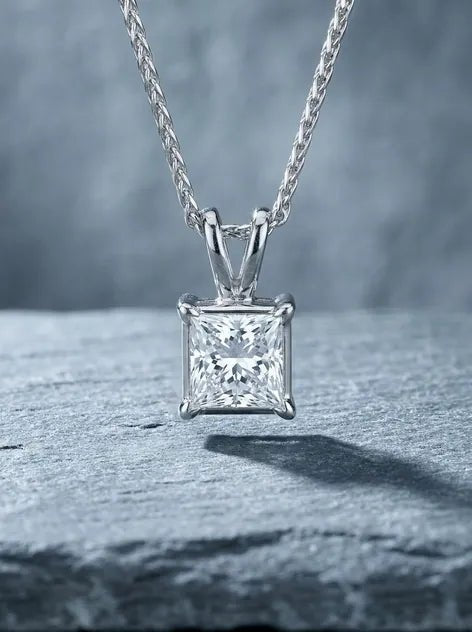
See them in finished pieces: lab-grown engagement rings, lab-grown bridal sets, lab-grown stud earrings, and lab-grown tennis bracelets, or browse all lab-grown diamond jewelry, every piece made to order in our own US factory.
Quick Answers
Asked every day at our counter
Is a lab-grown diamond a "fake" diamond?
What is the downside of a lab-grown diamond?
Is it worth buying lab-grown diamonds?
Will it cloud, fade, or wear differently over time?
Can anyone tell it's lab-grown?
Are lab-grown diamonds certified too?
Still Deciding?
See them side by side
We stock both, cut both, and set both. Tell us the budget and we'll show you the same ring twice, one natural, one grown, and let your own eyes make the call. Prefer something of your own? Bring us an idea or a sketch and our jewelers will design it from scratch.