



Learning Center Guide
Diamond Clarity
Diamond clarity grades what a trained eye finds inside a stone under 10x magnification, from FL down to I3. The grade that decides your ring isn't on the report at all: eye-clean, meaning nothing you can see at arm's length. Here's where that line falls.

Part One
The Diamond Clarity Scale: Eleven Grades, and the One That Isn't On It
The diamond clarity scale is eleven grades: FL and IF at the top, then VVS1 and VVS2, VS1 and VS2, SI1 and SI2, and finally I1, I2 and I3. Every one of them describes what a trained grader finds under 10x magnification, the standard GIA grades to. None of them describes what you see at arm's length, and that's the grade that decides your ring. Three things move the difference, and the report only hints at one.
Where the Inclusion Sits
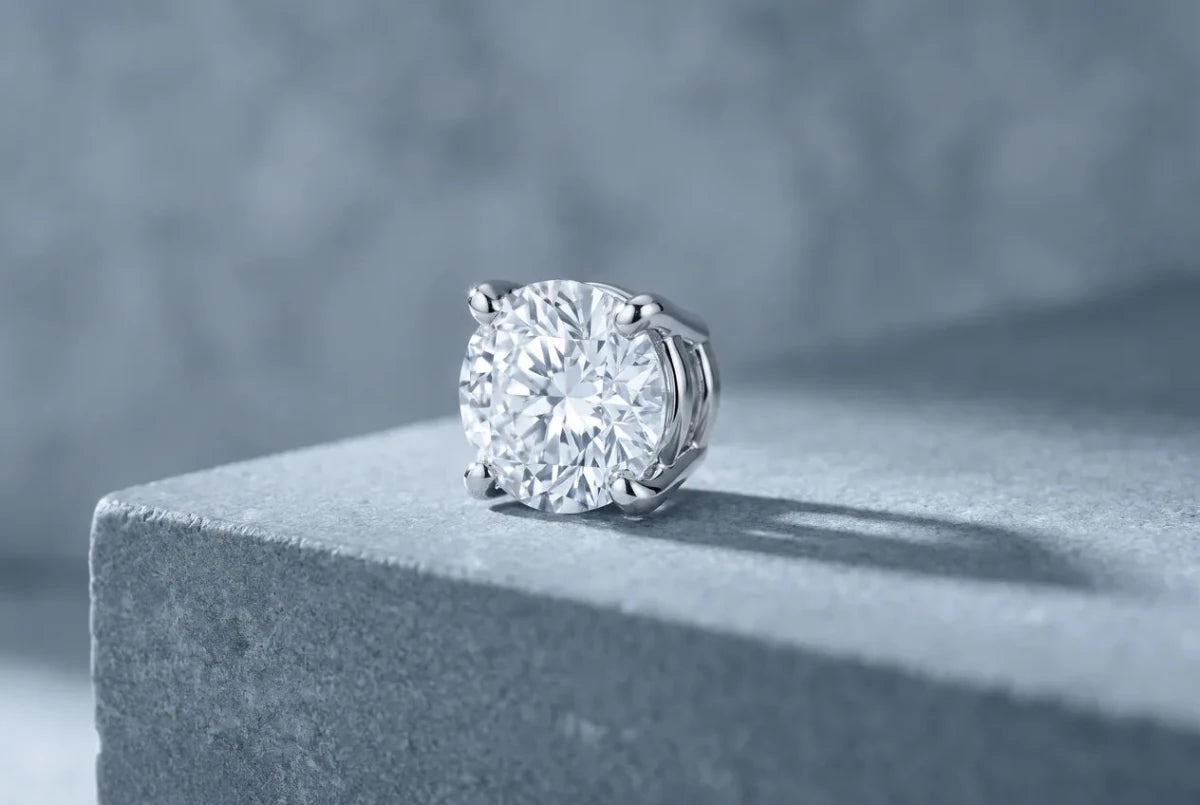
Two SI1 stones can look nothing alike, and the letter won't tell you why. An inclusion sitting dead center under the table is in the brightest, most open part of the diamond, and that's exactly where your eye lands first. The same inclusion out near the girdle often disappears under a prong once the ring is built. Position isn't graded on its own, so read the plot diagram most full reports print, or look at the stone face-up before you judge the grade.
How Big the Stone Is
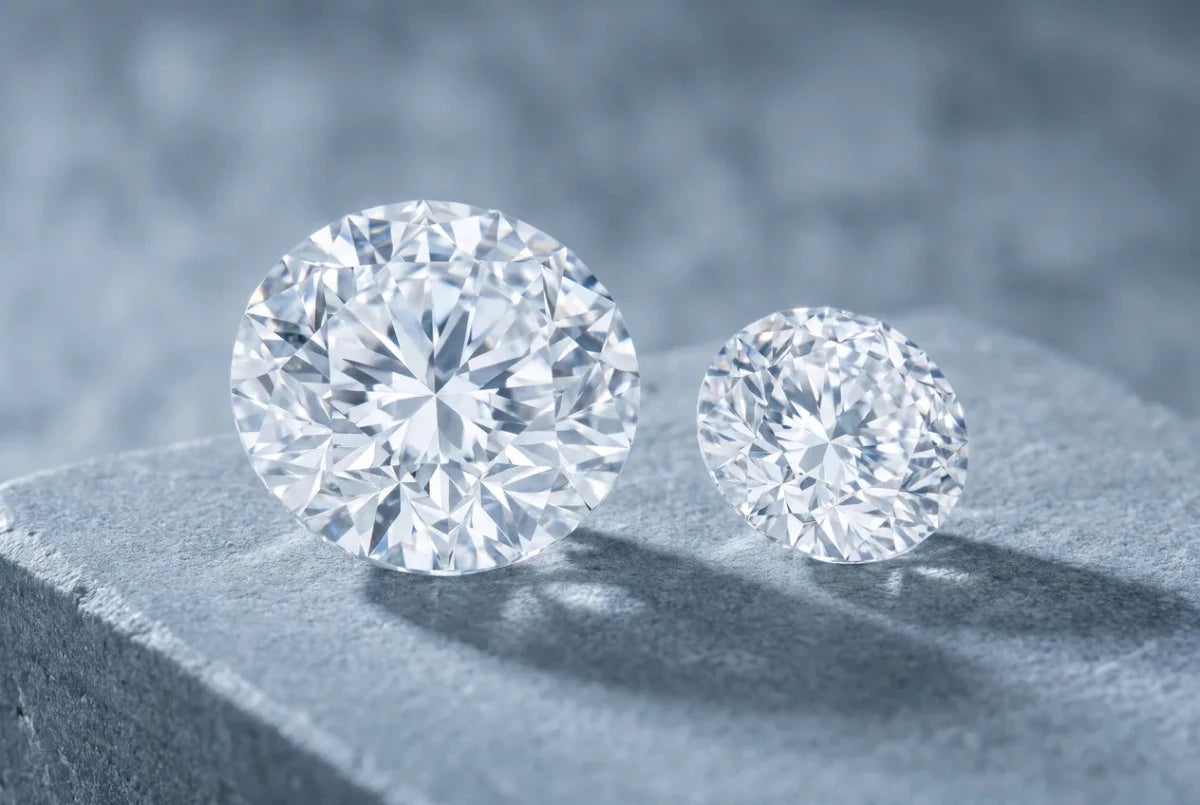
Clarity grades aren't scaled to carat weight, but your eye is. A 3ct SI1 has a wider table, a bigger open window and far more room for an inclusion to announce itself, while the same grade in a 0.50ct stone can be genuinely hard to find with a loupe. So a 3ct SI1 shows you what a 0.50ct SI1 hides. As the carat climbs, hold the clarity grade a step higher than you'd accept on a small stone.
What Kind of Inclusion It Is
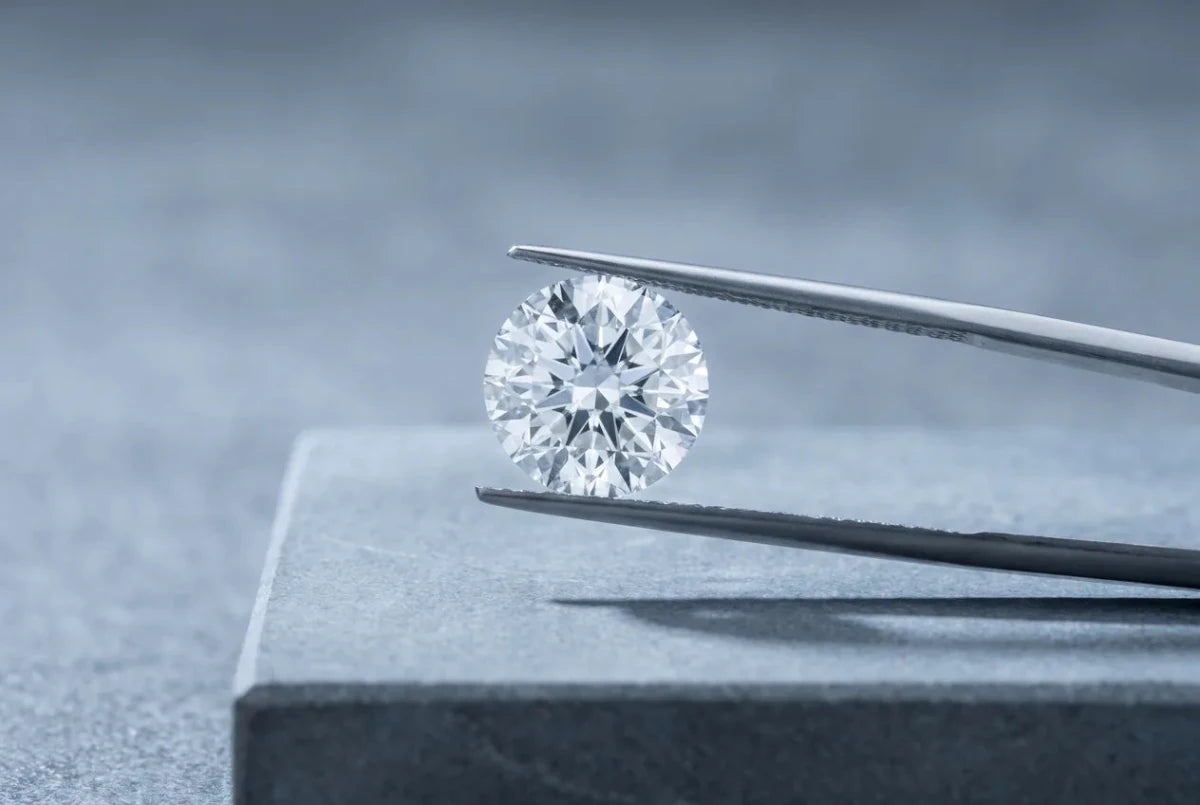
The characteristics a report names matter as much as the count. A crystal is another mineral trapped inside, and a dark one shows at a size a pale one wouldn't. Feathers are internal fractures: small ones vanish, but a large feather that reaches the surface at the girdle is a durability question, not just a looks question. Clouds are pinpoint swarms, and a dense one dulls brilliance even when it's hard to see. Needles and pinpoints are usually harmless.
At a Glance
Diamond Clarity Chart: What Each Grade Looks Like at 10x, and at Arm's Length
FL and IF are flawless, VVS is nearly impossible to find at 10x, VS is minor, SI is easy for a grader to spot, and I is visible without a loupe. That's the chart, best to worst. The best buy isn't at the top, though, because the top four grades pay for something your eye can't reach. Here both columns sit in the same row: what the grader sees, and what you see.
| Grade | What a grader sees at 10x | What you see at arm's length | Where it belongs | Value |
|---|---|---|---|---|
| FL / IF | Nothing inside. IF can carry a small surface mark | Clean, like every grade under it | Collector stones, and step cuts where nothing hides | You're paying for a line on a report, not for something the eye can find. |
| VVS1 / VVS2 | A pinpoint or two, and a grader has to hunt for them | Clean | Large emerald and asscher cuts, and buyers who want the paperwork | A grader's grade. The step up from VS is hard to see and easy to feel in the price. |
| VS1 / VS2 | Minor inclusions, found with a little effort | Eye-clean in nearly every stone | Step cuts, and anything over 2ct | The safe buy. VS2 usually looks identical to VS1 and costs less. |
| SI1 / SI2 | Inclusions a grader finds straight away | Usually clean in a round; check a step cut face-up | Round and other brilliant cuts, especially under 2ct | Where the value lives, as long as you look at the stone or its plot first. |
| I1 / I2 / I3 | Obvious, and often visible without the loupe | You can see them | Accent stones and pave, where each diamond is tiny | A real saving on melee. As a center stone, see it face-up before you decide. |
Some laboratories also print an SI3 grade, which sits between SI2 and I1. It isn't one of the eleven GIA grades, so a stone graded SI3 by one lab won't line up neatly against an SI2 or an I1 from another. Compare the stone, not the letter.
The Shape Factor
Eye-Clean by Shape: Which Diamond Clarity Grade to Hold for Each Cut
The clarity grade you need depends on the shape you chose. A round brilliant's facet pattern breaks the view into hundreds of small mirrors and hides a lot. A step cut like emerald or asscher is a window, and windows don't hide much.
That difference is geometry, not opinion. A brilliant cut is built from triangular and kite-shaped facets angled to bounce light back at you, and all that movement chops an inclusion up before your eye can resolve it. A step cut is built from long parallel planes with a wide open table, so you look straight down into the stone the way you'd look into clear water. It's why an SI1 round can read perfectly clean while an SI1 emerald cut shows you its business immediately. Pick the shape first in the shapes guide, then set the clarity grade to match it.

Here's what we see at the bench that no report shows. When a stone comes out of the parcel we look at it face-up under the lamp before it ever goes near a mounting, because that's the only view the customer will ever have. If the inclusion sits near the girdle we can usually turn the stone so a prong lands on top of it, and it's gone. A bezel goes further and covers the whole girdle line, which is why a bezel is the most forgiving setting for a lower grade. A halo pulls the eye outward to the small stones. What no setting fixes is an inclusion under the middle of the table, or a feather that reaches the surface at the girdle, because a prong tightening onto that spot is pressure in exactly the wrong place. We look hard at those two, and sometimes we say no. See how much metal each style puts near the girdle in the setting styles guide.
So the spending order is simple: cut first, then clarity down to eye-clean and no further, then color down to whatever the metal will expose. Cut is the one your eye reacts to across a room, which is why the cut guide comes before this one. Clarity stops paying the moment nothing is visible, and in a round that's usually VS2 to SI1, which is where we'd point most people. Color is last because the metal does half the work for you, and the color guide shows exactly how much: a warmer grade that looks obvious in platinum disappears in yellow gold.
| Shape | What the facet pattern does | Clarity we'd hold | Where inclusions show up |
|---|---|---|---|
| Round brilliant | Fifty-eight facets scatter light and break the view up | SI1, and SI2 when the plot looks kind | Dead center under the table |
| Oval, pear, marquise, heart | Brilliant faceting, but longer, with quieter ends | SI1 | The points and the tips, where the facets thin out |
| Princess, radiant, cushion | Brilliant faceting under a wider, flatter table | SI1 under 2ct, VS2 above it | Under the table, and near the corners |
| Emerald, asscher | Long step facets and an open table: a straight view in | VS2, and VS1 over 2ct | Anywhere. A step cut hides almost nothing |
The Short Answer
What Is the Best Diamond Clarity Grade to Buy?
VS2 or SI1 in a round brilliant. Both read eye-clean in most stones under two carats, both cost meaningfully less than VVS, and the money you save goes into cut, which is the C your eye actually reacts to. Three cases move that answer.
Round, under two carats
Buy SI1 and check it face-up or on its plot. A round's facet pattern does the hiding for you, so the grades above it are buying insurance you don't need. If the plot puts the inclusion near the girdle, SI2 is worth a look too.
Emerald or asscher
Step cuts are windows, so hold VS2, and VS1 once you pass two carats. There's nowhere for an inclusion to hide in a long parallel facet, and the open table shows the whole floor of the stone. This is the one place a higher grade earns its price.
Three carats and up
Hold VS2 or better, whatever the shape. Size doesn't change the grading, but it changes the viewing: a bigger table is a bigger window, and the same characteristic that hid in a one-carat stone has room to show itself in a three.
See the grades in finished pieces: diamond engagement rings, white gold and platinum diamond rings where an open, bright setting shows the most, or lab-grown diamond jewelry if you want the high clarity grades without the natural-stone premium. Prefer to pick the stone yourself? Our loose natural diamonds are EGL certified unless the listing says otherwise. Every piece is made to order in our own US factory.
Quick Answers
Asked every day at our counter
Is a VS1 or VS2 better?
What does SI mean in diamond clarity, and is SI1 good?
Is diamond clarity I2 or I3 good?
What is the lowest clarity grade worth buying?
Do lab-grown diamonds use the same clarity scale?
Still Deciding?
Ask the people who set the stones
Tell us the shape, the carat and the setting, and we'll say which clarity grade we'd hold and whether the inclusion has somewhere to hide. Every piece is made to order in our own US factory, so somebody is looking at your stone face-up before it goes in. Want a design of your own? Bring us an idea or a sketch and our jewelers will design it from scratch.