



Learning Center Guide
Diamond Carat
A carat is a unit of weight, not a measure of size: 200 milligrams, split into 100 points. Two stones at the same carat can face up visibly different, and the price jumps hardest at the round numbers. Here's what a carat actually looks like on a hand.

Part One
Diamond Carat Size: Why Two 1.00ct Diamonds Don't Look the Same
Carat is a unit of weight, not a measure of size. One carat is 200 milligrams, a fifth of a gram, and it divides into 100 points, so a 0.90ct stone is ninety points. Size is what you see face-up, measured in millimeters, and the two only agree when the stone is cut to spread. The American Gem Society puts it plainly: comparing diamonds by carat weight is like comparing paintings by size. Three things decide how big a carat actually looks.
Carat Is Weight: 200 Milligrams, 100 Points
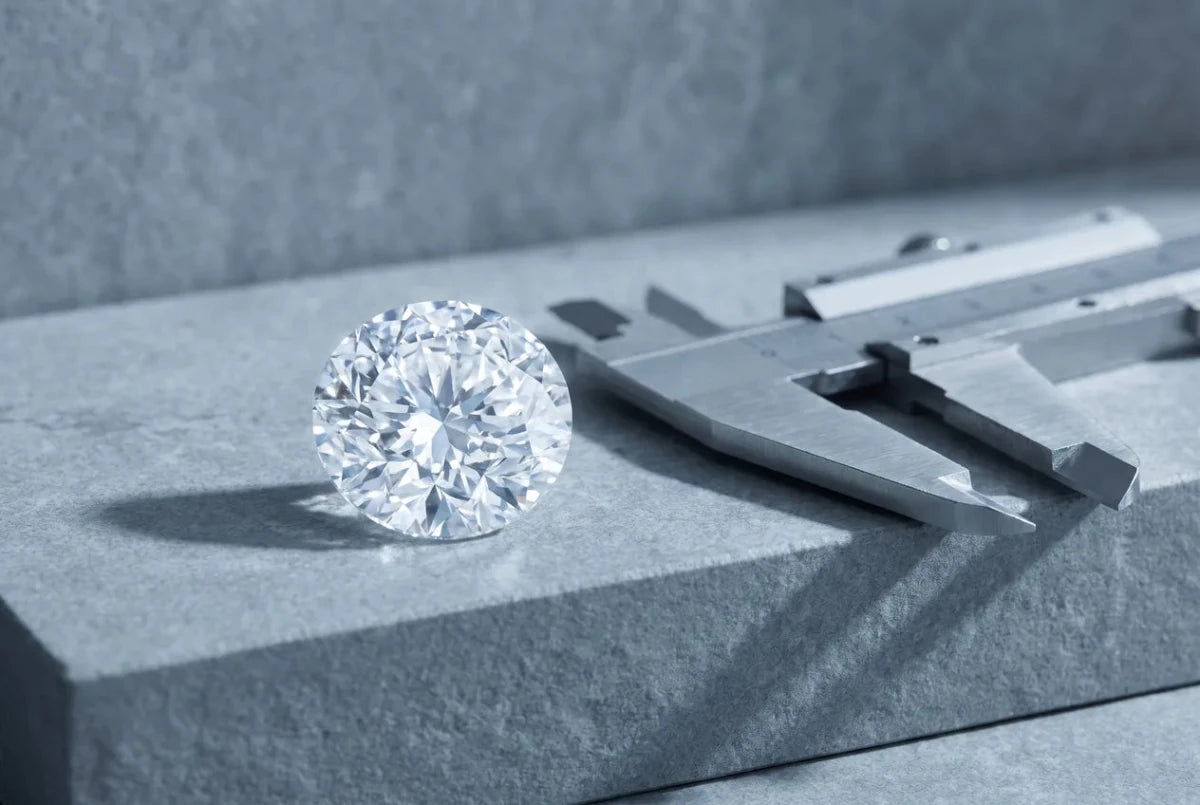
A carat weighs 200 milligrams, a fifth of a gram, and it's been that exact figure worldwide since the metric carat was standardized in 1907. Below one carat the trade talks in points: 0.75ct is seventy-five points, 0.50ct is fifty. That's the whole definition. It says nothing about how wide the stone is, how bright it is, or how it'll read across a dinner table. Those come from cut, and from shape.
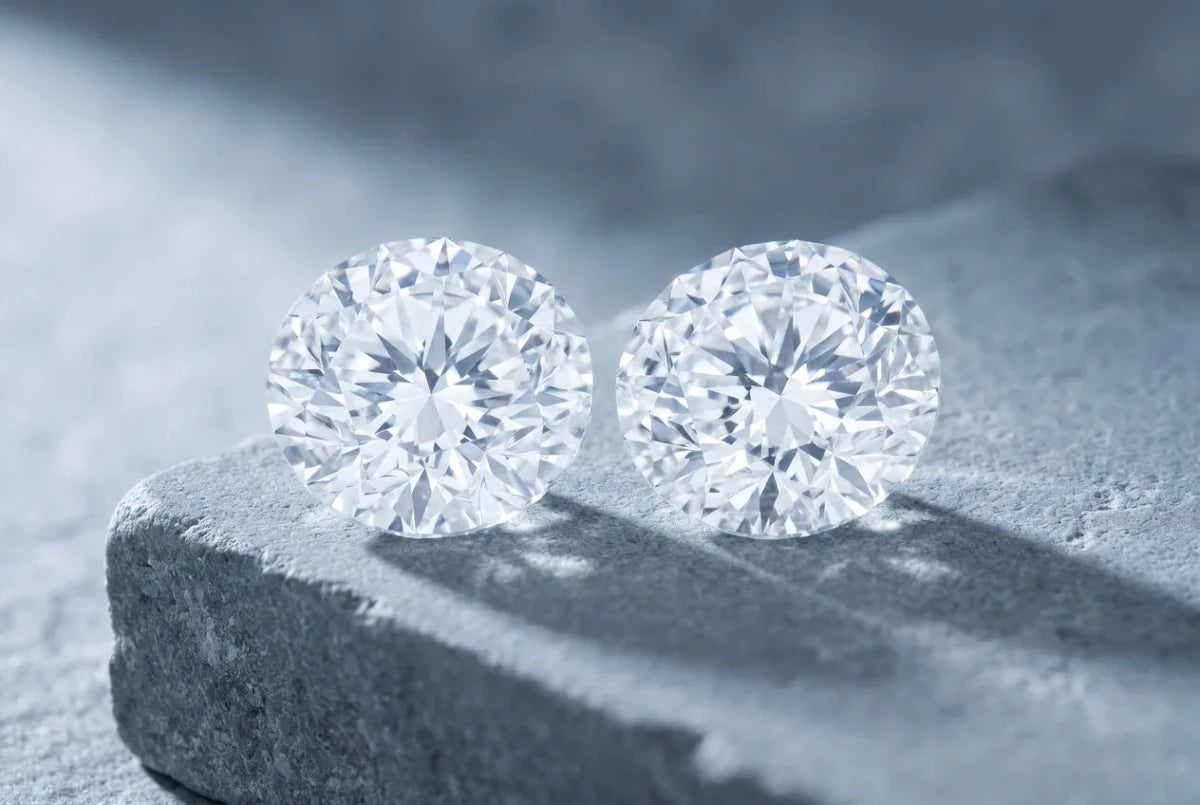
Spread: Where the Cutter Left the Weight
Two 1.00ct rounds can face up a visible step apart, and the word for that difference is spread. A deep stone hides weight below the girdle where nobody sees it, so it doesn't read as wide on top. A stone cut to spread puts the same weight into width instead. A well-cut 0.90ct can measure as wide as a poorly cut 1.00ct. Ask for the millimeters, not just the carat.
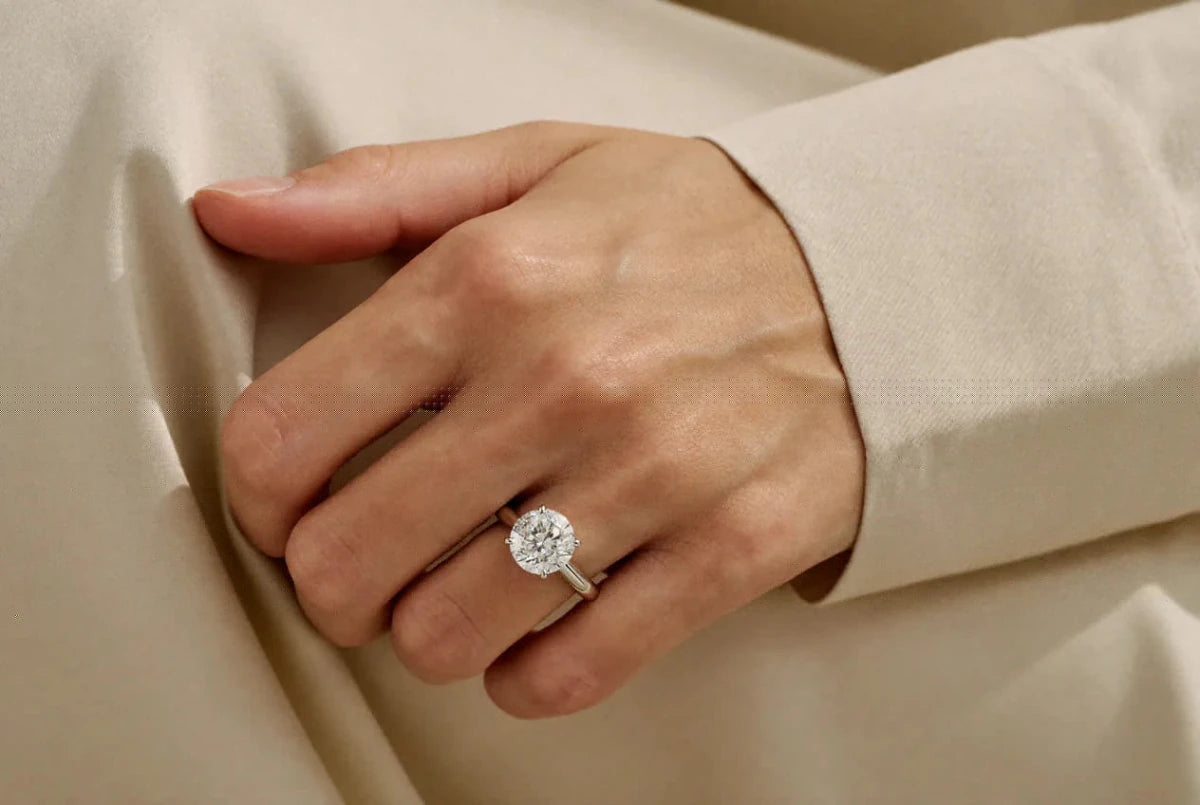
The Finger Is the Frame
The same 1.00ct round reads bigger on a size 4 finger than on a size 8, because your eye judges the stone against the finger under it, not against a chart. On a small hand a 0.90 looks generous. Past a size 7 that same stone starts to look modest, and that's where length beats weight: an oval or a pear covers finger a round can't. Our ring size guide has the chart, and we'll mail you a free sizer if you'd rather measure than guess.
At a Glance
Diamond Carat Size Chart: Face-Up Millimeters by Weight
A well-cut 1.00ct round measures about 6.4mm across the top, a 0.50ct about 5.1mm, a 2.00ct about 8.1mm. Doubling the weight doesn't double the width, it adds roughly a quarter to it. The figures below are approximate ranges for round brilliants, because proportions move them, and the buying notes are ours.
| Carat | Round face-up (approx) | What it reads like | Suits | Buying note |
|---|---|---|---|---|
| 0.50ct | 5.0 to 5.2 mm | Neat, and unmistakably a diamond | Sizes 4 to 6, or a halo that adds width | Width per dollar is at its friendliest down here. |
| 0.75ct | 5.7 to 5.9 mm | The weight where people start to notice | Any finger, almost any setting | Sits comfortably below the first price step. |
| 0.90ct | 6.1 to 6.3 mm | Wears as a one-carat ring | Any finger | The best saving on this page: about 0.2mm under a 1.00. |
| 1.00ct | 6.3 to 6.5 mm | The number people ask for by name | Sizes 5 to 8 | The price steps up here, and part of the step is for the number. |
| 1.50ct | 7.2 to 7.4 mm | Reads across a room | Sizes 5 to 9 | A softer step; 1.40 to 1.45 buys nearly all of the look. |
| 2.00ct | 7.9 to 8.2 mm | A statement, and the setting has to carry it | Sizes 6 and up | Second hard step; 1.90 sits just under it for meaningfully less. |
The Price Curve
Diamond Carat Price: Why the Jump Happens at 1.00 and 2.00
Price climbs faster than weight, and it jumps at the round numbers. A 1.00ct costs more than twice a 0.50ct of matching quality, and the step from 0.90 to 1.00 costs far more than the two tenths of a millimeter it buys you.
Large rough is rare, so the price per carat rises as the weight rises. That's why a 2.00ct isn't two 1.00cts stacked together; it's a rarer stone and the market prices it as one. The American Gem Society makes the same point from the other side: a one-carat is worth more than twice a half-carat only when every other quality factor is equal, and in the real world they never quite are. Cut, color and clarity move the number as hard as weight does, which is why a carat chart with prices printed on it is guessing.
Sitting on top of that curve are the magic sizes. 1.00, 1.50, 2.00: the round numbers people ask for by name, and the trade prices them accordingly. A 0.90 and a 1.00 differ by roughly two tenths of a millimeter across the top. Two tenths of a millimeter is not something you catch on a moving hand. The price gap between them is not two tenths of anything. Buy at 0.90, 1.40 or 1.90 and you're paying for the stone instead of for the number, and the difference goes into cut, or into the setting, or it stays in your pocket.

Shape is the other lever, and it costs nothing to pull. An oval, a pear, a marquise or an emerald cut lays its weight out lengthwise, so it covers more finger than a round of the same weight. A cushion does the opposite: it's a deep shape, and it parks carat under the girdle where the view from above never gets it. At the bench, when someone wants a bigger look, we reach for shape before we reach for weight. A bigger stone and a bigger look are two different orders.
| Shape at 1.00 ct | Typical face-up (approx) | How it reads |
|---|---|---|
| Round | 6.4 to 6.5 mm across | The benchmark every other shape gets judged against |
| Oval | 7.7 x 5.7 mm | Longer than a round, and it flatters a shorter finger |
| Pear | 8.0 x 5.5 mm | Length at one end, a point that draws the eye down the hand |
| Marquise | 10.0 x 5.0 mm | The most finger coverage per carat, by a distance |
| Emerald | 7.0 x 5.0 mm | Long and open; a step cut is a window, so buy it eye-clean |
| Princess | 5.5 x 5.5 mm | Compact face-up, because the weight goes into depth |
| Cushion | 5.5 x 5.5 mm | Deep, so it faces up smaller than its weight suggests |
Spread is a cut question before it's a shape question, and our diamond cut guide covers the proportions that decide it. The shapes themselves, one by one, are in the diamond shapes guide, and if you're leaning toward an emerald or an asscher, read the clarity guide first: an open step cut shows what a round would hide.
The Short Answer
What Carat Weight Should You Actually Buy?
Buy just under the round number, in a shape that spreads. A well-cut 0.90 wears like a one-carat ring and doesn't price like one, and the money you keep is better spent on cut than on the last tenth of a millimeter.
Buy under the round number
0.90 instead of 1.00. 1.40 instead of 1.50. 1.90 instead of 2.00. You give up about two tenths of a millimeter, which nobody sees, and you keep the money the round number costs. It's the cheapest upgrade on this page.
Want size? Change shape, not weight
An oval, pear or marquise at the same carat covers more finger than a round, because the weight runs lengthwise instead of downward. If what you want is a bigger look rather than a bigger stone, this is the move, and it doesn't cost a cent more.
Match the weight to the hand
On a size 4 or 5 finger, 0.75 to 1.00ct reads full. From a size 7 up the same stone shrinks, so go longer or go wider: an elongated shape, or a setting with side stones beside the center. Measure the finger first, then pick the weight.
See the weights on finished pieces: diamond engagement rings across every carat, natural loose diamonds or lab-grown diamonds if you'd rather pick the weight and the millimeters yourself, and the same stones set in white gold, yellow gold or platinum. Every piece is made to order in our own US factory in Miami, so you're buying at the source.
Quick Answers
Asked every day at our counter
How much is a 1 carat diamond worth?
What is a 24 carat diamond?
What is 1 carat of diamond in millimeters?
Does a bigger carat always look bigger?
Is a 2 carat diamond ring twice the price of a 1 carat?
Still Deciding?
Tell us the finger size, and we'll tell you the carat
Give us the ring size, the shape you like and the budget, and we'll come back with the weight that actually fits that hand, in millimeters, not just in carats. If you've got a design in mind rather than a stone, describe it or send a sketch and our jewelers will draw it up first.