



Learning Center Guide
Gold vs Platinum: Choosing a Ring Metal
Platinum is naturally white and stays white; white gold is gold under a thin rhodium plating that wears and needs redoing every few years. Platinum costs more. Here are all four metals we cast, what each one asks of you, and which one fits your hand.

Part One
The Four Ring Metals: White Gold, Yellow Gold, Rose Gold, Platinum
Four metals, and only one of them is naturally white. Every PrimeStyle piece is cast in solid gold or platinum, never plated brass, never vermeil, and the choice comes down to color, upkeep, and how hard the ring gets worn.
White Gold
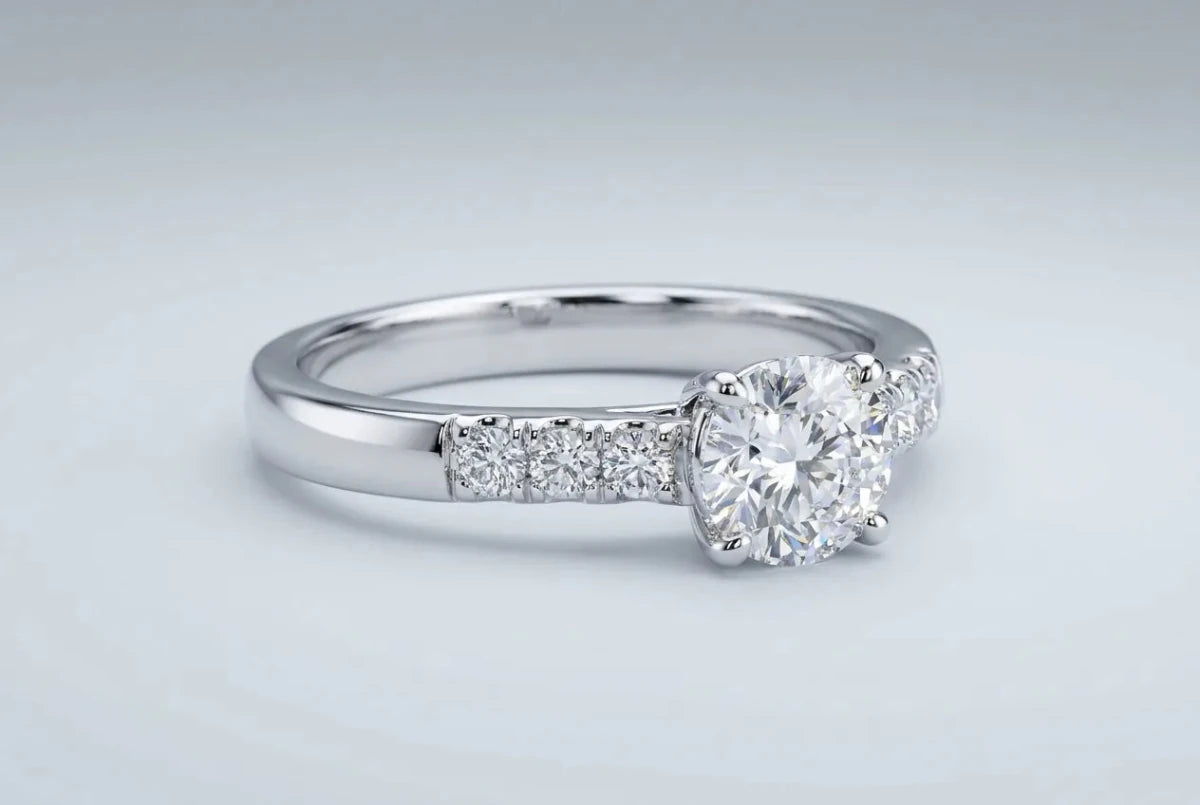
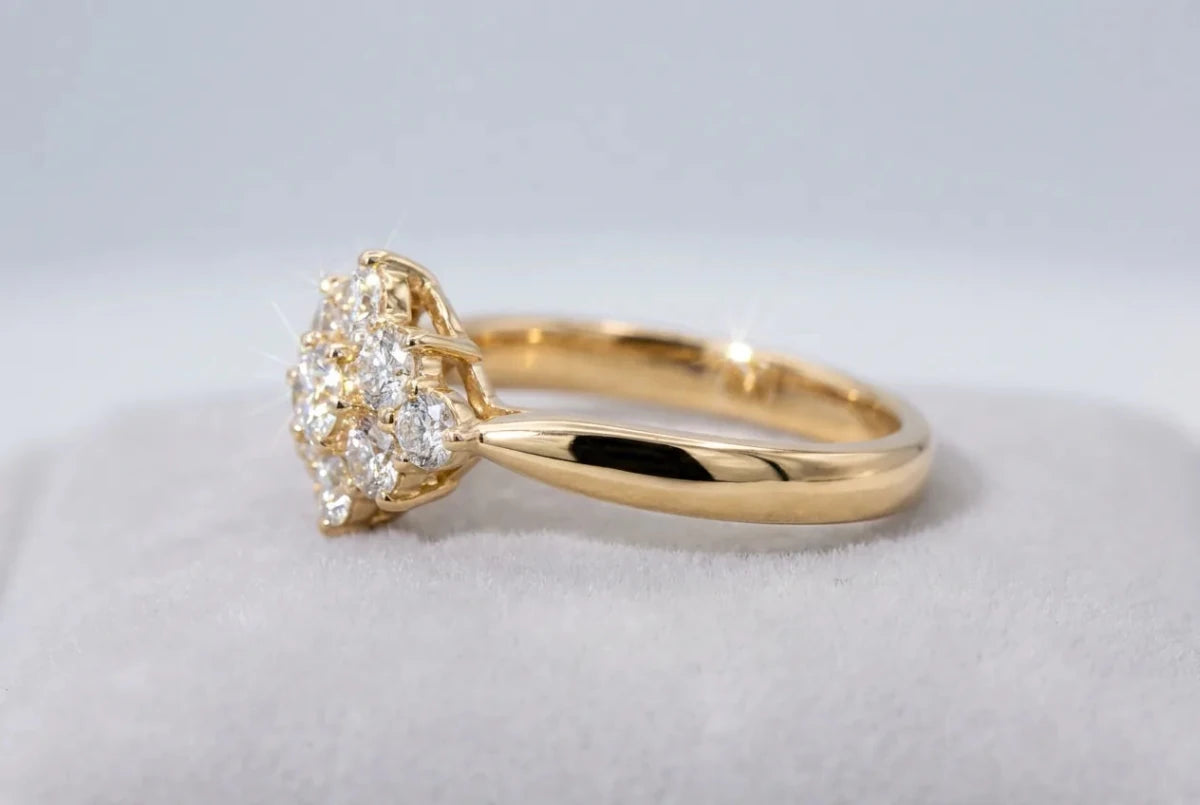
White gold is gold alloyed with white metals and finished with a thin layer of rhodium, and rhodium is what makes it that mirror white. It's been the default engagement metal for about twenty years. A plated surface is still a surface: after a few years of daily wear the warmer gold underneath starts to show at the edges and along the back of the shank, and a re-plate brings the showroom white back. Nothing is broken when that happens. It's the deal you make with white gold. We'd rather you hear it here than notice it in year three.
Yellow Gold
The metal jewelry has meant for five thousand years. Pure gold warmed with a touch of silver and copper, and the color is the metal itself: no plating, nothing to wear through, nothing to redo. It flatters warm skin, and it's forgiving of a warmer diamond color, which is the practical part most people miss. A stone that reads faintly warm in a white setting looks completely at home in yellow gold, so yellow gold buyers can spend less on color grade and more on size. A polish takes it back to new.
Rose Gold
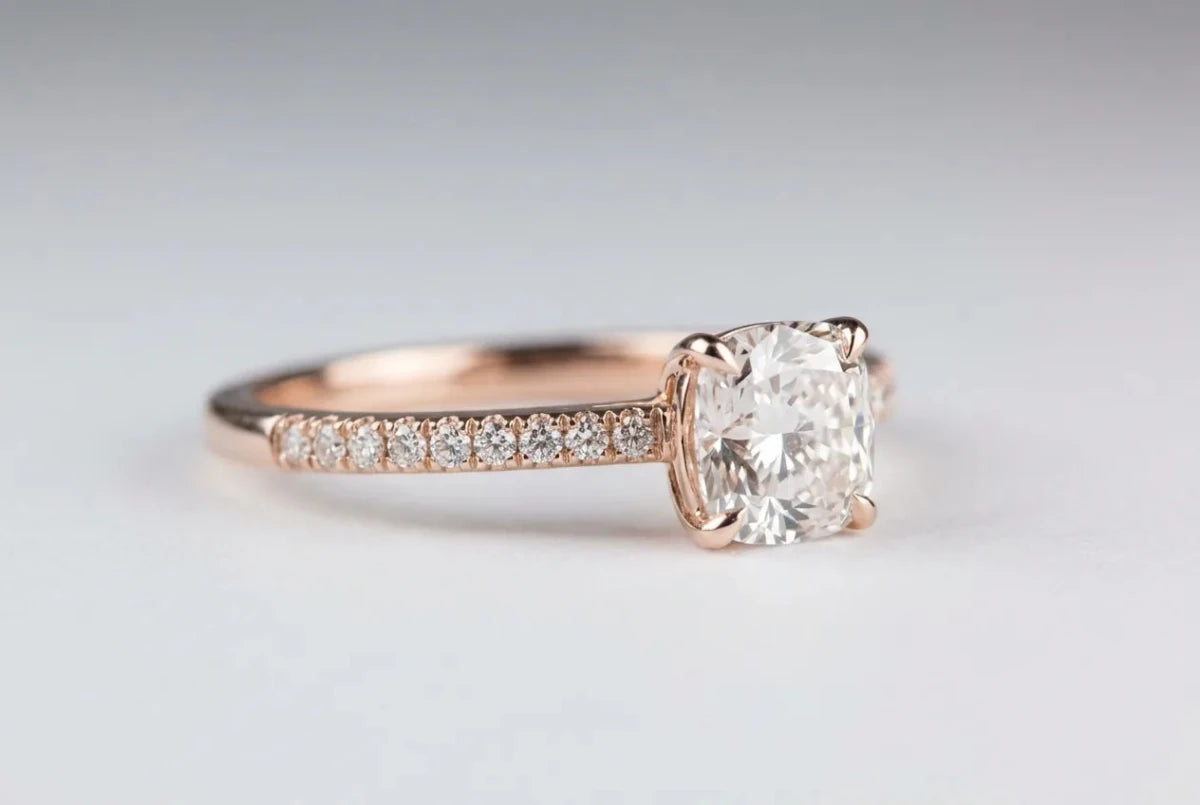
Rose gold is the same karat gold as the other two, mixed to a different recipe: more copper. The copper does two jobs at once. It gives rose gold the blush color, and it makes rose the hardest of the three golds, so it's the most forgiving of daily knocks. No plating and no color to lose. The one caution is skin: if copper turns your wrist green under a bracelet, rose gold isn't your metal and platinum is.
Platinum
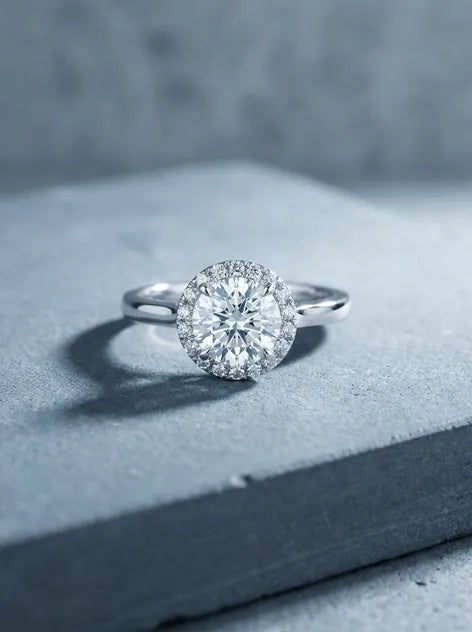
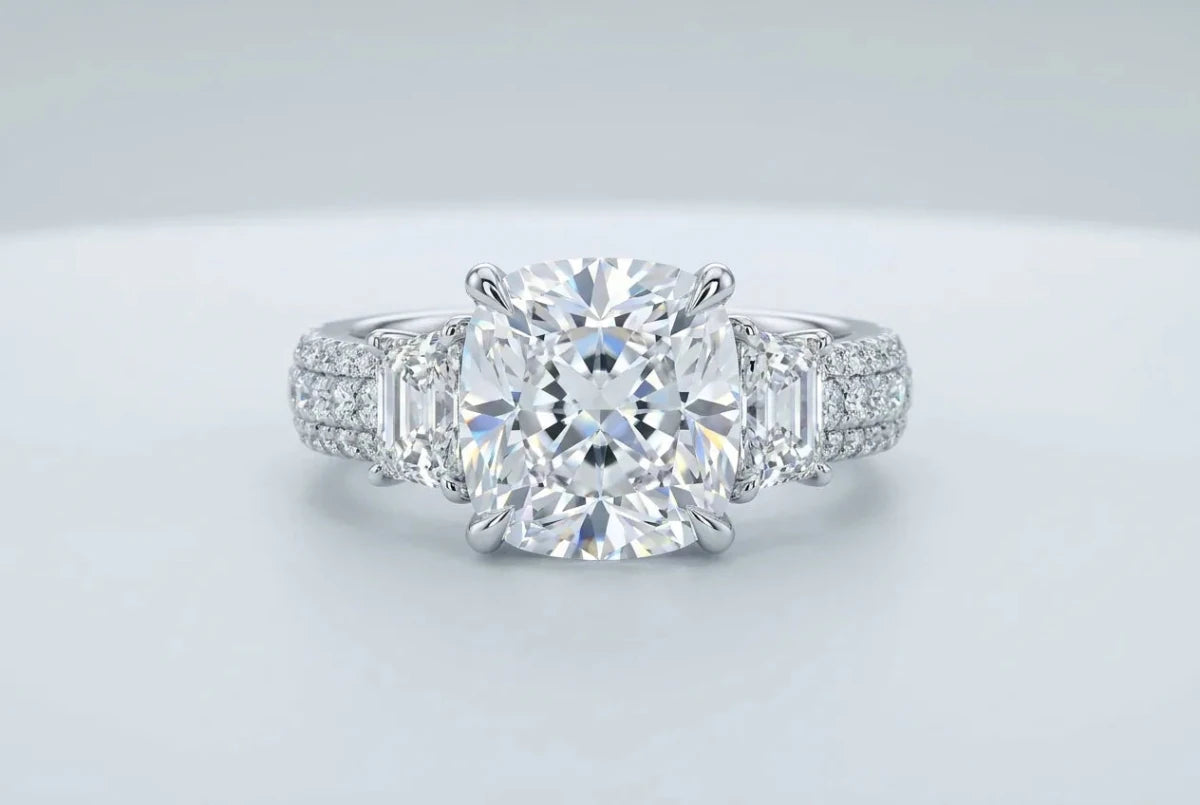
Platinum is white all the way through. No plating, so there's nothing to wear off and nothing to redo, ever. It's also used at very high purity: to be marked simply "Platinum" in the US a piece must be at least 950 parts per thousand pure platinum, against 58.3% gold in 14K, so there's very little alloy metal touching the skin. That's why platinum is the answer for anyone who reacts to nickel. It's dense, too. The same band in platinum runs roughly half again heavier than the 14K version, and you feel it every day. Platinum scratches like any metal, but it displaces metal instead of losing it, so the marks settle into a soft satin patina and a polish restores the mirror whenever you want it back. Platinum is a standard option here, not a special order. See it finished in platinum diamond rings.
Part Two
Is Platinum Better Than Gold?
Neither is better. Platinum is naturally white forever and costs more; white gold matches the look for less and needs re-plating every few years.
Why Platinum Costs More Than Gold
Three reasons, and only one of them is the metal price.
Purity. A platinum ring is at least 95% pure platinum. A 14K gold ring is 58.3% gold, because karat is a share out of 24 and 14 of 24 is 58.3%. You're buying far more precious metal per ring, before anything else happens.
Weight. Platinum is denser, so the same ring design takes more metal by weight to make. That's not a design choice, it's physics, and it lands on the invoice.
Labor. Platinum melts far hotter than gold. It needs its own crucibles, its own investment and its own tooling, it dulls files and burs faster, and it takes noticeably longer to bring up to a mirror. We cast, set, polish and repair all four of these metals in our own US factory, and a platinum ring simply occupies more bench hours than the same ring in gold.
One thing worth knowing: gold and platinum trade as separate commodities, and each has traded above the other at different points in the last twenty years. So "platinum is the more expensive metal" isn't a permanent fact about the world. "A platinum ring costs more than the same ring in gold" is, and the three reasons above are why.
White Gold vs Platinum: What the Extra Money Buys
On day one, in a case, under the same lights, they match. That's not marketing, that's why the question exists.
What separates them is year five. Platinum is the same color in year five, year fifteen and year forty, because the color is the metal. White gold in year five is a ring that's been re-plated once or twice, or a ring whose owner has decided they like the warmer tone coming through. Platinum also holds a stone longer: platinum prongs bend and thin, gold prongs wear and eventually snap.
What white gold buys instead is diamond. The same budget in 14K white gold moves real money into the stone, and the stone is what people look at.
So Which One Should You Buy
Most of our white-metal orders go out in 14K white gold, and for most hands that's the right call: the difference in metal goes into the diamond, and a re-plate every few years is a small habit, not a burden.
Platinum is the right call in three situations, and they aren't close calls: skin that reacts to nickel, a ring the wearer never wants to think about again, and a ring that's meant to be handed down. If any of those describe you, buy the platinum.
And if the ring is going to be yellow or rose, none of this applies to you. Those two have no plating and no color question at all.
At a Glance
Gold vs Platinum Ring Metals, Compared
Gold vs platinum comes down to one trade: gold costs less and puts more of the budget into the diamond, platinum won't ever need re-plating. Yellow and rose gold sit outside that argument, because there's no plating on either one and no color to lose. The table sorts all four by color, upkeep, skin, purity and what each is best for.
| Metal | Color | Upkeep | Sensitive skin | Purity & weight | Best for |
|---|---|---|---|---|---|
| White gold | Bright mirror white, rhodium-plated | Re-plate every 2–3 years | Usually fine | 14K is 58.3% gold, 18K is 75%. Light on the hand | The modern white look at a gold price. |
| Yellow gold | Warm gold, permanent | Occasional polish | Usually fine | 14K is 58.3% gold, 18K is 75%. Light on the hand | Classic pieces; forgiving of warmer diamond color. |
| Rose gold | Blush pink, permanent | Nearly none | Avoid if copper-sensitive | 14K is 58.3% gold, 18K is 75%. Light on the hand | Vintage character and the toughest of the golds. |
| Platinum | Cool white, permanent, never plated | Optional re-polish, no plating ever | The nickel-free answer | 950 platinum, 95% pure. Roughly half again heavier | Heirloom rings worn hard and kept forever. |
Part Three
10K vs 14K vs 18K: What Karat Actually Changes
Karat is the share of pure gold out of 24. More gold means richer color and a softer metal; less gold means harder wear and paler color. That trade is the whole story. There's no karat that gives you the deepest color and the hardest wear at the same time, and any jeweler telling you otherwise is selling. US law requires the karat to be marked on the piece, so you can always check what you were sold.
10K, 41.7% Gold
Ten parts gold out of 24. The hardest, the cheapest and the palest, and also the one with the most alloy metal in it, which is the part nobody mentions: more alloy means more to react to if your skin is sensitive, and a color that can dull sooner. A practical pick for pieces that take daily abuse.
14K, 58.3% Gold
Fourteen parts gold out of 24, and the metal most engagement rings in this country are made in, including most of ours. Real gold color with everyday durability, and hard enough that a working hand doesn't punish it. If you're not sure, this is the answer.
18K, 75% Gold
Eighteen parts gold out of 24. The richest, deepest color and the softest of the three: it picks up fine scratches sooner and its prongs move more easily under hard use. In our repair queue the bent-prong jobs skew toward higher-karat rings on hands that work with them. Choose 18K for color and for occasion pieces, or when the hands wearing it are gentle.
One karat note specific to white gold: 18K white gold is warmer underneath the rhodium than 14K white gold, because there's more yellow gold in the mix. Both look identical while plated. When the plating wears, the 18K shows a little more warmth than the 14K does. And platinum has no karat at all. It's marked 950 or PLAT, because it isn't an alloy of gold.
The Short Answer
Which Metal to Pick, by How the Ring Gets Worn
Sensitive skin means platinum, a hand that works for a living means 14K, and a ring meant to be handed down means platinum or 18K. Color isn't on that list on purpose: white, yellow and rose are the same karat gold underneath, so that part is preference and you can settle it last. Here's the reasoning behind each.
Sensitive skin
Choose platinum. At 95% pure there's almost no alloy metal against your skin and no plating to wear through. If nickel has ever left you a rash, this is the one, and it isn't a close call.
Worn hard, every day
Choose 14K, in whichever color you like. Permanent color in yellow and rose, tough alloys in all three, and a polish brings any of them back to new. Rose is the toughest of the golds. Platinum survives hard wear just as well; it's the more expensive route to the same place.
One ring, forever
Choose platinum, or 18K if you want the warmth. Platinum prongs bend before they break, which is why so many jewelers set their own stones in platinum heads.
See the metals in finished pieces: white gold diamond rings, yellow gold diamond rings, rose gold diamond rings and platinum diamond rings. Every metal here is a live filter, not a special order, and that includes platinum on lab-grown pieces as well as natural. Everything is made to order in our own US factory.
Quick Answers
Asked every day at our counter
Why is my white gold ring turning yellow?
Is platinum more expensive than gold?
What are the downsides of platinum?
Why do jewelers not like platinum?
Is it okay to shower with a platinum ring?
Does platinum scratch?
Can I mix metals, a yellow band with a white engagement ring?
Still Deciding?
Ask the people who cast the metal
Every PrimeStyle ring starts as solid gold or platinum in our own US shop. Tell us how it will be worn and we'll tell you plainly which metal fits and which karat, including when the cheaper one is the right answer. Want something that isn't on the site? Bring us an idea or a sketch and our jewelers will design it from scratch.