
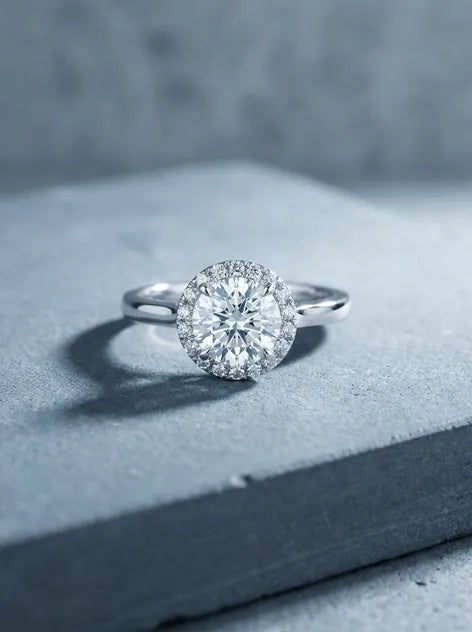

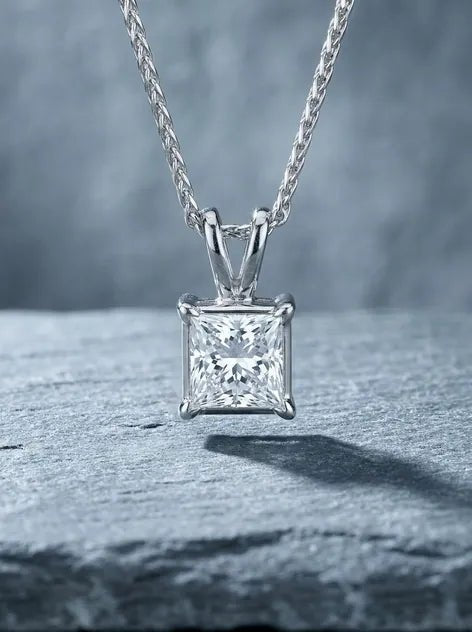


Solitaire
One diamond, one band, nothing else. The classic engagement ring, and it puts the entire budget and all the attention on a single stone.
Suits: a high-quality center stone that can stand alone.
Learning Center Guide
A ring setting is the metal that holds the diamond, and it decides three things: how safe the stone is, how much light reaches it, and how the ring feels on a working hand. Here are the four ways a diamond is held and the seven ring styles built on them.

Part One
There are four: prong, bezel, flush and tension. Every ring style sold anywhere is built from one of them, or from two of them combined.
The trade never changes. More metal around the stone means more protection and less light. Less metal means more sparkle and more to keep an eye on.

Four to six metal claws grip the diamond above the band and leave almost nothing in the light's way, which is why a prong setting sparkles harder than anything else. It's also the setting that comes back to our bench more than any other. Prong tips thin out from years of contact with door handles, car keys and denim, and when a tip wears through, the stone starts to move. Checked every year or two, it rarely gets that far. Four prongs show a fraction more diamond. Six hold better, and on a stone of a carat or more we set six.
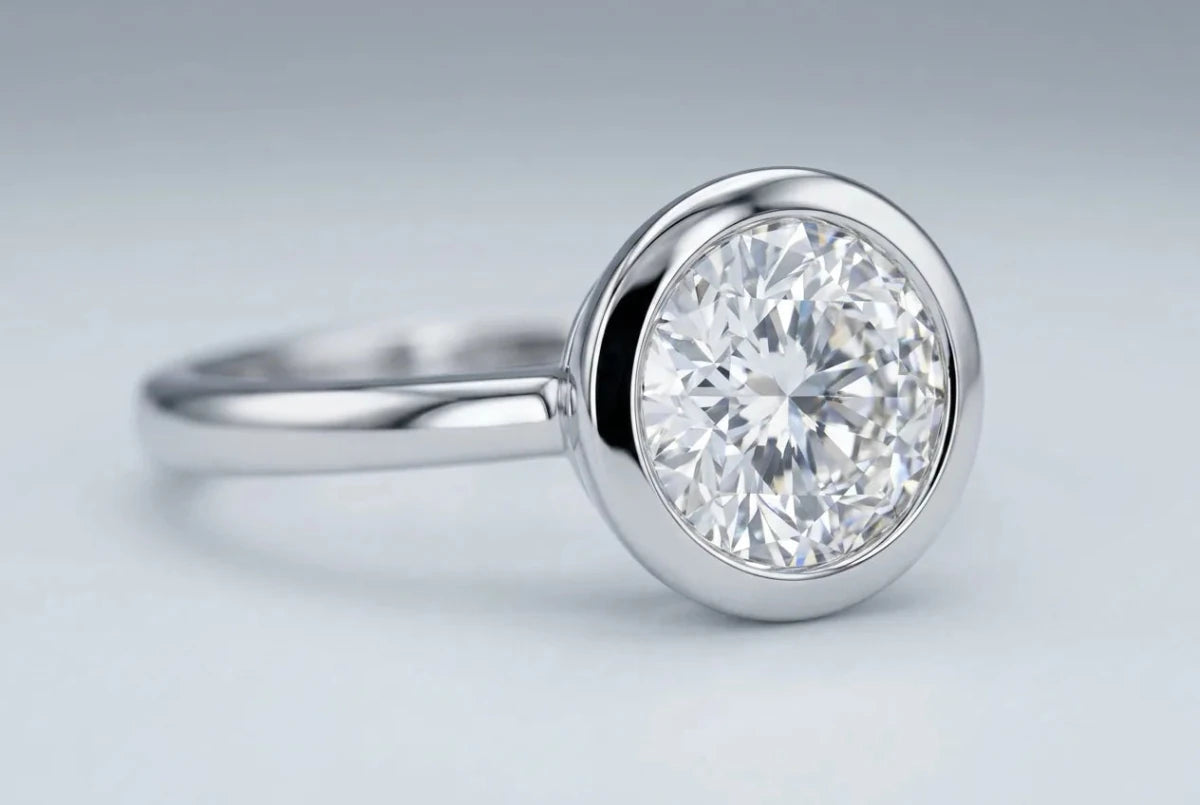
A rim of metal is shaped to one individual stone and folded over its edge. That edge is the girdle, the thin band around the widest part of a diamond, and it's where a diamond chips. A bezel covers the girdle completely, so there is nothing to catch on a sweater and nothing to hook a glove. Bezels take a setter longer than prongs, because the rim has to be fitted to that one stone and no other. A partial bezel leaves the sides open for more light, which is a fair trade if the ring isn't going to work for a living.

A flush setting, also called a gypsy setting, drops the diamond into a seat cut in the band so its top face sits level with the metal surface. Nothing stands above the surface at all, which makes it the most protected placement there is and the quietest looking. You'll see it mostly on men's bands and on accent stones patterned into a band. A flush setting engagement ring does exist, but sinking a center diamond into metal hides most of the stone, and people who want that clean a look are usually happier with a low bezel.
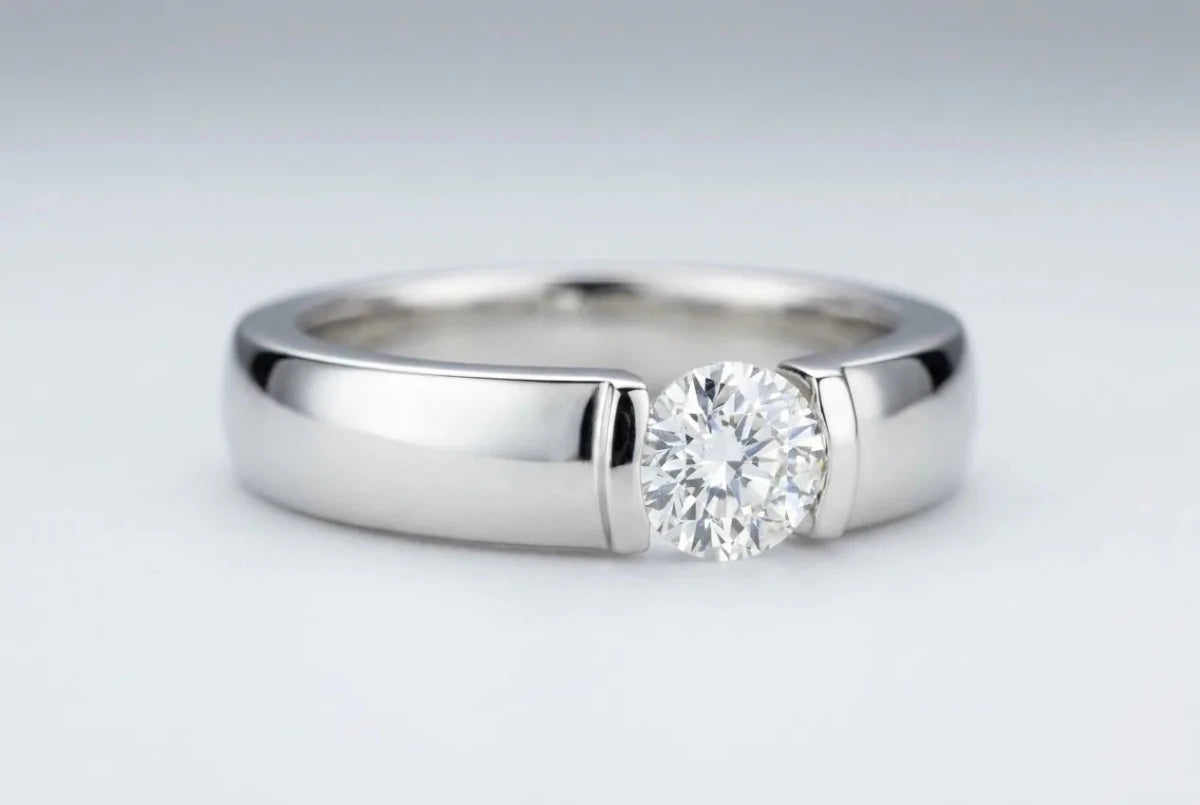
The band's own spring pressure grips the stone between its two ends, so the diamond looks like it's floating. It's the most striking of the four and the least forgiving. A hard knock can shift the stone, and the tension is calibrated to one exact finger size. Get the size right the first time.
At a Glance
| Technique | Security | Sparkle | Upkeep | Best for |
|---|---|---|---|---|
| Prong | Good | Maximum | A prong check every year or two | Engagement rings where brilliance comes first. |
| Bezel | Maximum | Moderate | Nearly none | Hands-on work and everyday wear without worry. |
| Flush | Maximum | Subtle | None | Accent diamonds and men's bands. |
| Tension | Delicate | High | Cannot be resized; handle with care | A modern statement piece, worn thoughtfully. |
Say It Any Way You Like
Most people describe a setting rather than name it. “Holds the diamond up high” is a cathedral mounting. “Doesn’t catch on anything” is a bezel. Here is the translation.
| What you might call it | What a jeweler calls it | Where you see it |
|---|---|---|
| “holds the diamond up high” | cathedral or high-basket mounting | prong engagement rings |
| “sits flat and doesn’t catch” | low setting, bezel or flush | everyday and working hands |
| “diamonds all the way around” | eternity band | anniversary and wedding bands |
| “little diamonds all over the band” | pavé | engagement rings, wedding bands |
| “a circle of small diamonds around the big one” | halo | engagement rings |
| “diamonds in a groove between two metal edges” | channel setting | wedding and anniversary bands |
| “the diamond is inside the metal, flat on top” | flush or gypsy setting | men's bands, accent stones |
| “the metal part on its own” | mounting, or setting | see the note below |
Height is the thing customers describe most and name least. A cathedral mounting carries the stone up on two arches of metal. A basket holds it in a cage of wire underneath. A low setting drops it close to the finger. High settings show the stone from the side and let more light through it, and they also sit above the knuckle line, which is exactly where sleeves, gloves and hair find them. If the ring is going on a hand that works, ask for the lowest setting that still shows the stone.
One note on settings sold without a stone. Some jewelers sell an empty mounting and let you supply the diamond. We don't. Every PrimeStyle ring is made complete in our own US factory, with our own diamonds set at our bench, and we don't set stones that came from somewhere else. If the setting you want isn't on the site, send our jewelers the idea or the sketch and they will design it from scratch.
Part Two
A technique holds the stone. A style is the design of the whole ring. These seven cover nearly every diamond ring made, and the unique engagement ring styles are combinations of these seven, not a separate category.
One diamond, one band, nothing else. The classic engagement ring, and it puts the entire budget and all the attention on a single stone.
Suits: a high-quality center stone that can stand alone.
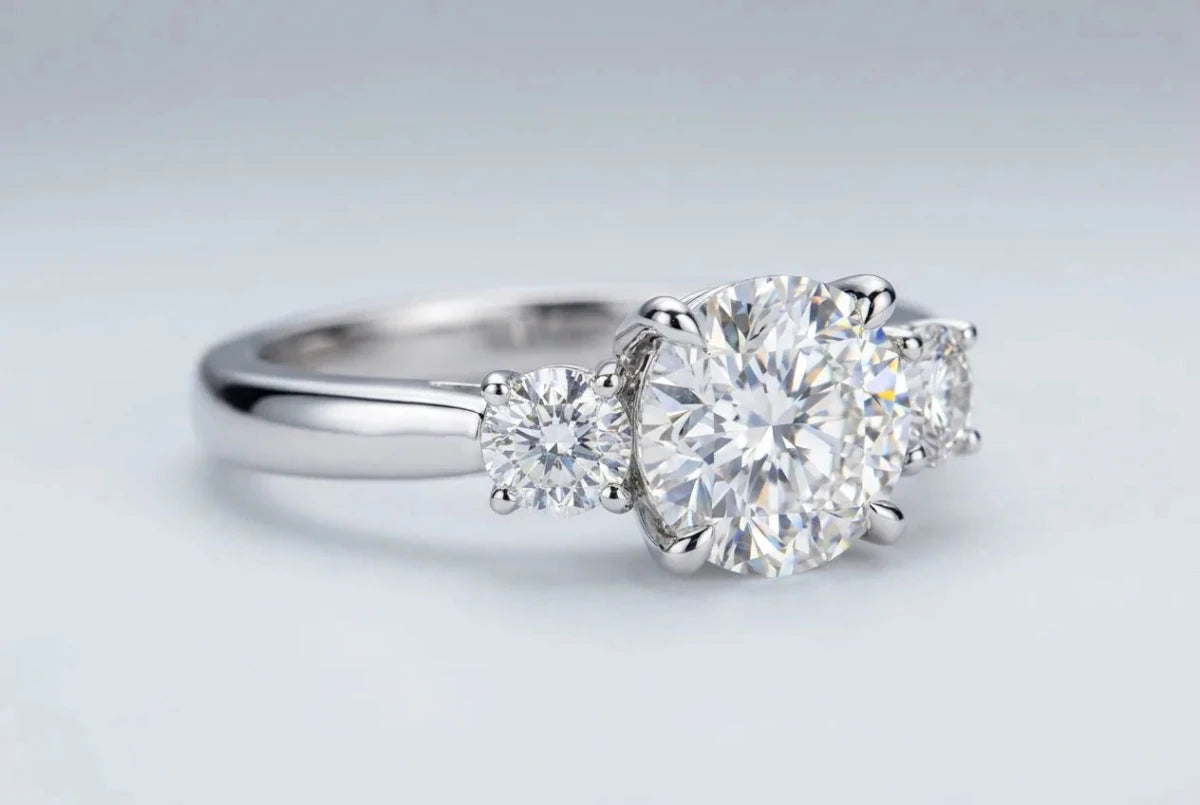
A center diamond flanked by two smaller ones, traditionally read as your past, present and future. The side stones also make the center look larger than it measures.
Suits: anniversaries and engagements with a story to tell.

A circle of small diamonds surrounds the center stone, adding a full size of visual spread. The most effective way to make a stone look bigger than its carat weight.
Suits: maximizing presence on a budget.
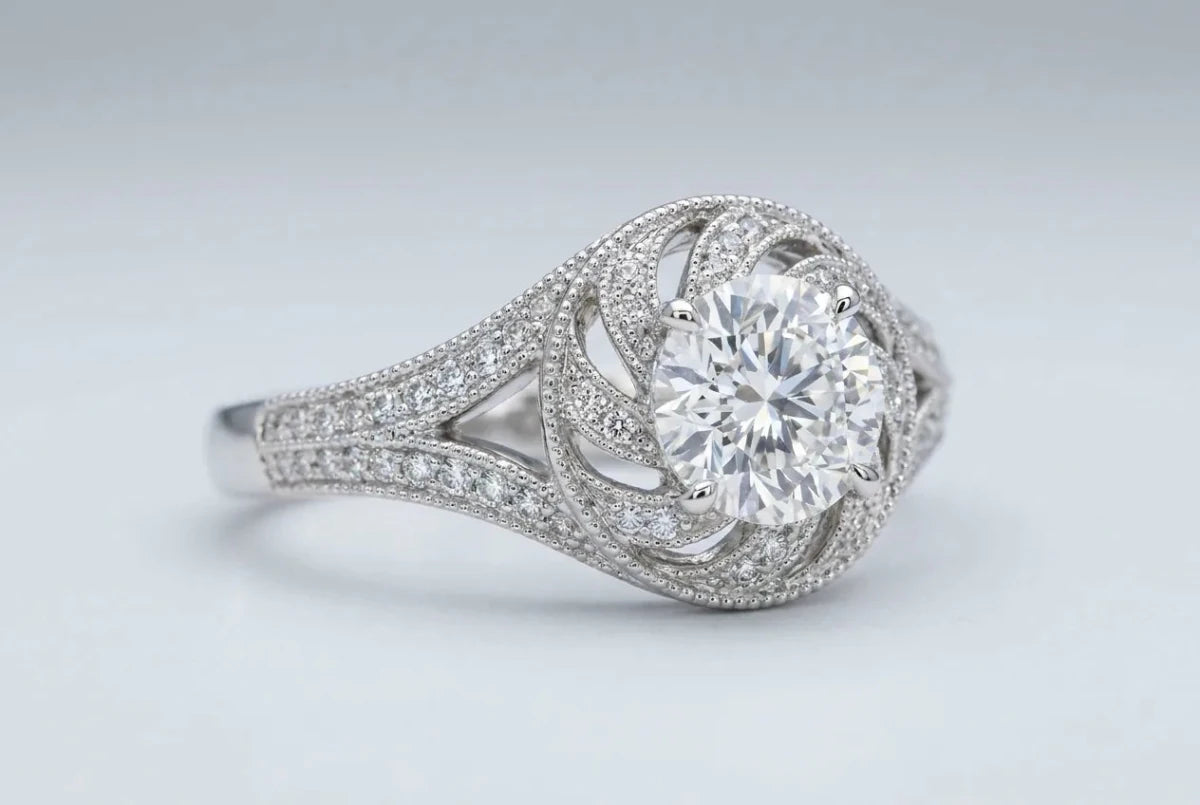
The top of the line: a two-carat-or-larger center diamond inside ornate, fully worked metal set with dozens of smaller stones. Designed as one piece of art rather than a stone on a band.
Suits: once-in-a-lifetime pieces.

A row of diamonds runs inside a channel between two unbroken rails of metal. Nothing stands proud of the surface, so nothing snags. Those unbroken rails are also why a channel band only resizes a little.
Suits: wedding bands and stacking rings.

Like channel, but each diamond is held by short vertical bars of metal with its sides left open. More light through the stones, and a rhythm of metal and diamond around the band.
Suits: bands that should sparkle harder than channel.

Dozens of tiny diamonds set nearly edge to edge so the metal surface reads as continuous sparkle. Each stone is held by small beads of metal raised with a graver, and those beads are small by design, so a hard knock can loosen one. After prongs, pavé is the second thing that comes back to us. It's still worth it for what it does to the whole piece.
Suits: maximum brilliance across the whole piece.
See these settings in finished rings: engagement rings, bridal sets, solitaire rings, halo rings, three-stone rings, eternity rings, wedding bands, anniversary rings and men's rings. Every one is made to order and set by hand in our own US factory.
The Short Answer
Choose bezel or flush, and keep the setting low. The stone sits inside metal, nothing snags on gloves or tools, and upkeep is close to zero.
Choose prong for the center stone with pavé or a halo around it. The less metal in front of a diamond, the more light comes back out of it. Take the prong check every year or two as part of the deal.
Choose tension or a low bezel. Clean lines, no claws. Just know a tension ring can't be resized at all, so get the size right first. Still torn? Contact us and tell us how the ring will be worn.
Quick Answers
Still Deciding?
Every PrimeStyle ring is set by hand in our own US factory, and we've been making them since 2001. Tell us how the ring will be worn and we'll tell you plainly which setting fits and which one to skip. Want something that's not on the site? Send an idea or a sketch and our jewelers will design it from scratch.