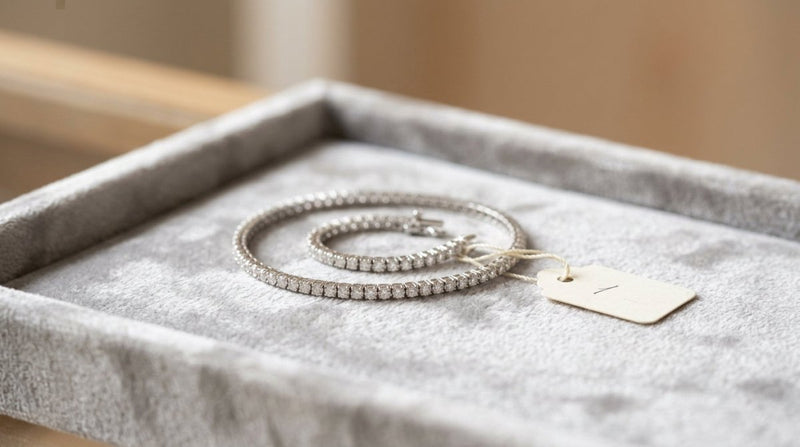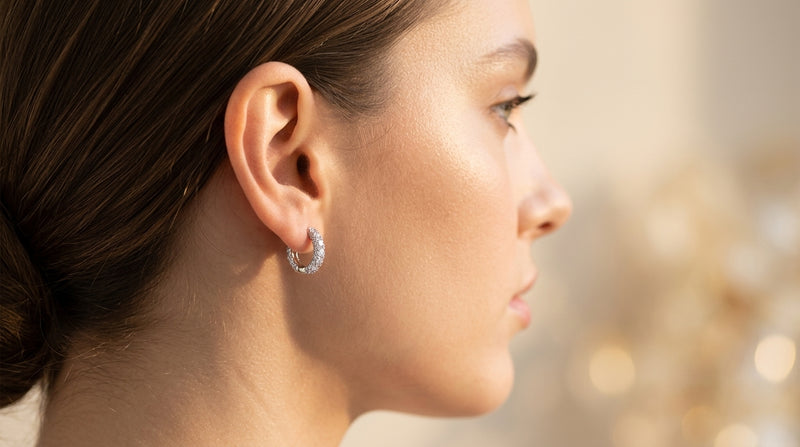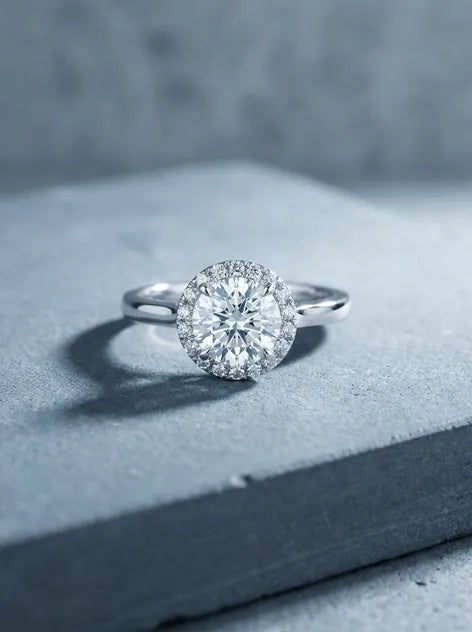
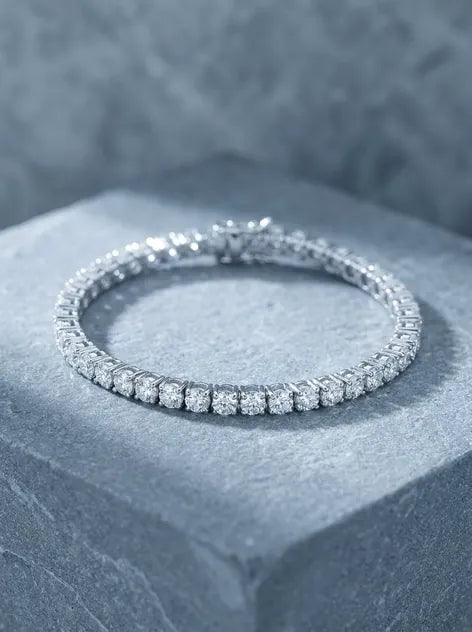

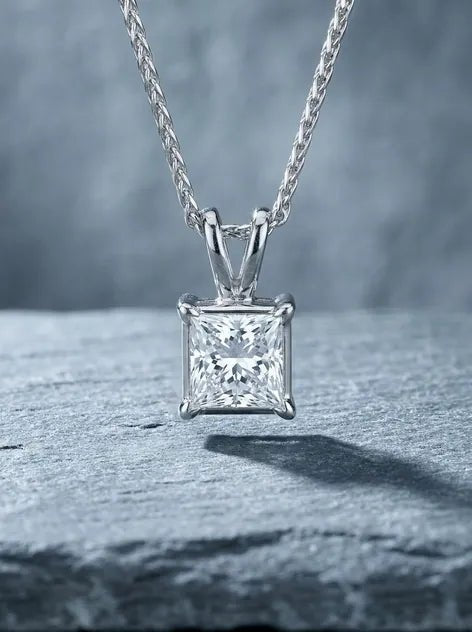


A tennis bracelet is a flexible line of matched diamonds, each stone set in its own small metal link, running in one unbroken row around the wrist. That's the whole definition: one row, matched stones, and enough flex to drape with the wrist instead of sitting rigid like a bangle. Put a 3 carat tennis bracelet next to a 3 carat pendant and the bracelet reads quieter, because the weight is spread across dozens of small diamonds instead of concentrated in one big stone. That evenness is the entire point of the design.
What separates a tennis bracelet from every other diamond bracelet is consistency. The stones are matched for size, color, and clarity, so your eye doesn't stop on any single diamond. It reads as one continuous line of light. Jewelers called this a line bracelet or an eternity bracelet for most of the 20th century. Then tennis happened to it, and the old names never recovered.
Why Is It Called a Tennis Bracelet?
It's called a tennis bracelet because of Chris Evert. During a US Open match in the 1980s, the diamond line bracelet she wore on court snapped, and she asked the officials to stop play so she could find her diamonds. The cameras were rolling, the story ran everywhere, and shoppers started walking into jewelry stores asking for "the tennis bracelet." The industry took the hint and renamed the whole category.
The design itself is much older than the name. Diamond line bracelets show up through the Art Deco years and earlier. Evert didn't invent the bracelet; she gave it a story, and the story stuck because it says something true about the piece: it's real jewelry you can actually live in. She was wearing serious diamonds while playing professional tennis. That's the durability claim, told as an anecdote.
What Are the Main Tennis Bracelet Styles and Settings?
The setting decides how the bracelet looks and how it survives daily wear. These are the four you'll actually see:
- Prong-set: Three or four small claws hold each diamond, leaving most of the stone open to light. It's the classic look and the sparkliest option, because light enters from the sides as well as the top. The trade-off is that prongs can catch on knits and need a checkup now and then.
- Bezel-set: A thin metal rim wraps each stone completely. You give up a little brilliance and gain a smooth, snag-free edge that shrugs off daily knocks. If the bracelet is going to live on the wrist through workouts and school runs, this is the practical pick.
- Channel-set: The diamonds sit in a metal channel with no dividers between them, so the row looks like a single ribbon of stones. Very sleek, very secure, slightly less fire than prongs.
- Half-bezel: Metal wraps two sides of each stone and leaves two open. It splits the difference: more light than a full bezel, more protection than prongs.
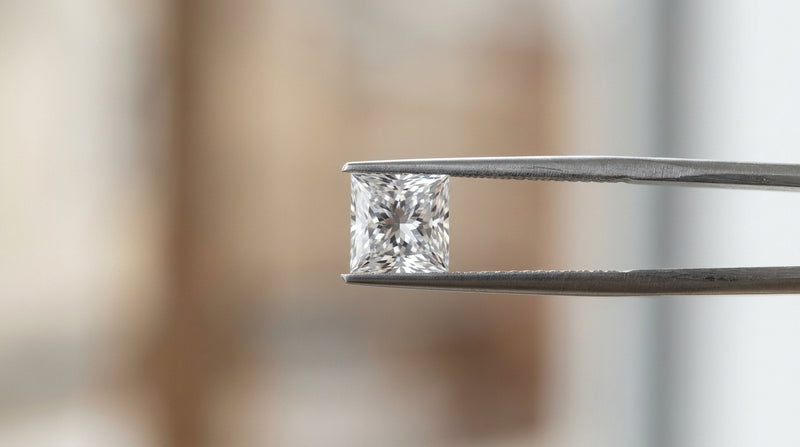
Round brilliant is the standard stone shape because it hides small quality differences well in a long row. Princess, emerald, oval, and marquise versions exist, and some designs alternate shapes for a more editorial look. My honest take from the bench: round stones in a three-prong setting give you the most sparkle per dollar, and that's what I'd point most first-time buyers toward.
Gold Tennis Bracelets: Should You Choose Yellow, White, Rose, or Platinum?
The same row of diamonds looks noticeably different depending on the metal under it. In white gold or platinum, the whole bracelet reads as one icy line, because the metal disappears behind the stones. In yellow gold, you get contrast: the warm links frame each diamond and the piece reads richer and a little more vintage. Rose gold does the same with a softer, pinker cast.
None of these is the "correct" choice. Match the metal to what's already on the wrist and hand. If she wears a yellow gold watch and yellow gold rings, a white gold tennis bracelet will look like a guest. Platinum costs more than 14K gold for the same design because the metal is denser and pricier per gram; it doesn't make the diamonds sparkle more. That's worth saying plainly, because plenty of shoppers assume otherwise.
Real Diamonds vs. Swarovski and Crystal Tennis Bracelets: What's the Difference?
A Swarovski or crystal "tennis bracelet" is cut glass in a plated setting, and it usually costs less than dinner for two. A real diamond tennis bracelet, natural or lab-grown, is a different object: the stones are harder than almost anything they'll ever touch, so they keep their polish and sparkle for decades. Crystal scratches, clouds, and loses its coating with wear. That's not a knock on crystal; it's a fair product at its price. But the two shouldn't be compared as versions of the same thing.
Here's the practical difference ten years in: the diamond bracelet still throws light across the room, and the crystal one lives in a drawer. To know what you're buying, get the specs in writing: total carat weight, stone origin (natural or lab-grown), and the metal stamp (14K, 18K, or platinum). A seller who won't put those three things on paper has answered your question already.
How Do You Buy a Tennis Bracelet? Five Things to Check
- Total carat weight: Tennis bracelets are priced by the combined weight of all stones, not per diamond. A 3 carat total weight bracelet might carry 45 small stones. Bigger individual stones mean fewer links and a bolder line; smaller stones mean a finer, more delicate row at the same total weight. Our price guide on how much a tennis bracelet costs breaks down what each weight tier actually buys.
- Quality balance: In a row of small stones, cut and overall whiteness matter more than chasing top clarity grades. Tiny inclusions that would bother you in a 1 carat solitaire are invisible in a 0.07 carat bracelet stone. Don't pay solitaire-grade premiums for stones nobody can inspect.
- Length and fit: A tennis bracelet should sit close, with room for one finger between bracelet and wrist. Too loose and it slides over the hand and takes more abuse. Measure before you order; our bracelet size chart shows how to do it at home in two minutes.
- Clasp and safety: Look for a box clasp with a safety latch, or a hidden clasp with a figure-eight lock. This is the part of the bracelet that failed on Chris Evert. It's worth thirty seconds of your attention.
- Natural or lab-grown: Both are real diamonds with the same hardness and sparkle. Lab-grown stones consistently reach very high color and clarity grades and cost meaningfully less at the same weight, so the same budget buys a heavier row. Natural stones carry the traditional provenance some buyers want. Neither choice is wrong; decide which story you're buying.
Browse our diamond bracelets to see these settings and weights side by side. We've manufactured in our own US factory since 2001 and sell factory-direct, so the prices skip the middleman markups a mall jeweler builds in. And if you're still deciding between a bracelet and another piece entirely, our guide to the types of bracelets maps the whole category in one read.
FAQ
What is the difference between a bracelet and a tennis bracelet?
A tennis bracelet is one specific type of bracelet: a flexible, continuous row of matched diamonds, each in its own link. "Bracelet" covers everything else too, from bangles and cuffs to chains and charm bracelets. Every tennis bracelet is a bracelet; almost no other bracelet qualifies as a tennis bracelet.
What does gifting a tennis bracelet mean?
The unbroken line of stones is usually read as continuity: love or commitment without a gap in it. That's why tennis bracelets are a go-to for milestone anniversaries, big birthdays, and push presents. There's no rulebook here, though. It means what the giver says it means.
Which wrist do you wear a tennis bracelet on?
There's no rule. Most people wear it on the non-dominant wrist because it takes fewer knocks there, and that's what I'd suggest for daily wear. If you wear a watch, the opposite wrist keeps the bracelet from scratching the watch case.
Why is the tennis bracelet so popular?
Because it's the rare diamond piece that works everywhere. It doesn't shout, it layers with a watch or other bracelets, and it never reads as costume. A design that survives forty years of trend cycles without changing isn't lucky; it's just right.