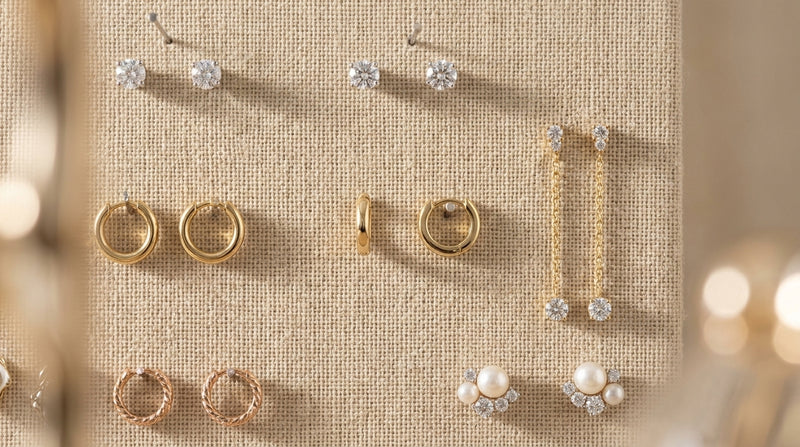


Huggie earrings are small hoops, usually 6 to 15 mm across, that close snugly around the earlobe instead of hanging below it. The name is literal: the hoop hugs the lobe. Where a classic hoop shows open air inside the circle and moves when you do, a huggie sits still and close, more like a ring for your ear than a pendant hanging from it.
That one difference in fit explains the whole trend. Huggies are comfortable enough to wear around the clock, they don't snag, and they layer beautifully across multiple piercings. If studs are the jewelry you forget you're wearing, huggies are the hoops you forget you're wearing, and that combination didn't really exist before they took off.
What Makes an Earring a Huggie?
Three things make a huggie a huggie: small diameter, snug fit, and a band that's thicker than a typical hoop's wire. The diameter is the defining one. Most huggies run 6 to 15 mm; once a hoop clears about 20 mm, it hangs visibly below the lobe and it's just a small hoop. The thickness matters too. A huggie's band is usually 1.5 to 3 mm wide, which gives it that solid, sculpted look and leaves room for a row of set diamonds.
The construction is simple and self-contained: the hoop opens, wraps through the piercing, and closes back into itself flush. There's no separate piece to fumble with or lose down a sink drain, which is a real advantage for anyone who's ever crawled under a bathroom vanity looking for half of an earring.
Huggie vs Hoop Earrings: What's the Real Difference?
The real difference is where the earring lives. A hoop hangs from the piercing; a huggie wraps around the lobe. Everything practical follows from that:
- Movement: Hoops swing, huggies don't. If you want motion and flash, get hoops. If you want a clean fixed line of metal or diamonds, huggies.
- Snag risk: Huggies sit so close to the ear that hair, scarves, headphones, and pillows slide right past. Larger hoops catch all four.
- Presence: A 40 mm hoop is an outfit decision. An 8 mm huggie goes with everything you own, the way studs do.
- Stacking: Huggies were built for the multi-piercing era. Two or three sizes stacked up the ear look intentional; stacked large hoops mostly look crowded.
Neither is better; they're different tools. Plenty of people own both and treat huggies as the weekday pair and hoops as the weekend pair. For the full map of where these two sit among studs, drops, and dangles, see our types of earrings guide.
Huggie Sizes: What Do the Millimeters Mean on the Ear?
Huggie listings quote inner or outer diameter in millimeters, and a couple of reference points make the numbers real. At 6 to 8 mm, the huggie grips just the pierced edge of the lobe; this is the size for second and third piercings. At 9 to 12 mm, the hoop wraps most of an average earlobe, the classic huggie look. At 13 to 15 mm, you get a slightly relaxed fit with a sliver of air showing, halfway to a small hoop.
If you're between sizes, go smaller. A huggie that's slightly snug looks intentional; one that's slightly big hangs off the lobe and loses the hugging effect that defines the style.
Gold Huggie Earrings: Should You Pick 14K or 18K?
Gold huggie earrings come mostly in 14K and 18K, and for a piece you'll wear constantly, the difference is worth understanding. 14K gold is 58.5 percent pure, harder, and more scratch-resistant, which suits an earring that gets slept on, showered near, and knocked by headphones. 18K gold is 75 percent pure, with a richer, warmer color, and it's softer. For a huggie worn daily and rarely removed, 14K is the practical pick; 18K is the pick when the deeper gold color matters more to you than maximum durability.
Color is a separate choice from karat: yellow, white, and rose gold all work in huggie form. Yellow gold is the signature huggie look right now, and rose gold huggies stack especially well against yellow ones if you're building up multiple piercings.
Diamond Huggies: How Does a Small Hoop Deliver Real Sparkle?
Diamond huggies set a row of small stones along the face of the hoop, so the earring reads as a continuous arc of light around the lobe. Because the stones are small and channel- or pave-set, diamond huggies deliver noticeable sparkle at a fraction of what the same visual impact costs in studs. It's the same principle that makes pave bands popular: many small diamonds set close together punch above their combined weight.
One honest note: small accent stones are about the arc of sparkle, not about individual stone presence. If what you want is one significant diamond per ear, that's a studs decision, and our diamond stud size chart will serve you better than any huggie.
How Do You Wear Huggie Earrings?
Wear huggies alone, stacked, or mixed, and don't overthink it. The style is forgiving. A single pair in the main lobe piercing is the clean default. With multiple piercings, stack sizes downward: the largest huggie in the lowest piercing, smaller ones climbing up. Mixing one diamond huggie with plain gold ones keeps a stack from looking busy.
Can you leave them in all the time? Mostly, yes; that's what the style is built for. They're low-profile enough to sleep in comfortably, and most people wear them for weeks straight. Two caveats from the bench: take them out before pools and hot tubs, because chlorine is genuinely hard on gold alloys, and give them a regular wash, since anything worn nonstop builds up skin oil and shampoo film that dulls both gold and diamonds.
If huggies sound like your style, browse the hoops and huggies in our diamond earrings collection, made in our own US factory since 2001 and priced factory-direct, without the middleman markup that usually sits on top of everyday gold.
FAQ
What does huggie mean in earrings?
"Huggie" describes how the earring fits: the small hoop closes snugly around the earlobe, hugging it, rather than hanging below it. The term is about fit, not about material or stone.
What is the main difference between hoop and huggie earrings?
Size and fit. Hoops hang from the piercing with open space inside the circle; huggies are small enough (typically 6 to 15 mm) that the hoop wraps the lobe itself and barely moves.
What is the difference between huggie and sleeper earrings?
Sleepers are thin, plain hoops originally worn to keep new piercings open, including overnight. Huggies are thicker, more sculpted, and often diamond-set. A huggie is comfortable enough to sleep in, but it's a jewelry piece first; a sleeper is a utility piece first.
Can you wear huggie earrings all the time?
Yes, continuous wear is what huggies are designed for; they sit too close to the ear to snag on much. Remove them for chlorinated water, and clean them regularly, because constant wear builds up oils that dull the metal and stones.
Do you need pierced ears for huggie earrings?
Yes. A huggie passes through a standard lobe piercing, so the style requires pierced ears. The good news is that a regular, fully healed lobe piercing is all it takes; no special piercing size is needed.