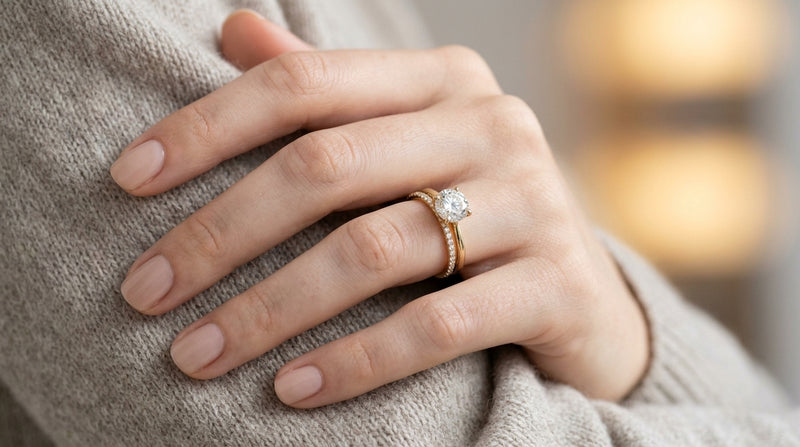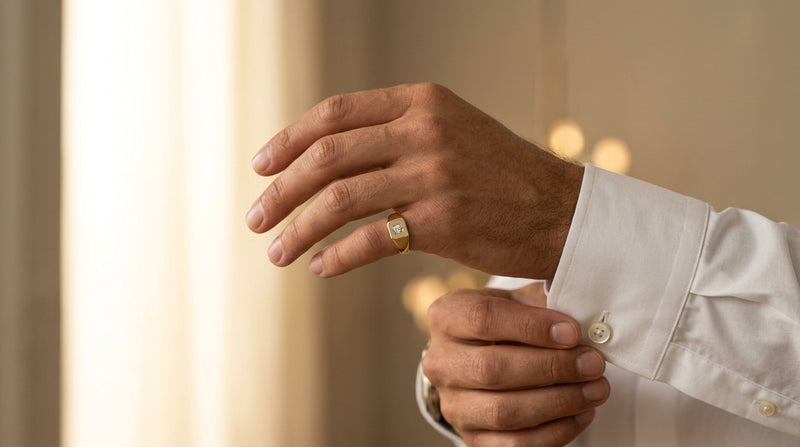
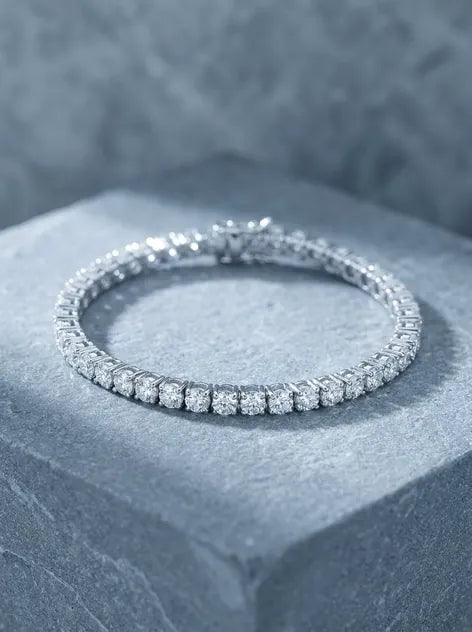
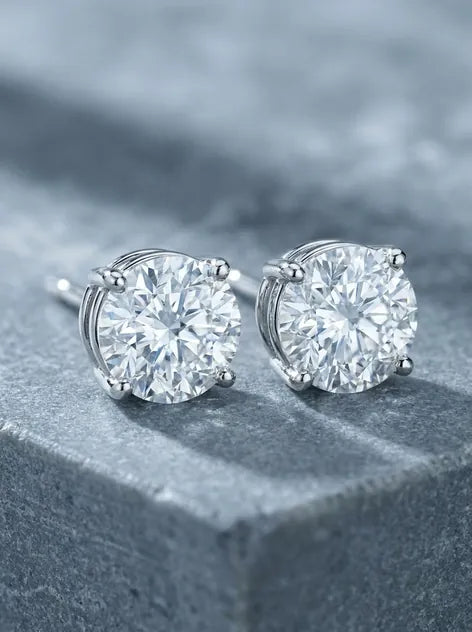
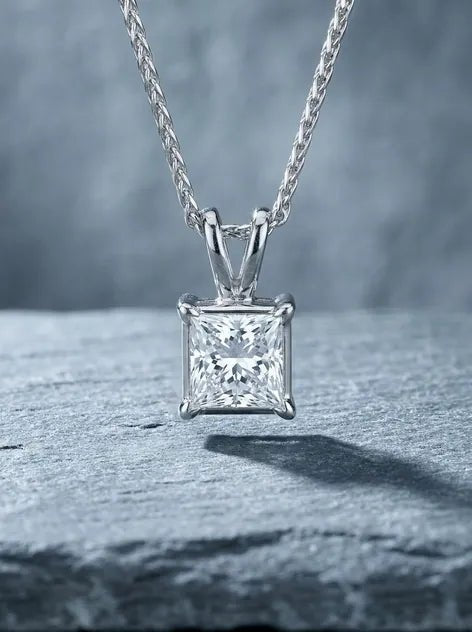


White gold is yellow gold alloyed with white metals, usually palladium, nickel, or silver, which shift its color to a cool silvery tone and make it denser and stronger. White gold rings have a modern, clean look that has made them the most popular choice for engagement rings and everyday wear. The metal costs less than platinum while giving nearly the same appearance; the trade-off is a thin rhodium plating that wears away and needs renewing, typically every year or so. Two karat grades cover most rings: 14K at 58.3 percent gold and 18K at 75 percent gold, the higher alloy content of 14K actually makes it the tougher of the two. One caution: nickel-based white gold can irritate sensitive skin, so anyone with a metal allergy should choose a palladium-based alloy instead. Because the color is neutral, white gold flatters every gemstone, sapphire, ruby, or diamond, which is why it remains the practical alternative to platinum for buyers who want the look without the price.
White gold was first developed in the 19th century, but it became widespread around World War II, when platinum was scarce and jewelers alloyed yellow gold with nickel or palladium to reproduce that silvery tone.

What Are the Popular Styles of White Gold Rings?
The five popular styles of white gold rings are the solitaire, the halo, the three-stone, vintage and Art Deco designs, and stackable bands:
- Solitaire Rings: The name comes from the Latin "solitarius," meaning alone, one gemstone as the whole focus of the ring. Prong, claw, or bezel settings hold the stone, and the white metal keeps all attention on it. This is the default engagement style for good reason.
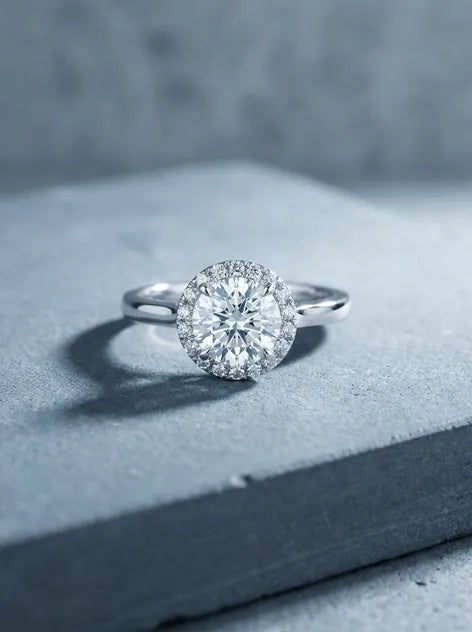
- Halo Rings: Small pavé diamonds encircle the main stone, boosting sparkle and making the center look larger. In white gold the halo and band blend into one continuous field of light.
- Three-Stone Rings: One main gemstone with a smaller stone on each side. The flanking stones frame the center diamond and shield its edges from knocks and friction.
- Vintage & Art Deco Styles: Milgrain borders and filigree metalwork give these rings an heirloom character while the cool white metal keeps them current. Vintage rings suit buyers who want intricate detail rather than minimalist polish.
- Stackable Rings: Several slim bands worn together and rearranged at will. The bands can be plain or gem-set, and the stack can grow over the years, one band per anniversary is a common tradition.
Which Gemstones Pair Best with White Gold Rings?
Diamonds, sapphires and rubies, emeralds, lab-grown stones, and colored diamonds all pair beautifully with white gold rings:
- Diamonds: The classic pairing, a colorless diamond looks brightest against silvery white metal bands, with no warm tint bleeding into the stone. This combination dominates engagement and wedding jewelry because it simply never looks dated.
- Sapphires & Rubies: Blue sapphire and red ruby both stand out sharply against a white band. Each carries traditional meaning, royalty and divinity for sapphire, love and courage for ruby, and both are hard enough for daily wear.
- Emeralds: Green against white reads fresh and crisp, where the same stone on yellow gold can look muted. If you want an emerald's color at full strength, white gold shows it better than any warm metal.
- Lab-Grown Stones: Grown in controlled conditions and available in nearly any color, lab-grown gems appeal to buyers who care about sourcing. A white gold metal band gives them the same neutral stage it gives mined stones.
- Colored Diamonds: Yellow, pink, orange, even red, white gold flatters fancy-colored diamonds without competing with them. The neutral band also means the stone can be swapped or upgraded later while the ring itself stays.
What Are the Advantages of White Gold Rings?
White gold's advantages are its timeless look, everyday durability, hypoallergenic alloy options, versatility with any gemstone, and a price well below platinum:
- Modern & Timeless: The cool silvery color has never cycled out of fashion the way warmer trends do. A white gold ring bought today will look right in thirty years.
- Durable & Long-Lasting: The alloying metals make white gold harder than pure gold, so it stands up well to daily wear. With basic care and periodic replating, a ring keeps its finish for decades.
- Hypoallergenic Options: Because white gold is a blend of several metals, the recipe can be adjusted. Skip nickel if you have sensitive skin and choose a palladium-based alloy, you get the same color with far less risk of irritation.
- Versatile Pairing: The neutral tone works with every gemstone color and every occasion, from engagement to everyday. Few metals let you change stones over time without the band ever clashing.
- Cost-Effective Luxury: White gold delivers the platinum look at a distinctly lower price. Its value tracks its actual gold content, 58.3 percent in 14K, 75 percent in 18K, so the karat you choose sets the cost.
How Can You Choose the Perfect White Gold Ring?
Choose a white gold ring by matching it to its purpose, picking a skin-safe alloy, pairing the right gemstone, settling the design and finish, and accepting the replating schedule:
- Consider Ring Purpose: Decide whether the ring is for an engagement, a wedding, or everyday fashion. White gold handles all three, but the purpose should guide how sturdy the setting and band need to be.
- Select the Right Alloy: Ask what the white gold is alloyed with. Nickel-free, palladium-based white gold is the safe choice for anyone with sensitive skin.
- Gemstone Compatibility: Diamond, sapphire, ruby, and emerald all sit comfortably on a white band. Pick the stone for its meaning and hardness rather than worrying about color clash, there won't be one.
- Ring Design & Finish: Choose the setting style first, then the surface, high polish for maximum shine, or a matte finish for a quieter, more subtle look. Both wear well; it is purely a matter of taste.
- Durability & Maintenance: Budget for rhodium replating roughly every year or two to keep the bright white finish. It is a quick, inexpensive service, but it is part of owning white gold.
What Are the Care & Maintenance Tips for White Gold Rings?
Care for white gold rings by washing them every few weeks in warm water with mild soap, scrubbing gently with a soft-bristle brush, rinsing, and patting dry with a soft cloth. Take rings off before showering or cleaning so the rhodium layer isn't exposed to harsh chemicals. Schedule a professional cleaning and inspection every six months, replate the rhodium when the finish starts to yellow, and have any loose prong or worn bezel repaired before the stone can shift. Store each ring in its own box or pouch, kept apart from other jewelry, white gold stays scratch-free far longer.