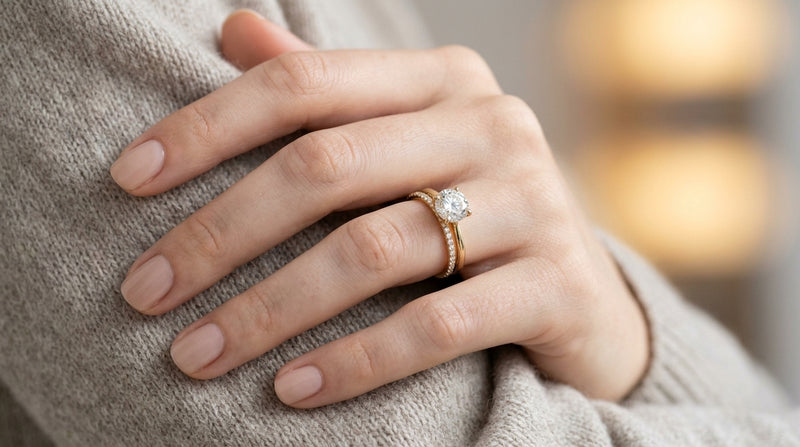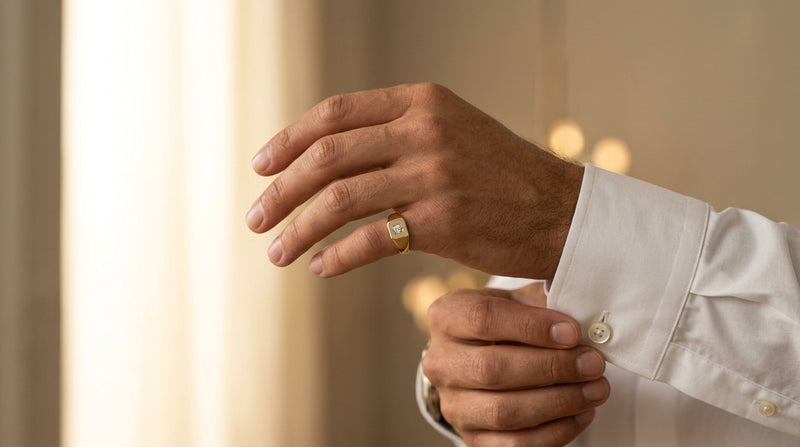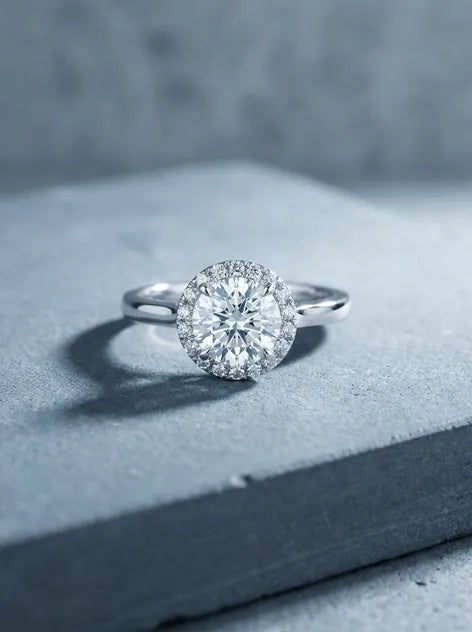


Stackable rings are designed to be worn together, several bands on one finger, or spread across the hand, for a look you compose yourself. The idea grew out of mix-and-match jewelry: combine different metals, stones, shapes, and widths until the stack says something personal. A thicker band next to a thin one creates balance; a gemstone ring in the middle creates a focal point. The style's popularity comes from that versatility. A stack can shift with your mood, mark milestones and relationships one ring at a time, and move easily between casual, office, and formal dress.
What Are the Different Types of Stackable Rings?
The five main types of stackable rings are plain metal bands, gemstone rings, eternity bands, engraved rings, and themed designs.
- Plain Metal Bands: These thin, simple rings, usually yellow, rose, or white gold, are the most versatile bands in any stack. They give ornate pieces breathing room and act as the clean foundation the rest of the stack is built on.
- Gemstone Rings: A diamond or colored stone gives the stack its focal point. Many wearers choose stones for meaning as well as looks; a blue sapphire, for instance, is September's birthstone and a longtime symbol of loyalty and trust.
- Eternity Bands: A continuous line of stones runs around the whole band, standing for unbroken love and commitment. Stacked beside engagement and wedding rings, an eternity band adds a steady line of shimmer to the set.
- Engraved Rings: Initials, dates, and symbols cut into the metal, or the stone, make each band a small record. A stack of engraved rings reads like a timeline of dates, achievements, and people worth remembering.
- Themed Rings: Distinctive shapes give a stack its personality: V-shaped bands, braided and twisted designs, nature-inspired motifs, and open-ended rings all qualify. One or two of these among plainer bands keeps the stack interesting without tipping into clutter.
What Materials and Metals Are Used in Stackable Rings?
Stackable rings are most often made from gold, platinum, or sterling silver, with mixed-metal stacks and alternative materials rounding out the options.
- Gold (Yellow, White, Rose): Timeless and elegant, gold is soft in its pure form, around 2.5 to 3 on the Mohs scale, so it is alloyed with other metals for strength. Yellow gold brings a warm luster, rose gold gains extra durability from its copper content, and white gold delivers a bright, silvery finish.
- Platinum: Naturally silvery-white, platinum never needs rhodium plating and its density makes it strong, scratch-resistant, and noticeably heavier on the hand. Its purity also makes it hypoallergenic. Platinum rings suit daily wear and active lifestyles with minimal upkeep.
- Sterling Silver: At 92.5% pure silver, sterling offers a bright white luster at the friendliest price, a practical way to build a large stack without a large budget. It tarnishes over time, so it asks for regular polishing in return.
- Mixed Metals: Combining metals in one stack breaks the old matching rules and lets new rings work with jewelry you already own. Yellow gold, rose gold, and platinum can share a finger, and you can swap a platinum band for white gold whenever the mood changes.
- Alternative Materials: Designers reach beyond the classics to vary texture and price. Enamel fuses color onto metal for a playful, artistic touch, while titanium, lightweight, durable, and hypoallergenic, balances heavier platinum pieces in a mixed stack.
How to Mix and Match Stackable Rings Like a Pro?
Mix stackable rings like a pro by varying proportion, blending metals, adding texture, working in gemstones, and ordering the rings deliberately.
- Play with Proportion: Vary band thickness so the stack has rhythm instead of reading as one solid block. Limit yourself to a single bold ring as the focal point and surround it with slimmer bands.
- Blend Metals: Contrast is the fastest way to make a stack look intentional. Yellow, rose, and white gold together create a play of warm and cool tones that a single metal can't produce.
- Add Texture: Set smooth, polished bands against braided, twisted, or hammered finishes. Each surface catches light differently, so the stack stays interesting even without a single gemstone.
- Incorporate Gemstones: Stones bring color, sparkle, and meaning. Birthstones or favorite-colored gems add personal notes that tie the stack to the wearer rather than to a trend.
- Mind the Order: Placement changes the whole effect. Put statement pieces, intricate designs, and larger stones at the center of the stack or toward the top of the finger, it looks balanced and sits more comfortably too.
How to Choose the Perfect Stackable Rings for Your Style?
Choose stackable rings by naming the style you want, minimalist, bold, romantic, comfortable, or luxurious, and letting that decision drive every pick.
- Minimalist Look: Stick to simple bands in a single metal tone. Clean lines and open space between rings do the work here; the restraint itself is the statement.
- Bold Statement: Pile on contrast, mixed colors, unusual shapes, a stack tall enough to notice across the room. This route suits anyone who treats jewelry as a conversation starter.
- Romantic Touch: Rose gold and floral engraving set the tone, and a red ruby on the band completes it with a shot of color and sparkle.
- Everyday Comfort: Build from plain, lightweight bands and durable metals that shrug off daily wear. Comfort compounds, a stack you forget you're wearing is a stack you'll actually wear.
- Luxury Appeal: High-end style comes down to materials and measured sparkle. A diamond or gemstone-accented piece anchors the stack and elevates everything around it.
When and How to Gift Stackable Rings?
Stackable rings make ideal gifts for anniversaries, birthdays, achievements, and self-gifting, because each new band adds to the story of the last one.
- For Anniversaries: Start with a simple band on the first anniversary and add a ring each year, building a stack that grows with the marriage. Milestone years call for milestone stones, a sapphire at five, a diamond at ten.
- For Birthdays: A birthstone ring matched to the recipient's birth month is the natural opener. Keep adding a ring on birthdays that follow, and the stack becomes a growing record of celebrations.
- For Achievements: Graduations, promotions, and new jobs all deserve a marker. One ring per milestone turns the stack into a résumé the wearer can glance at.
- For Self-Gifting: Building a stack one affordable band at a time is one of the easiest ways to enjoy fine jewelry without a single large purchase. A thin, simple band makes the right foundation.
How to Care for and Maintain Stackable Rings?
Keep stackable rings in shape with mild soap, separate storage, sensible wear habits, regular setting checks, and an annual professional cleaning. Wash the bands with mild soap and a soft cloth, using a brush for dust trapped between stones and textures. Store each ring separately so the bands don't scratch one another, and take the stack off before swimming or housecleaning. Press gently on any set stones now and then to confirm they're secure, and once a year let a professional give the whole collection a thorough cleaning and inspection.