

Custom-made rings are built from scratch around one person's preferences, style, and story rather than pulled from a standard catalog. They are most often commissioned for engagements, weddings, anniversaries, and other milestones, and many are designed to hold a specific memory or commitment in physical form. The process runs through a defined sequence between buyer and jeweler: consultation, material selection, CAD and 3D modeling, handcrafting, and finishing. The result is sized and shaped precisely to the wearer's finger, a ring that fits its owner in every sense.
What Are the Popular Styles of Custom-Made Rings?
The five popular styles of custom-made rings are solitaire or multi-stone designs, engraved rings, mixed-metal combinations, vintage-inspired pieces, and modern minimalist designs:
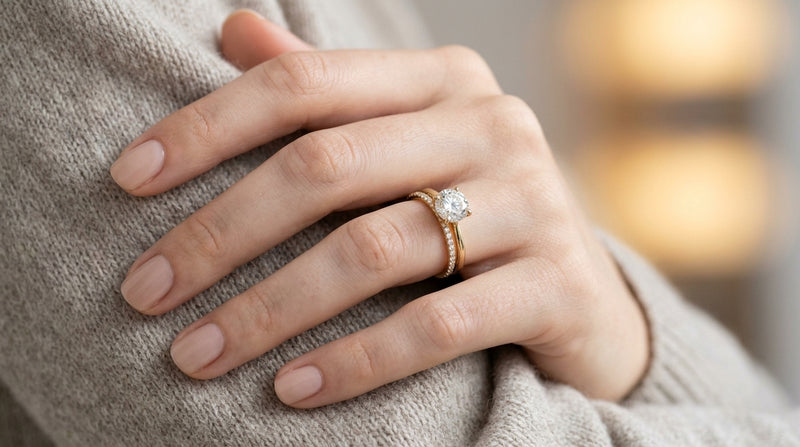
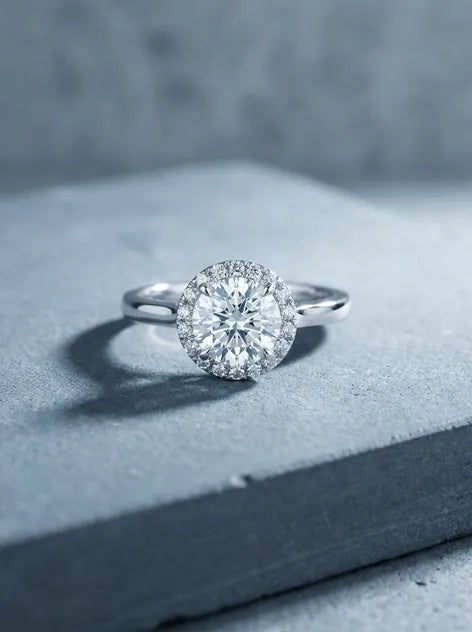
- Solitaire or Multi-Stone Designs: The classic route, either a single center stone for a bold, clean statement, or several stones arranged to a personal pattern. Multiple stones can boost the apparent size and brilliance of the center gem while keeping the design entirely yours.
- Engraved Rings: Engraving turns a custom design into something no one else can duplicate. A date, a name, or a private phrase cut inside the band stays hidden from everyone but the wearer, a quiet layer of meaning on top of the visible design.
- Mixed Metal Combinations: Dual metal rings pair yellow gold with white gold, platinum, or rose gold in a single band. The contrast looks bold and current, and many couples read the fusion of two metals as a symbol of their own.
- Vintage-Inspired Custom Rings: These designs borrow the intricate detailing and distinctive geometry of past eras. Art Deco symmetry, Edwardian lacework, and rebuild them with modern methods. You get the character of an heirloom in a ring made to today's standards.
- Modern & Minimalist Designs: Sleek lines, restrained detail, and carefully chosen finishes. A minimalist custom ring proves the point that personalization doesn't have to mean ornament; sometimes it means precision.
Which Gemstones Are Ideal for Custom Rings?
Diamonds, colored gemstones, lab-grown stones, birthstones, and multi-stone combinations are all ideal for custom rings:
- Diamonds: The most common centerpiece for engagement, wedding, and anniversary rings. Diamonds sit at the top of the Mohs hardness scale, so they take daily wear without complaint, and their neutral color works with any metal you choose.
- Colored Gemstones: Sapphires, emeralds, rubies, and topaz open the palette well beyond white. Each color carries its own meaning, sapphire for loyalty and trust, ruby for passion, which lets the stone itself say something about the wearer.
- Lab-Grown Stones: The right answer for buyers who care about a stone's origin. Lab-grown gems cost less than mined equivalents and come in a wide range of colors and cuts, which gives a custom design more room to move.
- Birthstones: A birthstone ties the ring to a specific person, the wearer or someone they love. Every birthstone has its own color and its own lore, which makes it a natural anchor for a personalized design.
- Multiple Gemstones: Combining stones of different colors, shapes, or sizes produces a design nobody else owns. A central diamond flanked by the wearer's birthstone is a classic example; a row of mixed colored gems is a bolder one.

How to Choose the Perfect Custom-Made Ring?
Choose a custom-made ring by defining your vision, selecting the metal, choosing the stones, nailing the size and comfort, and working with a skilled jeweler:
- Define Your Vision: Start with the purpose, an engagement ring, a wedding ring, or an anniversary piece, because that decides how durable and how formal the design must be. Then pick a direction: minimalist, vintage, modern, or classic.
- Select Metal Type: The metal sets the ring's durability, cost, and character. Gold is the classic choice and comes in white, yellow, and rose; platinum costs more but is naturally white and never needs rhodium plating to keep its color.
- Choose Gemstone(s): The stones are the centerpiece, so choose them for both durability and meaning. An active wearer needs a hard, well-protected stone; a color tied to the wearer's personality or birth month adds significance the design alone can't.
- Determine Ring Size & Comfort: Get sized professionally, ideally at more than one time of day, since fingers swell and shrink. The fit should be snug enough not to slip and loose enough not to pinch, and a smooth, rounded interior, a comfort fit, makes daily wear easy.
- Work with a Skilled Jeweler: Custom work lives or dies on the jeweler's craft and their willingness to listen. A good one draws out your ideas, pushes back where a detail won't work, and keeps your vision at the center of every decision.
Who Should Consider Custom-Made Rings?
Anyone who wants a ring that is genuinely one of a kind should consider a custom-made ring. It is the right path for people who value exclusivity, a signature piece no one else will ever wear, and for couples who want their own history worked into the design instead of choosing from standard options. Buyers drawn to meaningful symbolism, from birthstones to engraved dates, get the most out of the process.
How to Care for Custom-Made Rings?
Care for a custom-made ring with regular cleaning, sensible protection, setting checks, safe storage, and periodic professional maintenance:
- Regular Cleaning: Soak the ring in lukewarm water with a little gentle soap for about fifteen minutes, then work a soft-bristle brush into the setting to lift trapped oil and dust. Rinse and dry with a soft cloth.
- Protect from Damage: Take the ring off for exercise, gardening, cleaning with chemicals, and heavy lifting. Those few seconds of habit prevent most of the scratches and chips a ring ever suffers.
- Check Settings: Test the stones occasionally to confirm they sit tight. If anything wiggles, stop wearing the ring and have a jeweler tighten it before the stone works free.
- Store Safely: Keep the ring in its own pouch, box, or fabric-lined compartment. Diamonds and other hard stones will scratch softer metals and gems if pieces tumble together in a drawer.
- Professional Maintenance: Visit the jeweler every six to twelve months for cleaning, polishing, and inspection. They catch loose prongs and hairline cracks early, when the fix is small and the stone is still in place.