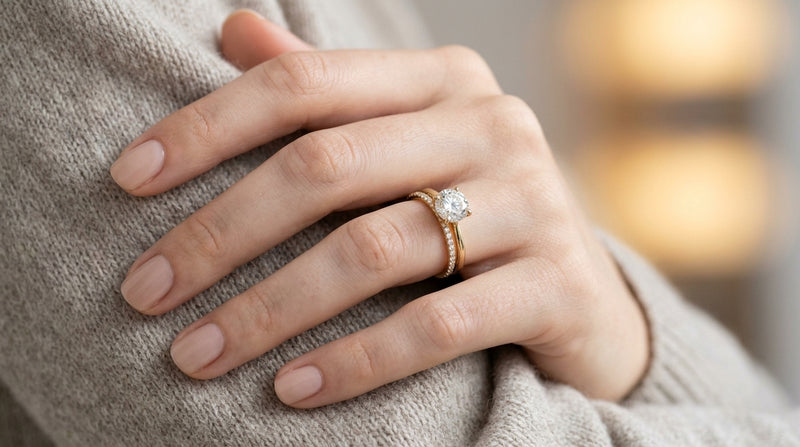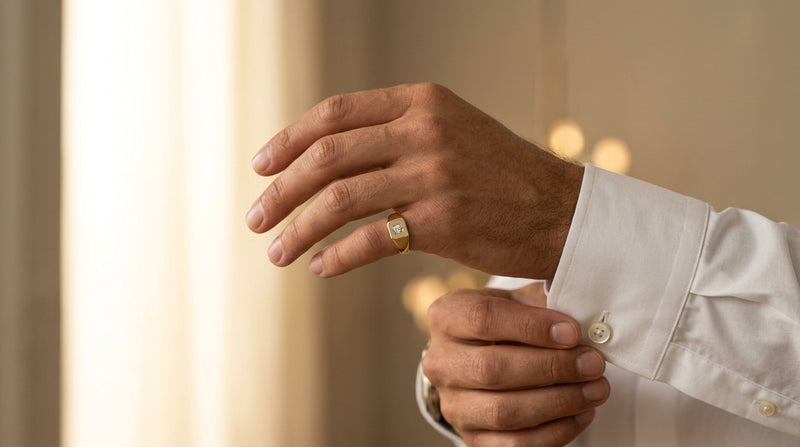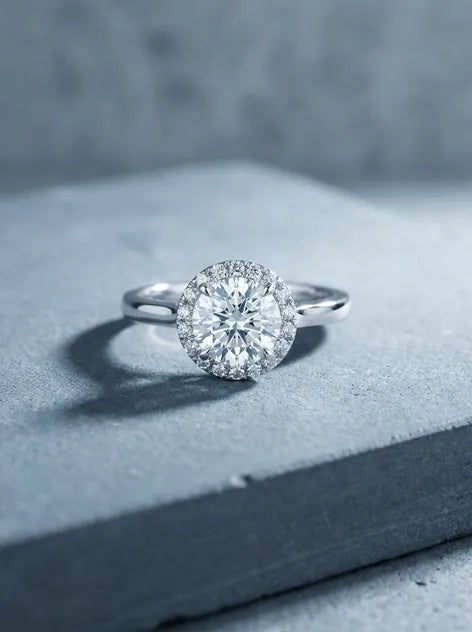
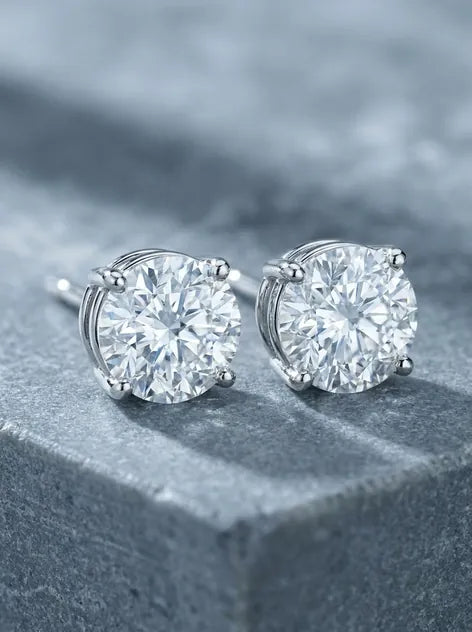
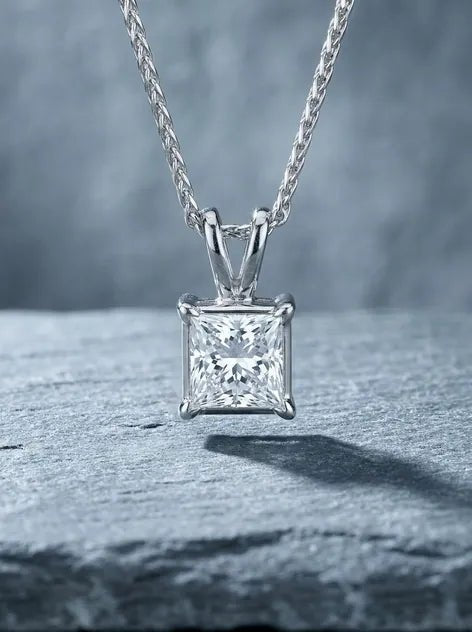


Oval cut rings deliver round-brilliant sparkle in a longer, more elegant silhouette. The elongated outline draws the eye down the hand, so fingers look longer and slimmer, and the shape sits as comfortably in vintage designs as in modern ones.
An oval is faceted with 56 to 58 facets for lively fire and brilliance, and because its weight spreads across a longer outline, it looks larger than a round diamond of the same carat. One caution: always check a stone for the bow-tie effect, a dark band across the center, before buying. Ovals now rank among the most requested shapes for engagement rings, and that size-for-weight advantage is a big part of why.

What Are the Different Types of Oval Cut Diamonds?
Oval diamonds come in four main variations, standard, long and narrow, wide, and east-west set, and each gives oval cut rings a different character:
- Standard Oval Brilliant: Balanced symmetry and 56 to 58 facets produce consistent, even sparkle. The pattern diffuses light, hides inclusions well, and suits nearly any ring style, the classic choice.
- Long and Narrow Oval: Ratios above about 1.45 read sleek and dramatic. The stretched form carries brilliance down its full length and shines in solitaire and minimalist designs.
- Wide Oval: Ratios below about 1.30 give a fuller face-up look with strong fire. The broader surface shows maximum sparkle, ideal for halo or vintage settings that celebrate the stone's spread.
- East-West Oval: Set sideways across the band, this orientation feels modern and bold. It flatters wider fingers and signals confident, individual taste.
Which Ring Settings Best Complement Oval Cut Stones?
Solitaire, halo, three-stone, vintage, and bezel or east-west settings complement oval cut stones best:
- Solitaire: A solitaire setting presents the oval alone on a clean band. The open design shows off its brightness and outline, minimal, classic, and quietly glamorous.
- Halo or Hidden Halo: Small diamonds around the oval add brilliance and visual size, while a hidden halo tucks an extra ring of sparkle beneath the center stone for a refined, luxurious touch.
- Three-Stone Oval Rings: Side diamonds flanking the center give the design depth and meaning. The trio stands for past, present, and future while adding real visual weight.
- Vintage Settings: Milgrain, filigree, and engraving dress the oval in antique detail. The added depth and texture turn the ring into an instant heirloom.
- East-West/Bezel Settings: Turning the oval sideways gives it a contemporary attitude, while a bezel wraps the stone in metal for a sleek profile that stands up to everyday wear.
What Metals Enhance the Beauty of Oval Cut Rings?
White gold and platinum, yellow gold, rose gold, and two-tone designs all enhance the beauty of an oval cut ring:
- White Gold and Platinum: Cool-toned metals sharpen the oval's brilliance and give it a sleek, modern frame. Platinum is naturally white, substantial, and hypoallergenic, while white gold costs less but needs occasional rhodium re-plating to stay bright.
- Yellow Gold: Warm gold gives the oval a vintage, traditional character. It also masks a faint yellow tint in lower color grades, so those stones look whiter than their grade suggests.
- Rose Gold: Pink-toned rose gold suits the oval's soft curves beautifully. The romantic color flatters every skin tone and lends an old-world warmth.
- Two-Tone Designs: Mixing metal colors, a white gold head on a yellow gold band, for example, keeps maximum brilliance at the stone while adding contrast and personality below it.
How to Choose the Perfect Oval Cut Ring?
Choose an oval cut ring by checking the bow-tie first, then the ratio, symmetry, setting, and the balance of the 4Cs:
- Bow-Tie Effect: Every oval shows some dark shadow across its middle, but a well-cut diamond keeps it faint. View the stone under several kinds of light, and never buy an oval sight unseen.
- Check the Ratio: The length-to-width ratio determines the shape of the stone. Between 1.35 and 1.50 is the classic, versatile range, higher ratios read long and slender, lower ones rounder and fuller. Pick what pleases your eye.
- Study the Symmetry: Both curves of the oval should mirror each other exactly, with the points aligned. Uneven sides cheapen the whole look, so inspect the outline from every angle.
- Match to Lifestyle: Pick a setting that works in daily life. Four or six prongs are the timeless, secure standard, while a bezel offers the most protection for active wearers by wrapping the entire edge of the diamond.
- Balance the 4Cs: Spend on cut first, since it drives brilliance. Ovals display color a bit more than rounds, so stay near-colorless (G/H), and VS-range clarity usually looks clean to the naked eye, a smart place to save.
What Customization Options Work Best for Oval Cut Rings?
Oval cut rings can be customized almost without limit. A halo or hidden halo boosts sparkle and apparent size at the center, while side stones reshape the whole design, tapered baguettes for a classic line, or small round diamonds for extra fire. Engrave a private message inside the band, and pick a setting personality to match: vintage milgrain for romance, or a smooth modern bezel for clean lines. Each detail turns a beautiful ring into a personal one.
How Do You Care for and Maintain Your Oval Cut Ring?
Maintain an oval ring with a weekly wash in warm water, mild soap, and a soft brush to lift away oils and dirt. Rinse well and dry with a lint-free cloth. Book a professional inspection every six months so a jeweler can confirm the prongs and setting are sound. Between wearings, store the ring in its own pouch to prevent scratches, and take it off for heavy activity or any job involving strong chemicals.