


The marquise cut looks biggest. Carat for carat, a marquise faces up larger than any other diamond shape: a 1 carat marquise measures roughly 10mm by 5mm, while a 1 carat round measures about 6.5mm across. If you're asking what diamond cut looks biggest, the short version is that elongated shapes (marquise, oval, pear) look biggest, and deep, squarish shapes (asscher, cushion, princess) look smallest, all at the same weight on the scale.
The reason's simple once you see it. Carat is weight, not size, and a cutter can put that weight where you see it (the spread across the top) or where you don't (depth below the setting). Different shapes distribute the weight differently, and that's the whole game.
How Do Diamond Shapes Rank by Face-Up Size?
Here's how the common shapes compare at 1 carat, using typical well-cut proportions. The millimeters are approximate; the ranking's reliable.
- Marquise (about 10 x 5mm): the biggest look per carat, roughly 15% more face-up area than a round. The long pointed outline also runs down the finger, which stretches the visual even further.
- Oval (about 7.7 x 5.7mm): close behind, around 8 to 10% more face-up area than a round, with a soft outline that's easier to live with than the marquise's points.
- Pear (about 8.6 x 5.8mm): similar gain to the oval, with a point at one end that adds length. Worn point-out, it elongates the finger like nothing else.
- Emerald (about 6.7 x 5mm): its face-up area is close to a round's, but the long rectangular lines and big open facets make it read larger than the numbers say.
- Round (about 6.5mm): the benchmark everything else is measured against.
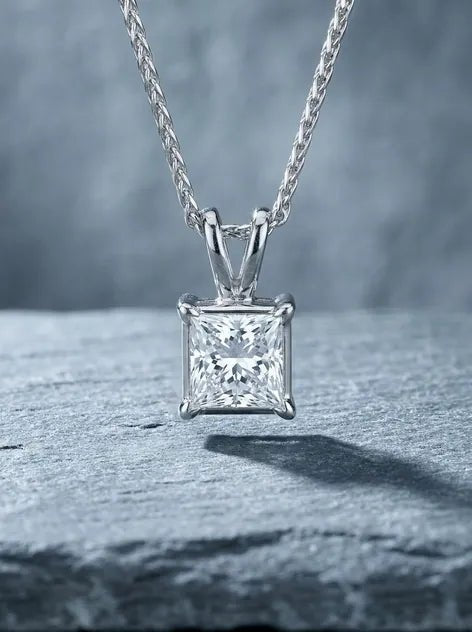
- Princess (about 5.5mm square): reads roughly 10% smaller than a round because the corners carry weight into the depth.
- Cushion and asscher (about 5.5 to 6mm): the smallest look per carat. Both are cut deep, so a big share of the carat weight hides under the setting where nobody sees it.
One outlier worth knowing: the antique rose cut. It's nearly flat on the bottom, so almost all of its weight sits in the spread, and a 1 carat rose cut faces up dramatically larger than any modern cut. The trade is brilliance; with no pavilion underneath, it glows softly instead of sparkling hard.
Why Is the Round Brilliant Cut Still the Benchmark?
The round brilliant cut gives back more light than any other shape; its 57 or 58 facets were engineered for exactly that. It's also the most expensive cut per carat, partly because demand's highest and partly because cutting a round wastes more of the rough crystal than cutting a fancy shape does.
So the honest trade is this: a round buys maximum sparkle per carat, while an elongated shape buys maximum size per carat, and usually at a 10 to 25% lower price per carat too. A 1 carat oval can cost less than a 1 carat round and look bigger on the hand. That's not a trick; it's geometry plus market demand, working in your favor for once.
Marquise, Oval, and Pear: What Makes These the Big-Look Cuts?
If maximum spread's the goal, these three are the shortlist. The marquise gives the most millimeters and the most drama; our marquise cut guide covers its history and how prongs protect those points. The oval cut is the crowd-pleaser of the three, big-looking but rounded and snag-free. The pear cut splits the difference, one soft end and one dramatic one.
One caveat I give buyers on all three: elongated brilliant cuts can show a "bow-tie," a darker band across the middle where light escapes. Every marquise, oval, and pear has some; a well-cut one keeps it faint. Look at the actual stone or real photos of it, not a stock render, before you commit.
Cut vs Shape: What Is the Shape of a Diamond Called?
Two words get tangled here. Shape is the outline you see from above: round, oval, pear, princess, and the rest. Cut, in the grading sense, is how well the facets are angled and proportioned, which the GIA 4Cs framework grades from Excellent down to Poor for rounds. In everyday speech "cut" covers both, which is why "what diamond cut looks biggest" really means "what shape looks biggest."
The distinction matters for one practical reason: a poorly cut stone of a big-look shape loses the advantage. An oval cut too deep hides its weight below the girdle just like a cushion does. Shape sets the ceiling on face-up size; cut quality decides whether the stone reaches it.
Which Settings Make the Diamond Look Bigger?
The setting can add a size class without adding a dollar of diamond:
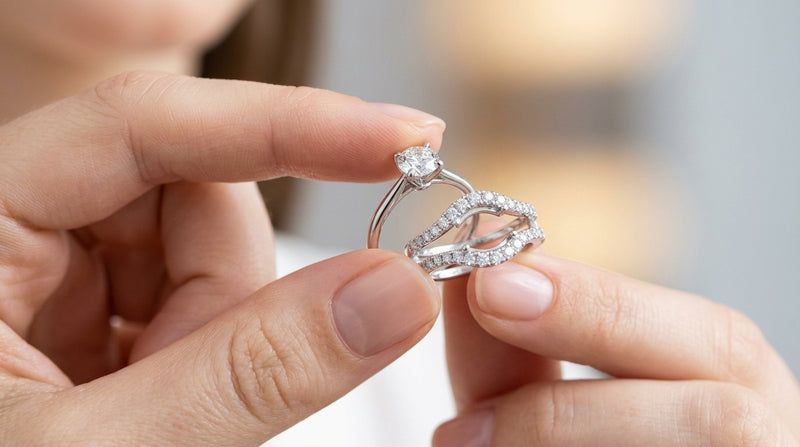
- A thin band: the single cheapest upgrade. Next to a 1.8mm band, the same center stone looks noticeably larger than it does on a 3mm band.
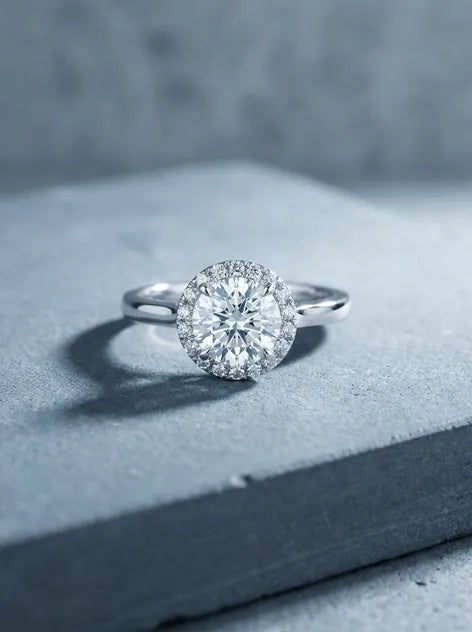
- A halo: a ring of small diamonds around the center reads as one bigger stone from arm's length. It's the most common route to a bigger look on a fixed budget.
- Four prongs instead of six: four prongs cover less of the stone's edge, so more diamond shows. Six prongs hold more securely; it's a real trade, not a free win.
- A white-metal head: on a yellow or rose gold ring, a white gold or platinum head blends into the diamond's edge and stretches it visually.
If you want to see how the shapes compare on an actual hand rather than in millimeters, browse our diamond engagement rings; you can filter by shape and carat side by side, and every ring is made to order in our US factory.
FAQ
Which diamond cut looks the smallest?
The asscher and cushion cuts look smallest per carat, with the princess close behind. All three are cut deep, so a large share of the carat weight sits below the setting where it doesn't show.
Does 4 prong or 6 prong make diamonds look bigger?
Four prongs make the diamond look bigger because less metal covers the stone's edge. Six prongs grip more securely and better protect the girdle. On stones under a carat I'd lean four; on larger or elongated stones, security starts to earn its keep.
Is a 2 carat diamond considered big?
Yes. The typical engagement ring center falls between 1 and 1.5 carats, so 2 carats reads clearly above average on the hand, especially in an elongated shape like an oval or marquise.
What is the most flattering diamond cut?
Elongated shapes flatter most hands: oval, marquise, and pear all draw the eye down the finger and make it look longer and slimmer. Round's the most universally safe, but if flattery's the brief, go elongated.