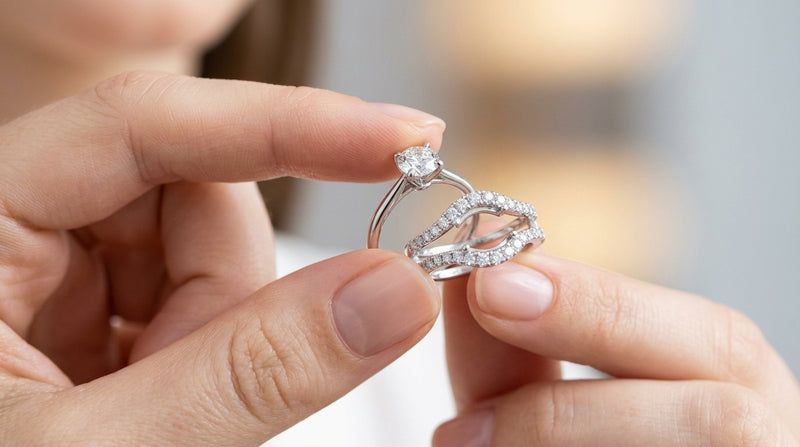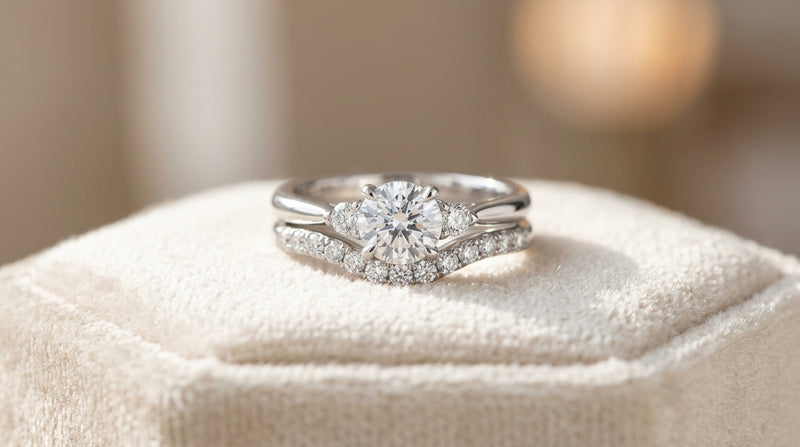
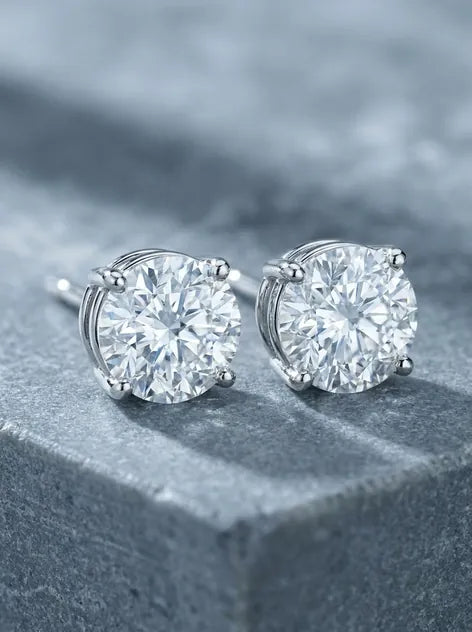
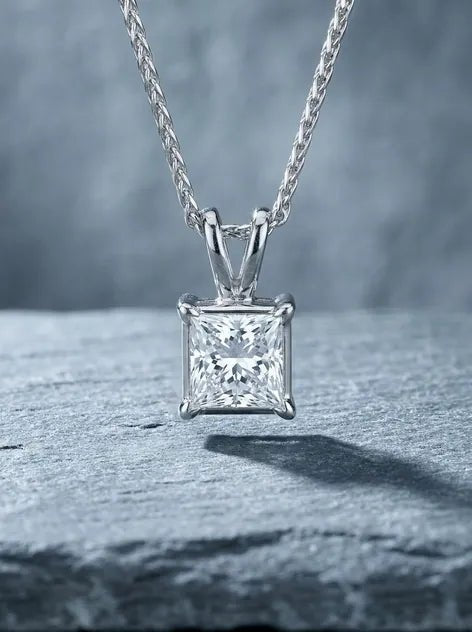


An engagement ring marks the proposal; a wedding ring marks the marriage. That's the difference. The engagement ring usually carries a center diamond and shows up when someone gets down on one knee. The wedding ring, also called a wedding band, is typically a simpler band exchanged during the ceremony itself. After the wedding, most women wear both on the left ring finger, band underneath, engagement ring on top.
That's the one-paragraph answer, and if that's all you needed, you're done. But the details decide what you actually buy and when, so here's the wedding ring vs engagement ring question taken apart properly: the terms, the traditions, the wearing rules, and how to buy both without paying for the pair twice.
Engagement Ring vs Wedding Ring: What Are the Core Differences?
- Timing: The engagement ring arrives at the proposal, months or years before the wedding. The wedding ring is exchanged at the ceremony and doesn't exist on anyone's finger before that day.
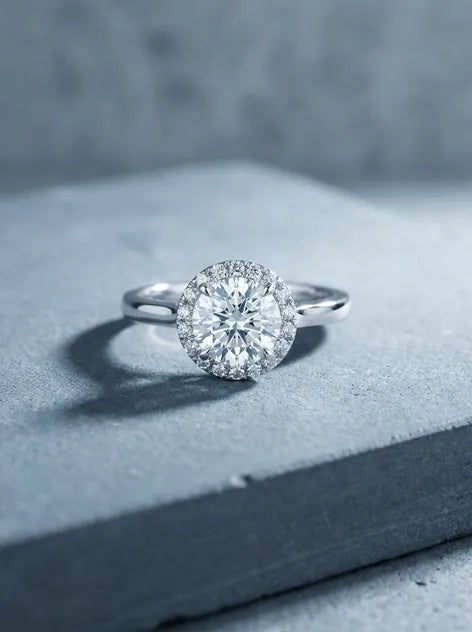
- Design: An engagement ring is built around a center stone, usually a diamond, held up where it catches light. A wedding ring is a band: plain metal, or metal lined with smaller diamonds, with no single stone dominating.
- Who wears one: Traditionally the engagement ring is hers alone. Wedding rings go to both partners; it's the one piece of jewelry most men will wear every day of their lives.
- Cost: The engagement ring is nearly always the bigger purchase, because the center diamond is nearly always the most expensive single component of either ring. Plain gold bands commonly run $300 to $1,500 at retail; diamond-lined bands run higher; engagement rings typically run several thousand.
Wedding Ring vs Engagement Ring vs Wedding Band: What Does Each Term Mean?
"Wedding ring" and "wedding band" are the same thing. There's no technical difference; "band" just describes the shape honestly, since it's a ring without a raised center stone. So the three-way comparison people search for really only has two objects in it: the engagement ring and the band.
Two more terms worth knowing before you shop. A bridal set is the engagement ring and her matching band designed as one piece, both rings hers. A trio set adds his band to make three rings. Knowing which one a listing describes is the difference between comparing prices and guessing at them.
Do You Wear Both an Engagement Ring and a Wedding Ring?
Most married women do, stacked on the left ring finger. It's completely normal, and it's what both rings are designed for. But there's no rule with teeth here, and plenty of people run it differently:
- Both, stacked: The standard. Band first, engagement ring over it. A matched set makes this effortless because the band is shaped to sit against the engagement ring instead of grinding against it.
- Band only, day to day: Common for nurses, chefs, gym regulars, and anyone who works with gloves. The engagement ring comes out for evenings and events.
- Engagement ring only: Some women skip a separate band entirely and let one ring do both jobs. Nothing improper about it.
- Adding a third ring later: Many couples mark a milestone anniversary with an eternity ring worn on the same finger or the opposite hand. Our eternity ring guide covers how those work.
Engagement Ring and Wedding Band Rules: Which Hand, Finger, and Order?
The American tradition is simple: both rings on the fourth finger of the left hand, wedding band closest to the knuckle side of the heart, engagement ring stacked above it. The band-goes-first custom comes from the old idea that the wedding ring should sit nearest the heart.
On the wedding day itself, logistics take over. Most brides move the engagement ring to the right hand before the ceremony so the band can go straight onto a bare finger, then restack afterward. Some hand the engagement ring to the maid of honor instead. Neither is more correct; pick the one that won't get lost in the moment.
Outside the US the picture changes: in Germany, Russia, Poland, and India's many traditions, wedding rings often go on the right hand. If your families follow different customs, wear the rings the way that means something to you. Nobody's checking.
Do You Need to Buy Both Rings?
You need the wedding ring, because that's the one exchanged in the ceremony. The engagement ring is the optional one, historically speaking, even though it gets the spotlight. If the budget only covers one ring, a diamond band that serves as both is a legitimate and increasingly common choice.
If you're buying both, buy them as a pair rather than as two separate hunts. A bridal set prices the two rings together and guarantees the match, and buying factory-direct means the middleman markup you skip is skipped on both rings. We've made rings in our own US factory since 2001, and the set is where that pricing gap shows up most, because at a traditional retailer you'd be paying the markup twice. For choosing the band style itself, plain, pave, contoured, our wedding ring guide breaks down the options.
If the stacked look is what you're after, browse our diamond bridal sets: each pairs an engagement ring with the band cut to match it, so the two-ring question is answered before it's asked.
FAQ
Can I use my engagement ring as my wedding ring?
Yes. Some couples exchange the engagement ring itself at the ceremony and never add a band. It's your marriage and your finger; one meaningful ring beats two rings bought to satisfy a convention.
Which ring do you propose with?
The engagement ring. The wedding band stays out of sight until the ceremony, where it's exchanged during the vows. If you've bought a bridal set, propose with the engagement ring and keep the band put away until the wedding.
Is it normal to wear an engagement ring and a wedding ring together?
Completely. Stacked on the left ring finger, band first, is the most common way married women wear them. Matched sets exist precisely so the two rings sit flush together instead of fighting each other all day.
Am I supposed to buy an engagement ring and a wedding ring?
Tradition says two rings for her and one band for him, but it's a tradition, not an obligation. Buy the wedding band for the ceremony; add the engagement ring if a proposal moment matters to you. Buying both as a set costs less than sourcing them separately.