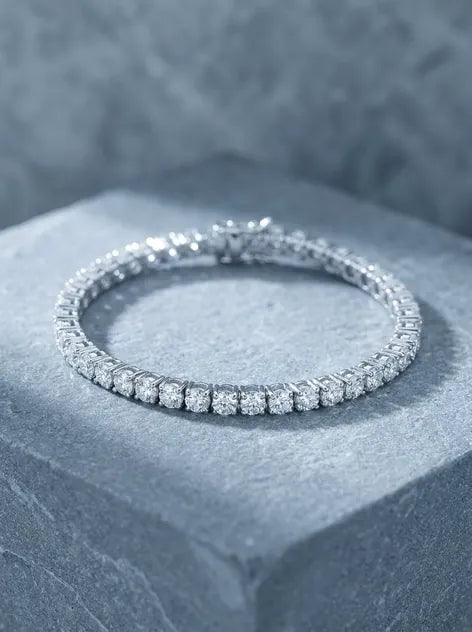


Eternity rings, also called infinity rings, symbolize everlasting love and commitment between two people. The band is set with gemstones either halfway or all the way around, and that continuous line of stones is the whole point, an unbroken circle standing for balance, unity, and trust. Built well, an eternity ring outlasts its first owner and passes down as a family heirloom. Unlike engagement and wedding rings, eternity rings are given at meaningful milestones to celebrate the road a couple has traveled together. They often appear on anniversaries too, though an anniversary ring is a different piece, it typically carries fewer stones.
The history of eternity rings reaches back to ancient Egypt, where simple circular bands represented eternal love. Those early bands were braided from reeds, echoing the ouroboros, the serpent swallowing its own tail. The modern diamond eternity ring took off in the 1960s, when a major diamond marketing campaign found a use for the smaller stones that rarely worked in engagement rings. Today couples give eternity rings for anniversaries, the birth of a child, and milestone birthdays.

What Are the Different Types of Eternity Rings?
The five main types of eternity rings are full eternity, half eternity, three-quarter eternity, custom, and floating designs.
- Full Eternity Rings: Diamonds or other gemstones circle the entire band, so the ring sparkles from every side. The unbroken line of stones is the purest expression of the eternity symbol. Expect a higher price, and know that a full eternity ring is difficult to resize later.
- Half Eternity Rings: Stones cover only the top of the band, leaving plain metal underneath. That makes the ring more comfortable, easier to resize, and less expensive than a full eternity design, a practical answer if finger size may change over the years.
- Three-Quarter Eternity Rings: Stones run most of the way around, with a short stretch of plain metal at the bottom. You get nearly the full-eternity look while keeping room for future resizing.
- Custom Eternity Rings: Initials, dates, or a personal symbol worked into the design add a private layer of meaning. Many couples place the detail where only the wearer can see it, keeping the outward design simple and elegant.
- Floating Eternity Bands: Minimal prong or tension settings make the stones appear to float within the band. The airy construction lets maximum light reach each gemstone, producing a delicate, modern look.
Which Metals Best Complement Eternity Rings?
Platinum, white gold, yellow gold, rose gold, and mixed metals are the five best choices for an eternity ring.
- Platinum: Known for strength and durability, platinum is silvery-white by nature and needs little maintenance. It is softer yet heavier than gold and develops a patina over the years, which a jeweler can polish away if you prefer the original shine.
- White Gold: An alloy of yellow gold and white metals such as nickel or palladium, finished with a mirror-like rhodium plating. Nickel can bother sensitive skin, so ask about the alloy. Plan on replating every one to three years to keep the bright finish.
- Yellow Gold: Timeless warmth with no plating required, since the color is the metal's own. Available in purities like 14K and 18K, which trade off durability against richness of color. Maintenance costs stay low.
- Rose Gold: A copper-and-gold alloy that delivers durability along with a reddish-pink blush. The tone flatters most skin colors and gives the design a warm, vintage-leaning character.
- Mixed Metals: Combining shades, and pairing them with stones of different colors, lets a jeweler build something genuinely personal, whether the style leans minimalist or vintage.
What Are the Different Setting Styles for Eternity Rings?
The five setting styles used for eternity bands are prong, channel, pavé, bezel, and bar.
- Prong Setting: Also called a claw setting, it holds each stone with small metal claws so light reaches the gem from every side. The trade-off for that brilliance is exposure, prongs can snag on fabric and wear down over time, so they need periodic checks.
- Channel Setting: Stones sit protected inside a metal channel, creating a smooth, clean line. The sparkle is more subtle since less light reaches the stones directly, and the channel needs careful cleaning to keep dirt from collecting inside.
- Pavé Setting: Small stones sit close together, held by prongs so tiny they nearly disappear. The surface reads as continuous sparkle. Those tiny prongs can loosen with wear, so pavé demands more maintenance than sturdier settings.
- Bezel Setting: A metal rim encircles each stone, making this one of the most secure options available. The costs are more visible metal, somewhat less sparkle, and a higher price.
- Bar Setting: Vertical metal bars separate the stones, keeping them aligned and protected while leaving two sides of each gem open to the light. The result out-sparkles a channel setting while staying more secure than prongs.
What Gemstones Define Eternity Rings?
Diamonds, sapphires, rubies, emeralds, mixed-gem designs, and birthstones are the six gemstone choices that define eternity rings.
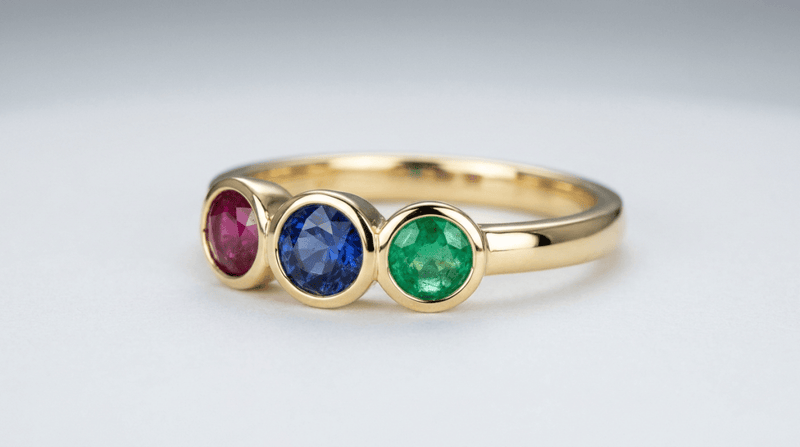
- Diamonds: The classic symbol of everlasting love. A diamond sits at 10 on the Mohs hardness scale, the most durable gemstone you can buy, and pairs cleanly with every metal from yellow gold to platinum.
- Sapphires: Deep blue stones that stand for loyalty and sincerity. Their hardness makes them well suited to daily wear, and the color gives the band a quietly regal look.
- Rubies: Red stones representing passion, energy, and devotion. A line of rubies turns the eternity symbol into a statement about vibrant, living love.
- Emeralds: Green stones tied to growth, harmony, and renewal. Couples often choose emeralds to mark the birth of a child or another new beginning.
- Mixed Gem Designs: Amethyst, aquamarine, and peridot, linked to spirituality, communication, and strength, bring color combinations with meanings of their own. Mixing gems lets the ring tell a more specific story.
- Birthstones: Setting a band with the birthstones of a couple or their children is one of the most personal choices available. It turns the ring into a record of the family itself.
How Do You Select the Perfect Eternity Ring?
Select an eternity ring by matching your partner's style, weighing daily comfort, balancing setting security against sparkle, choosing a meaningful gemstone, and confirming the size.
- Choose a Style: Before you shop, work out whether your partner leans modern and minimalist or vintage and classic. Pick a design that sits comfortably alongside the jewelry they already wear.
- Daily Comfort: Think about how the ring fits their routine. An active lifestyle calls for a durable metal like platinum and a lower-profile setting; a gentler routine opens up more delicate options.
- Stone Setting Security: Balance sparkle against protection. Prong settings deliver maximum light but sit exposed; shared-prong and bar settings strike a sensible middle ground between security and brilliance.
- Pick a Meaningful Gemstone: The stone can carry the message, sapphires for loyalty and trust, rubies for vibrant love. Choosing deliberately makes the gift more than decoration.
- Ensure Correct Ring Size: Sizing matters more here than with most rings, because full eternity designs usually cannot be resized. Confirm the size before you commit.
How Are Eternity Rings Worn?
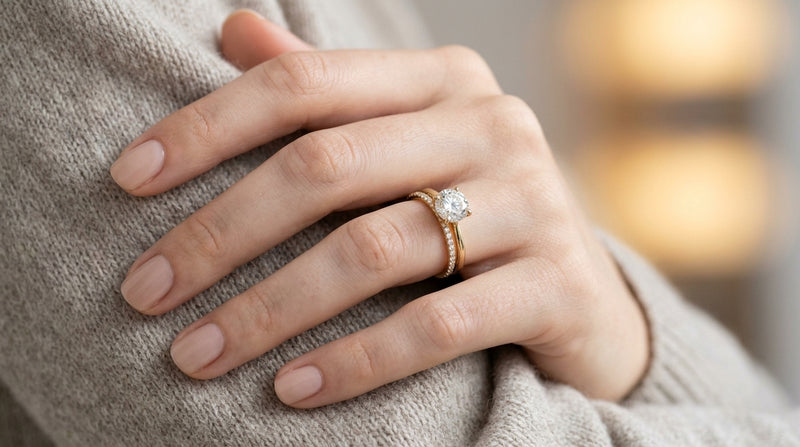
An eternity ring is traditionally worn on the same finger as the engagement or wedding ring, stacked above or below them. Modern styling is flexible, many people mix and stack bands freely, and an eternity ring works just as well worn alone as a standalone piece.
What Are the Modern Design Innovations in Eternity Rings?
The five modern innovations in eternity ring design are east-west settings, geometric patterns, two-tone metals, hidden halos, and custom engraving.
- East-West Stone Settings: Turning elongated stones, emerald, oval, or marquise cuts, sideways gives the band a fresh, unexpected orientation. It is a small change that reads as distinctly contemporary.
- Geometric Designs: Hexagonal and square settings build bold, architectural patterns around the band. The look suits anyone drawn to structure over softness.
- Two-Tone Metals: Pairing metals such as rose gold and white gold in one band symbolizes two distinct personalities sharing one life. The contrast also adds visual depth.
- Hidden Halo Details: A circle of pavé-set diamonds tucked beneath the center stone shows only from the ring's side profile. It is a private flourish for the wearer.
- Custom-Engraved Eternity Rings: A special date, message, or set of initials engraved on the band turns the ring into a keepsake as specific as the relationship it celebrates.
How Do You Care for Your Eternity Ring?
Clean an eternity ring gently with mild soap and warm water, and keep it away from harsh chemicals that can discolor the band or start corrosion. Store it in its own box so other jewelry cannot scratch the stones. Once a year, have a professional inspect and clean it, a jeweler's equipment and solutions reach the spots a home cleaning cannot, and a quick prong check protects the stones for the long term.