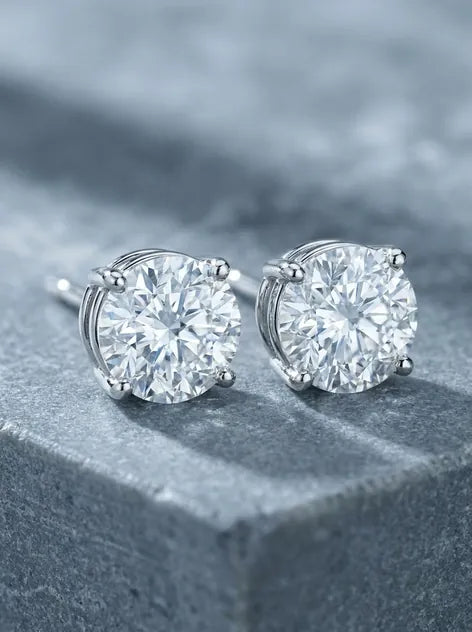
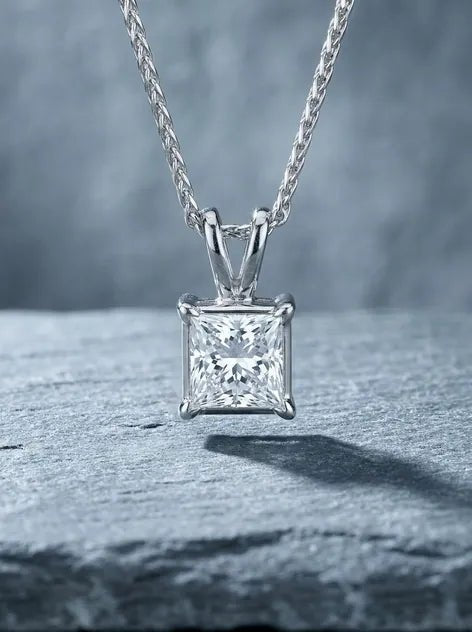


A 1 carat natural diamond ring typically costs $4,000 to $9,000 at US retail. The same ring with a lab-grown center typically costs $1,200 to $3,500. That's the short answer on 1 carat diamond ring price. The long answer is that two 1 carat diamonds can differ in price by three times, and once you know where to look, the reasons are visible.
I've been pricing diamonds at the bench since 2001, so let me break this down the way I would across the counter: the stone on its own, the price chart in plain English, the natural versus lab split, and what actually moves the number.
What Does a 1 Carat Diamond Cost on Its Own?
A natural 1 carat round with mid-range grades typically costs $3,500 to $6,000 as a loose stone at retail. Push the grades down and you'll find natural 1 carat stones near $2,500; push them to the top and you'll pass $8,000 without trying. A lab-grown 1 carat with comparable grades commonly runs $500 to $1,500 as of 2026, and lab prices have kept drifting down year over year.
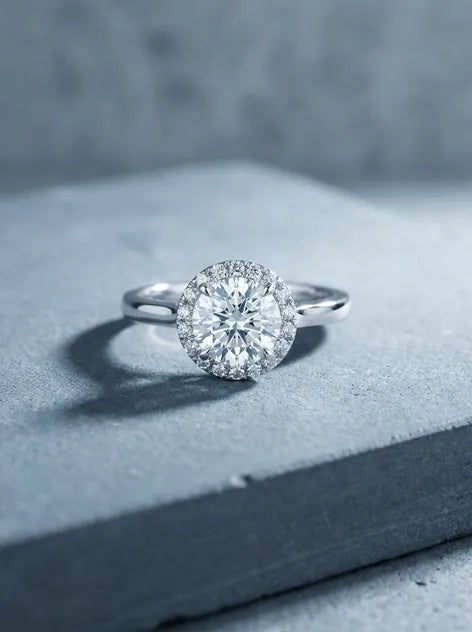
Then the setting joins the bill. A simple 14K solitaire setting typically adds $400 to $1,000 at retail; a halo or pave setting with small side diamonds adds more, and platinum sits above 14K gold on any of them. This is why "1 carat diamond" quotes confuse people: one number is a stone, the other is a finished ring. Always compare finished rings.
What Does a 1 Carat Diamond Price Chart Show, in Plain English?
Skip the grid of grades for a second. For natural 1 carat rounds, the market really breaks into three tiers:
- Value tier, roughly $2,500 to $3,500 for the stone: I to J color, SI clarity, good cut. The trick here is finding an "eye-clean" SI stone, one whose inclusions you can't see without magnification. When you do, you've bought the same look for thousands less.
- Middle tier, roughly $3,500 to $5,500: G to H color, VS to SI1 clarity, very good or excellent cut. This is where I'd point most buyers. The stone reads white and clean to every eye that will ever look at it.
- Top tier, $6,000 to $9,000 and up: D to F color, VVS clarity and better, excellent cut. From here up, you're paying for grades that only show under a loupe. Some buyers want the paper to say it; that's a valid choice, but know that's what the extra money buys.
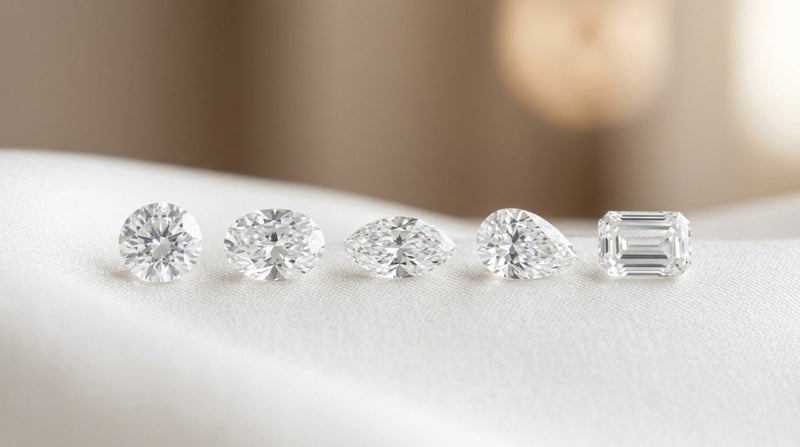
All of these grades come from the GIA 4Cs framework: cut, color, clarity, carat. Carat gets the headline, but cut is what your eye actually notices, because cut controls how much light the stone throws back.
Natural 1 Carat Diamond Price vs Lab-Grown: How Big Is the Gap?
Same carbon, same crystal, same sparkle, very different price. A lab-grown 1 carat ring commonly lands between $1,200 and $3,500 complete, and lab-grown stones consistently reach very high color and clarity grades, so the average lab stone you'll see is graded better than the average natural stone at the same size. Our lab-grown ring guide covers how they're made and graded.
Natural diamonds cost more because the earth made a limited number of them, and rarity has always carried a price. Some buyers want the billion-year stone and won't be talked out of it; I don't try. The practical way to frame the choice: at $5,000, you're picking between a fine natural 1 carat ring and a lab-grown ring closer to 2 carats. Neither answer is wrong. It's a values question, not a quality question.
What Moves the Price of a 1 Carat Real Diamond Ring?
Four levers move the number more than anything else:
- Cut: the biggest visible factor. A well-cut stone throws back light; a poorly cut one leaks it out the bottom. A smaller, well-cut diamond will out-sparkle a bigger, mediocre one every time. The round brilliant cut is the benchmark here, and rounds also cost the most per carat of any shape.
- Color: D through F is colorless, G through J is near-colorless. Side by side under bright light you might catch the difference; on a hand, in the world, you won't. G to H is the value sweet spot.
- Clarity: the eye-clean rule again. An SI1 you can't see into is worth more to you than a VVS2 costs. Grades above eye-clean are for the certificate, not the eye.
- Metal and setting: 14K gold is the workhorse, 18K costs more, and a 1 carat diamond platinum ring price runs a few hundred dollars above the same ring in 14K white gold. The two metals look nearly identical on the hand.
1 Carat Diamond Ring Price in the USA: How Do Retail and Factory-Direct Compare?
The ranges above are retail-market numbers, and retail carries layers. A typical ring is cut in one place, wholesaled in another, branded by a third company, and sold by a fourth, and each layer adds its margin before you ever see the tag. We've manufactured in our own US factory since 2001 and sell direct, so those layers aren't in the price. Same stone grades, same gold, fewer hands in the middle. That's the whole mechanism, and it's why comparing a factory-direct price to a mall price at the same dollar figure isn't comparing the same ring.
If you're ready to see real options at 1 carat, browse our diamond engagement rings; you can filter by carat weight, metal, and stone origin, and every ring is made to order in our US factory.
FAQ
How much is a 1 carat diamond usually worth?
A natural 1 carat round with mid-range grades is usually worth $3,500 to $6,000 at retail as a loose stone. A lab-grown 1 carat with similar grades usually runs $500 to $1,500. Cut, color, and clarity move each of those ranges up or down.
How many carats is a $10,000 engagement ring?
With a natural center, $10,000 typically buys a finished ring around 1.25 to 1.75 carats with good grades. With a lab-grown center, the same money reaches 3 carats and beyond. Setting choice moves the answer by a few tenths either way.
How many carats is a $5,000 ring?
Around 0.75 to 1.00 carat natural with solid grades, or roughly 2 carats lab-grown. This is the budget where the natural versus lab decision changes the look of the ring the most.
How much should I spend on an engagement ring if I make $100,000 a year?
Ignore the salary formulas. A comfortable cash budget at that income is usually $5,000 to $8,000, which lands you a strong 1 carat natural ring or a larger lab-grown one. Spend what you can pay without financing stress.