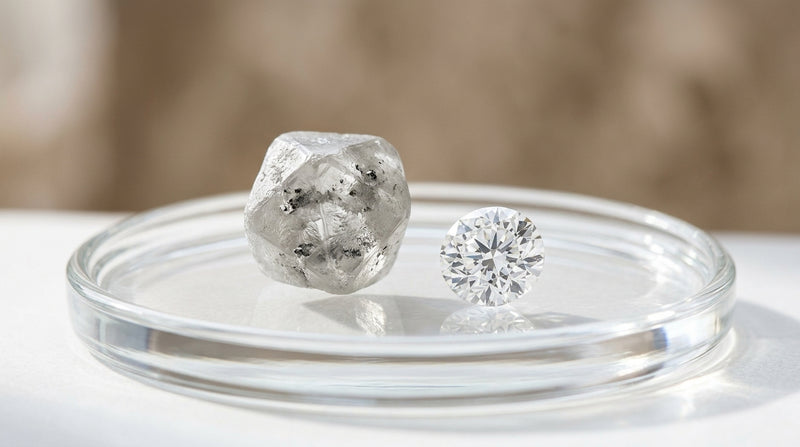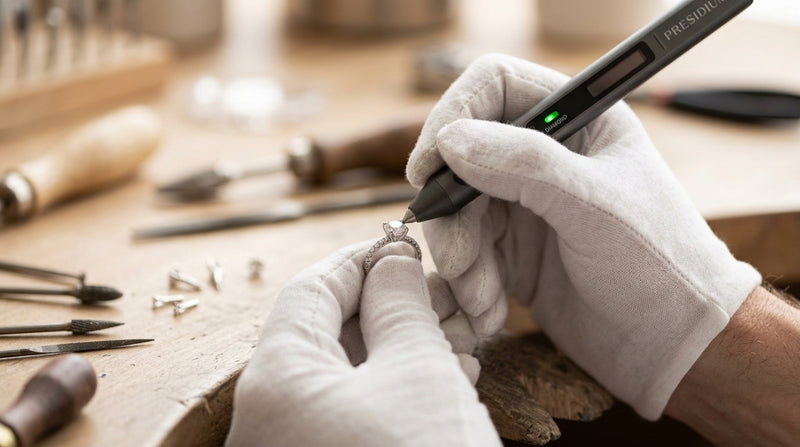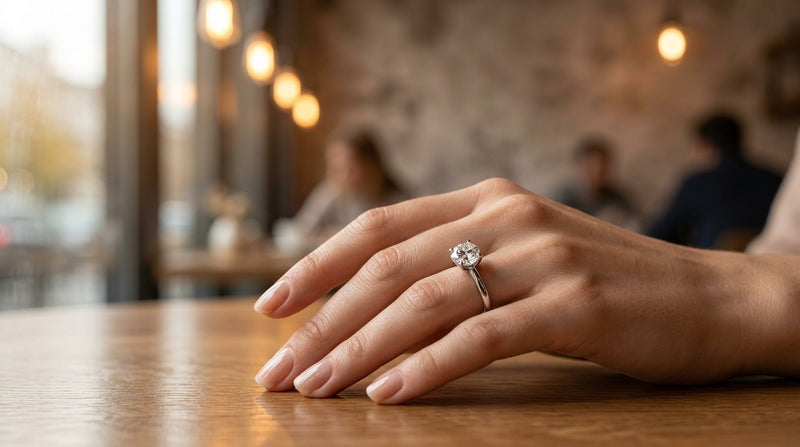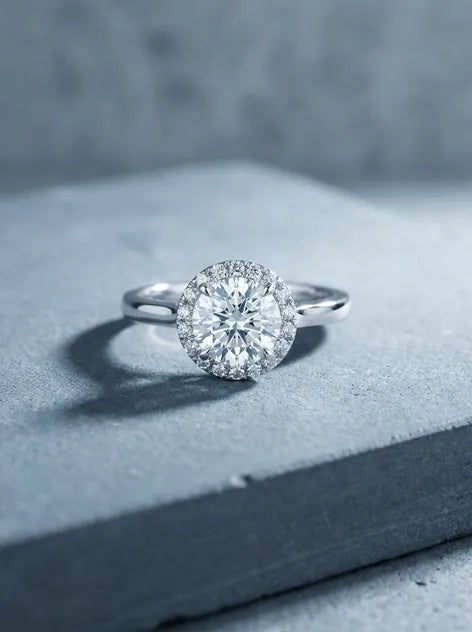
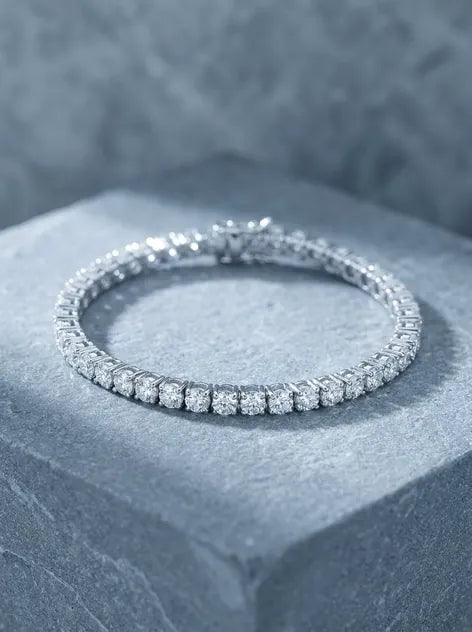


A lab-grown diamond typically costs 70 to 90 percent less than a natural diamond with the same carat weight, color, clarity, and cut. That's the short answer on lab grown vs natural diamond price in 2026, and the gap has widened every year since 2020. A 1 carat natural diamond that runs $4,000 to $7,000 at retail has a lab-grown twin selling for roughly $400 to $1,200. Same crystal, same sparkle, graded on the same GIA 4Cs scale.
We make jewelry with both, so there's no horse in this race for us. Natural diamonds carry rarity and a stronger resale story. Lab-grown diamonds put a size and quality on your hand that the same budget couldn't touch ten years ago. Here's the carat-by-carat breakdown, in typical US retail ranges, so you can see the gap at the size you're actually shopping.
1 Carat Lab-Grown Diamond Price vs Natural: How Much Do You Save?
At 1 carat, a well-cut lab-grown diamond in the G to H color range with VS clarity typically runs $400 to $1,200 at retail. The natural version of that same stone typically runs $4,000 to $7,000. That's not a rounding error. It's the difference between a ring budget and a used-car budget.
- 0.50 carat: lab-grown typically $150 to $500 at retail; natural typically $1,000 to $2,500.
- 0.75 carat: lab-grown typically $300 to $800; natural typically $2,000 to $4,000.
- 1.00 carat: lab-grown typically $400 to $1,200; natural typically $4,000 to $7,000. This is also the weight where an IGI certificate becomes the standard paperwork for a lab-grown center stone.
Grades move you inside each range. A D color, VVS clarity stone sits near the top; a G color, VS2 stone sits lower and still reads bright white to the eye. That second stone is where the smart money usually goes, because cut quality does more for sparkle than a clarity grade you'd need a microscope to appreciate.
2 and 3 Carat Lab-Grown Diamond Prices vs Natural: How Wide Is the Gap?
This is where the gap stops being a discount and becomes a different decision entirely. Natural diamond prices climb steeply with carat weight because big rough is rare. Lab-grown prices climb too, but nothing like as fast.
- 2 carat: lab-grown typically $900 to $2,500 at retail; natural typically $12,000 to $25,000.
- 3 carat: lab-grown typically $1,800 to $4,500; natural typically $25,000 to $60,000.
Put plainly: a 3 carat lab-grown diamond often costs less than a 1 carat natural one. That single fact explains most of what's happened in engagement rings over the last five years. Shoppers who walked in planning a 1 carat natural stone walk out with a 2 carat lab-grown stone and money left over for the band.
4 and 5 Carat Lab-Grown Diamond Prices: Where Does the Gap Get Enormous?
At statement sizes, natural pricing enters serious-collector territory while lab-grown stays in reach of a normal budget.
- 4 carat: lab-grown typically $3,000 to $7,000 at retail; natural typically $45,000 to $100,000 and up.
- 5 carat: lab-grown typically $4,500 to $10,000; natural typically $70,000 to $150,000 and up.
A 5 carat natural diamond is genuinely rare, and its price reflects that rarity. A 5 carat lab-grown diamond isn't rare, and its price reflects that too. Neither number is wrong. They're just answering different questions: one is the price of scarcity, the other is the price of production.
Why Do Lab-Grown Diamonds Cost So Much Less?
The gap comes down to supply and the number of hands in the chain.
- Supply isn't capped: A natural diamond took about a billion years and a mining operation to reach a cutting wheel. A lab-grown crystal takes weeks in a growth chamber, and growers keep getting better at it, which is why lab prices have fallen year after year.
- The middleman chain: A typical retail diamond passes from mine or grower to cutter to wholesaler to brand to mall store, and every hand adds margin. We've made diamond jewelry in our own US factory since 2001 and set the stones ourselves, so those stacked markups are exactly what factory-direct pricing skips.
- Same grading, same 4Cs: Both types are graded on color, clarity, cut, and carat under the GIA framework. Lab-grown stones consistently reach very high color and clarity grades, which is part of why the price-per-look comparison lands so hard in their favor.
What lab-grown doesn't buy you is rarity. Natural diamonds hold a resale and heirloom story that lab-grown can't match, and for some buyers that's worth every dollar of the gap. If you're weighing that trade seriously, the honest version is in our guide on whether lab-grown diamonds are worth it.
1 Carat Lab-Grown Diamond Earrings and Rings: Where Do the Savings Land?
The price gap shows up differently depending on what you're buying.
- 1 carat lab-grown diamond ring: The center stone is most of a solitaire's cost, so cutting the stone price by 80 percent cuts most of the ring price with it. That's why a 1 carat lab-grown engagement ring now sits in a budget that used to buy a half-carat natural one. Our guide to lab-grown diamond rings walks through the settings that make the most of it.
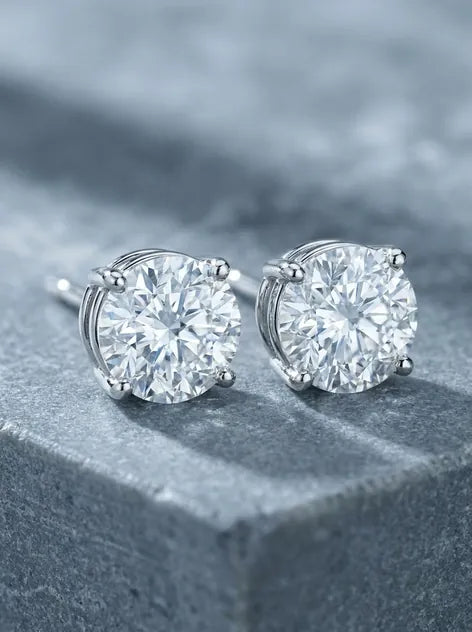
- 1 carat lab-grown diamond earrings: Studs need two matched stones, which doubles the stone cost, so the savings double too. A 1 carat total weight pair (0.50 carat per ear) is the everyday classic; a 2 carat total weight pair is where natural pricing used to shut most people out and lab-grown doesn't.
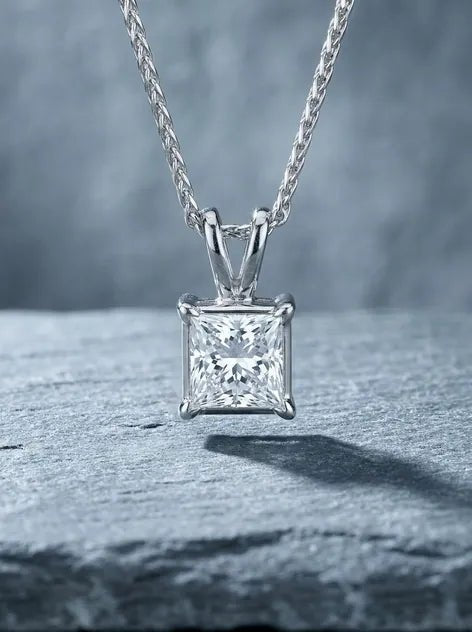
- Pendants: One stone, worn at eye level where nobody's inspecting clarity. It's the piece where an excellent-cut lab-grown stone earns its keep fastest.
If you want to see real stones at these weights instead of ranges on a page, browse our lab-grown diamond collection. Every piece is made in our own US factory, and every lab-grown center diamond of 1.00 carat or more comes with its IGI certificate.
FAQ
What are the disadvantages of lab grown diamonds?
Two honest ones: resale value is weak, and prices are still falling, so the stone you buy today may retail for less next year. There's also no rarity story to pass down. If resale or rarity matters to you, a natural diamond is the better pick.
How many carats is a $20,000 diamond?
In natural diamonds, $20,000 typically buys a well-graded stone around 1.5 to 2 carats at retail. In lab-grown, the same money reaches 5 carats and beyond. Same budget, very different stone on the hand.
How much is a 2 carat lab diamond worth?
At retail in 2026, typically $900 to $2,500 depending on cut, color, and clarity. Resale value runs well below retail, so treat the retail number as the cost of wearing it, not as an investment figure.
Is a lab-grown diamond worth buying?
Yes, if your goal is the biggest, best-graded diamond your budget allows and you plan to wear it, not resell it. It's a real diamond with the same hardness and the same sparkle. It isn't worth buying as a store of value.
Why do jewelers hate lab-grown diamonds?
Most don't. The grumbling you hear usually comes from businesses built around natural inventory and its margins, and from the honest concern that falling lab prices upset customers who bought early. We make and sell both, and each one earns its place for a different buyer.