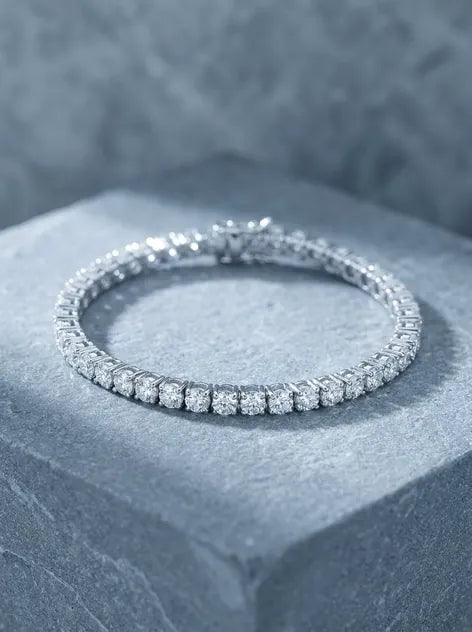
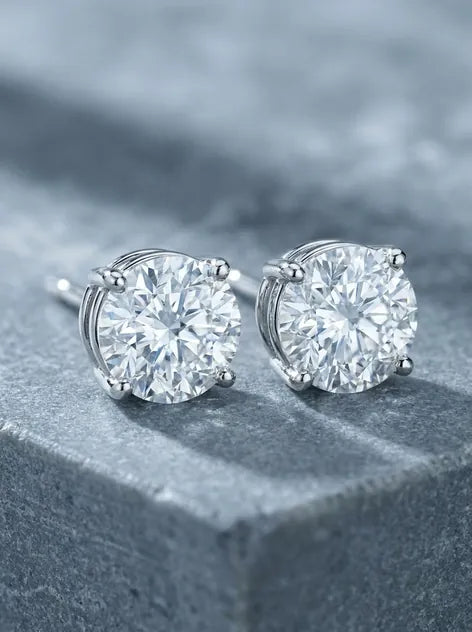
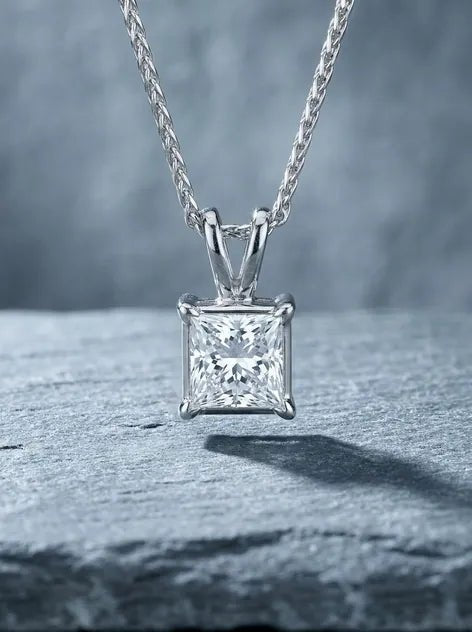


Lab-grown diamonds are worth it if you're buying a diamond to wear, and not worth it if you're buying a diamond to resell. That's the honest answer to "are lab grown diamonds worth it," and it fits in one sentence because the trade really is that clean. You get the same crystal, the same hardness, the same sparkle, at 70 to 90 percent less than a natural stone with matching grades. What you give up is rarity and resale value.
We manufacture jewelry with both natural and lab-grown diamonds in our own US factory, so this isn't a sales pitch for one side. It's the conversation I'd have with you across the counter, including the caveat plenty of sellers skip.
Are Lab-Grown Diamonds Cheaper? Yes, and Here's By How Much
Dramatically cheaper, and the gap grows with carat weight. Typical US retail in 2026 looks like this:
- 1 carat: lab-grown typically $400 to $1,200; natural typically $4,000 to $7,000.
- 2 carat: lab-grown typically $900 to $2,500; natural typically $12,000 to $25,000.
- 3 carat: lab-grown typically $1,800 to $4,500; natural typically $25,000 to $60,000.
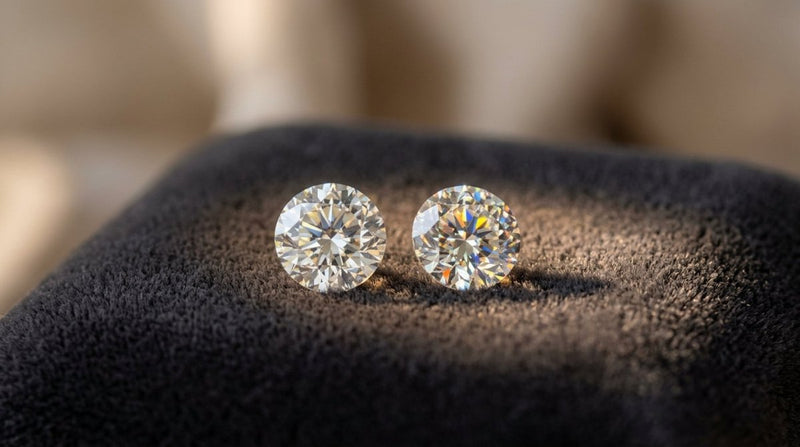
Both are graded on the same GIA 4Cs framework of cut, color, clarity, and carat, so these are equal-spec comparisons, not apples to oranges. The full carat-by-carat table lives in our lab-grown vs natural diamond price guide if you want every size from half a carat to five.
Lab Diamonds vs Real Diamonds Cost: What Does the Same Budget Buy?
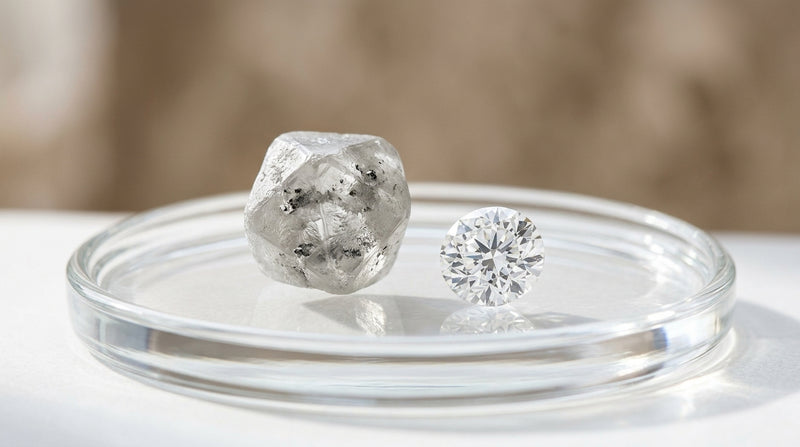
First, the terms: a lab diamond is a real diamond. The comparison people mean is lab-grown versus natural, and the useful way to run it is to hold the budget still and see what comes back.
- $1,000: a well-cut 1 carat lab-grown stone, or a natural stone around a third of a carat.
- $2,500: a 2 carat lab-grown stone, or a natural stone around half a carat.
- $6,000: a 3 to 4 carat lab-grown stone with very high grades, or a solid 1 carat natural stone.
There's a quality angle too, and it's not the one you usually hear. Lab-grown diamonds consistently reach very high color and clarity grades, so at a normal budget you're often choosing between a bigger, better-graded lab stone and a smaller natural one, not between equals. Natural's answer to that is real: rarity, tradition, and a stone with a billion-year story. Neither answer is wrong. They're different purchases.
What Are the Disadvantages of Lab-Grown Diamonds, Stated Plainly?
Every honest worth-it verdict needs the cons on the table.
- Resale value is weak: Jewelers and pawn shops pay little for lab-grown stones because new ones keep getting cheaper. Expect to recover a small fraction of retail if you ever sell.
- Prices are still falling: The stone you buy today may retail for less next year. That stings if you think of it as an asset. It doesn't change anything about wearing it.
- No rarity story: A lab-grown diamond is a product of production, not scarcity. If handing down something genuinely rare matters to you, that's natural's territory.
- Perception, for some: A minority of buyers and families still see natural as "the real thing." The FTC and the grading labs disagree, but feelings are part of a ring purchase too.
Do Lab Diamonds Hold Value?
No, and it's better to hear that here than at a resale counter in ten years. Lab-grown diamonds don't hold value, because there's no scarcity underneath the price. To be fair, natural diamonds also resell well below retail, a fact that surprises most first-time sellers, but they do hold meaningfully more than lab-grown.
Here's the frame I give customers: a diamond is not an investment, it's a purchase you wear every day for decades. Judge it like one. Price per year of wear, a 2 carat lab-grown stone is one of the best deals in jewelry. Judged as a savings account, no diamond of any origin does the job well.
So Who Should Buy Lab-Grown, and Who Shouldn't?
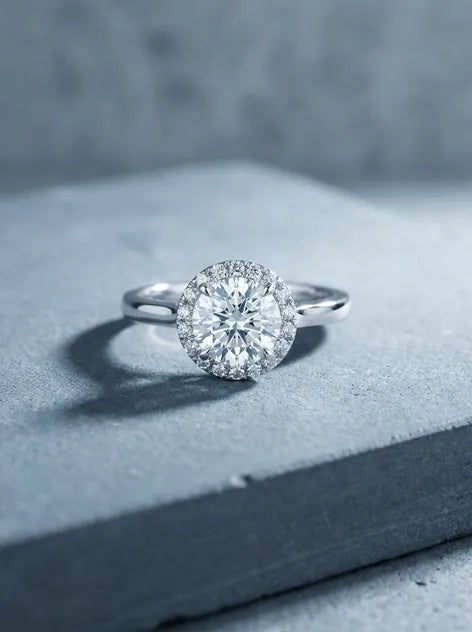
Buy lab-grown if the goal is the most diamond your budget allows: maximum size and grades to wear, especially for an engagement ring where the center stone is most of the cost. In my experience most shoppers who compare both side by side pick the lab-grown stone once they see the same money buy double the carat weight.
Buy natural if resale value, rarity, or the heirloom story carries real weight for you, or if the person wearing it wants a mined stone. That preference is legitimate and we don't argue with it; we build for it.
Either way, put your money in cut first. An excellently cut G color VS2 stone will out-sparkle a poorly cut D VVS1 every time, and that rule doesn't care where the crystal grew.
When you're ready to compare real stones instead of hypotheticals, browse our lab-grown diamond collection, made in our own US factory since 2001, with an IGI certificate included on every lab-grown center diamond of 1.00 carat and up. For settings and styles, our lab-grown diamond rings guide covers what works at each carat weight.
FAQ
Are lab diamonds worthless after purchase?
No. Their resale value is low, but their wearing value is identical to any diamond: same hardness, same sparkle, same decades of daily use. Insurers also cover them like any other diamond, at replacement value.
How much should a 1 carat lab diamond cost?
Typically $400 to $1,200 at retail in 2026, depending on cut, color, and clarity. If you're quoted far above that range for ordinary grades, you're paying for the store, not the stone.
Can a jeweler tell if a diamond is lab grown?
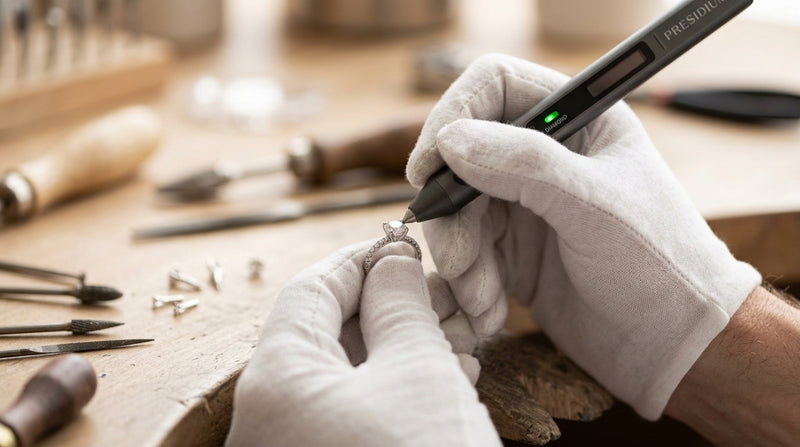
Not by looking. It takes lab-grade equipment or the laser inscription on the stone's girdle, which is exactly why graded lab-grown diamonds carry one. A handheld diamond tester reads them as diamond, because they are.
Are Tiffany diamonds mined or lab grown?
Mined. Tiffany sells natural diamonds in its jewelry. That's a brand positioning choice, not a statement about what lab-grown stones are.
Will lab diamond prices go down in 2026?
Most likely, yes. Production keeps growing and growers keep getting more efficient, which has pushed prices down every year for nearly a decade. Buy at the size and grades you want to wear, and don't try to time it like a stock.