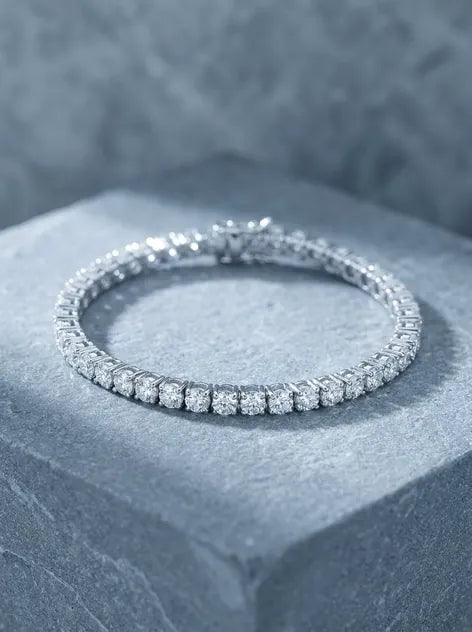
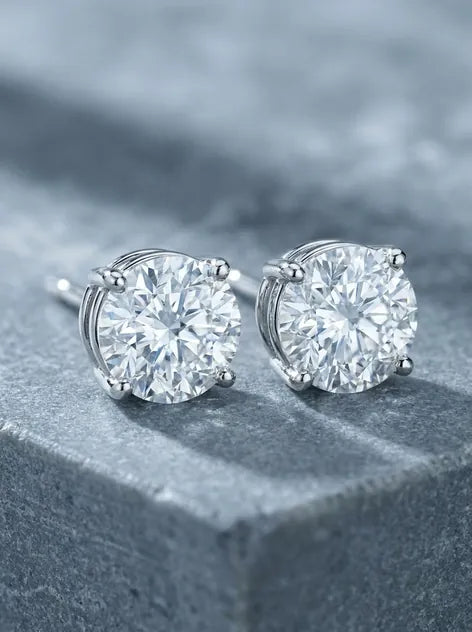
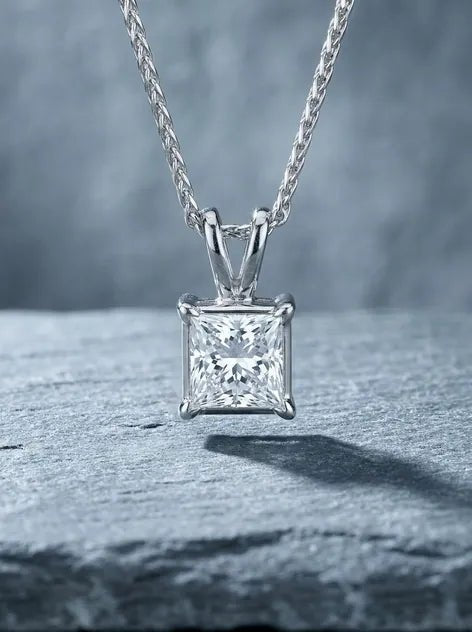


Yes. Lab-grown diamonds pass a diamond tester every time, because they're real diamond, pure crystallized carbon with the same thermal and electrical properties as a mined stone. A tester isn't checking where a stone was born; it's checking what the stone is made of. So the question "do lab grown diamonds pass a diamond tester" has the shortest answer in this whole subject: they pass because they should.
What a handheld tester can and can't do is worth five minutes, though, because it explains a lot: why your jeweler can't eyeball a lab stone, why pawn shops check the girdle instead of the readout, and why moissanite is the stone the tester was really built to catch. I'll walk through it the way I'd show you at the bench.
How Does a Diamond Tester Actually Work?
The pen-style tester in every jewelry store measures heat, not identity. Touch the probe to the stone and it reads how fast heat moves through it.
- Thermal testers: Diamond conducts heat faster than almost any material on earth. If heat races away from the probe, the tester beeps "diamond." Glass and cubic zirconia hold heat, so they fail instantly.
- Electrical testers: Newer combination pens also pass a small current through the stone. This catches moissanite, which conducts heat like diamond but electricity differently.
- What no pen tester reads: Origin. A lab-grown diamond and a natural diamond are the same material, so every handheld tester on the market reads them the same way: diamond.
If you're testing at home, know the limits of a $20 pen before you trust it. Test a clean, dry stone at room temperature, touch the probe to a facet at a right angle, and don't let the tip drift onto the metal setting, because metal conducts and will beep like a diamond. And even a perfect reading only tells you "this is diamond material." For anything expensive, the certificate and the girdle inscription are the real proof.
One honest footnote, because almost nobody prints it: a small share of HPHT-grown diamonds carry trace boron from the growth chamber, which makes them slightly electrically conductive. On a combination tester, that rare stone can trigger a false "moissanite" beep. The stone is still a real diamond; its certificate settles it in seconds.
Does Moissanite Pass a Diamond Tester?
Sometimes, and that's the whole problem testers were built to solve. Moissanite (silicon carbide, a different material entirely, most of it lab-made) conducts heat almost exactly like diamond, so an old thermal-only pen will happily pass it. Electrical testers catch it, because moissanite conducts electricity and diamond doesn't. That's why modern pens test both, and why a dedicated moissanite tester exists as a second-check tool in shops that buy stones over the counter.
So the readout logic runs: thermal pass plus electrical pass means diamond, lab-grown or natural. Thermal pass plus electrical fail means moissanite, almost always.
Moissanite vs Diamond: How Do You Tell Them Apart Without a Tester?
A 1 carat moissanite and a 1 carat diamond look similar in a photo and nothing alike side by side. Three tells:
- The rainbow fire: Moissanite bends light more than diamond, so it throws stronger colored flashes. Under sunlight it can read like a disco ball, where diamond balances white sparkle with color.
- The doubling: Moissanite is doubly refractive: look down through the stone with a loupe and the back facets appear doubled, like faint ghost lines. Diamond shows single, crisp facet edges.
- The weight: Moissanite is lighter than diamond, so a moissanite that measures like a 1 carat round weighs noticeably less on a scale.
None of this makes moissanite a bad stone. It just isn't a diamond, and it shouldn't be priced or sold as one.
Can a Jeweler or a Lab Tell Lab-Grown From Natural?
Not with eyes, a loupe, or a pen tester. Telling lab-grown from natural takes real lab equipment that reads a stone's growth pattern and trace elements, machines like the GIA's screening instruments, using methods far beyond a handheld probe. Even experienced graders don't call origin by sight.
The practical identifier is simpler: the laser inscription. Graded lab-grown diamonds are inscribed on the girdle, the thin edge of the stone, with their certificate number and a lab-grown notation. Anyone with a loupe can find it, match it to the IGI or GIA report, and know exactly what the stone is. If you're curious why those growth patterns differ in the first place, our guide on how lab-grown diamonds are made covers both processes in plain language.
Do Lab-Grown Diamonds Hold Their Value?
Since tester questions usually come from people worried about being fooled, here's the related honesty: passing the tester doesn't mean holding the price. Lab-grown diamonds resell for a small fraction of retail, because supply keeps growing and new stones keep getting cheaper. Natural diamonds resell below retail too, just less brutally. Buy a lab-grown stone for what it costs against what it looks like, which is the best trade in jewelry right now, and don't buy it as an asset. The full breakdown is in our guide on lab-grown vs natural diamond prices.
If you want stones whose paperwork does the proving for you, browse our lab-grown diamond collection. We've manufactured in our own US factory since 2001, every lab-grown center diamond of 1.00 carat or more includes its IGI certificate, and our lab-grown diamond rings guide can help you pick the setting around it.
FAQ
Can a pawn shop tell if a diamond is lab created?
Not with their handheld tester; it reads lab-grown as diamond, because it is one. What they can do is loupe the girdle for the laser inscription, which states the certificate number and lab-grown origin. That inscription, not the tester, is how the trade identifies stones.
What are the downsides of lab-grown diamonds?
Weak resale value and prices that are still falling, plus no rarity story. On the hand there's no downside at all: same hardness, same sparkle, same lifespan as a natural diamond.
Why do jewelers hate lab-grown diamonds?
It's mostly economics. Lab-grown stones carry lower prices, and sellers with big natural inventories worry about the comparison. The stones themselves test, wear, and grade like any diamond, and plenty of us happily make jewelry with both.
What company sells the best lab diamonds?
Judge the stone, not the brand. Two lab-grown diamonds with the same IGI or GIA grades are the same quality no matter whose name is on the box, so compare certificates and prices, and put cut quality first. The seller's job is fair pricing and honest paperwork.