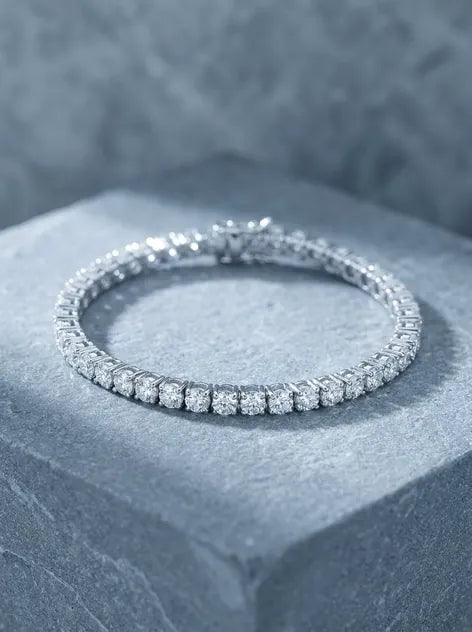
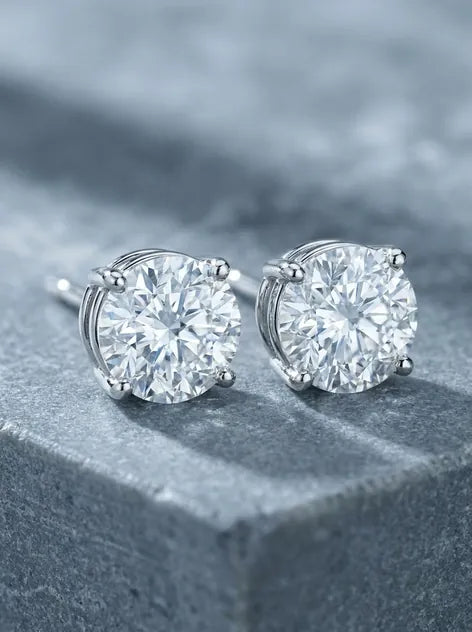
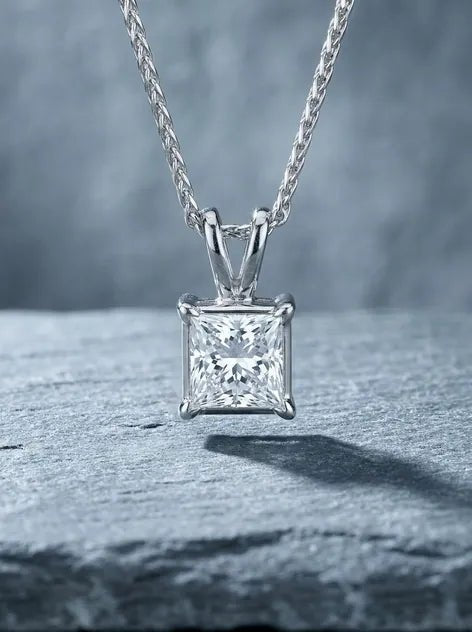


Lab-grown diamonds are made in one of two ways: HPHT, which crushes carbon under heat and pressure the way the earth does, or CVD, which builds a diamond layer by layer from carbon gas. Both methods produce real diamond crystal, pure carbon in the same structure as a mined stone, with the same hardness of 10 on the Mohs scale. That's the whole answer to how lab grown diamonds are made in one breath. The rest of this guide is what each of those two words actually means, and what it means for the stone on your hand.
I'll explain it the way I'd explain it at the bench, not the way a materials-science paper would. By the end you'll know which process made the stone you're looking at, whether it matters, and what to check on the certificate.
Are Lab-Grown Diamonds Real Diamonds?
Yes. A lab-grown diamond is carbon crystallized in the diamond structure, which is the definition of a diamond. The US Federal Trade Commission agrees: since 2018 its jewelry guides define a diamond by its material, not its origin. Hardness, brilliance, fire, the way it wears over decades, all identical to a mined stone.
The comparison that makes it click for customers: lab-grown ice from your freezer and ice from a frozen lake are both ice. Different birthplace, same material. What's genuinely different is rarity and price, and we cover that gap number by number in our lab-grown vs natural diamond price guide.
The HPHT Process: How Does It Recreate the Earth's Pressure Cooker?
HPHT stands for high pressure, high temperature. It's the older method, first pulled off by General Electric in the 1950s, and it copies what the earth does to carbon about 100 miles underground.
- The setup: A tiny diamond seed (a thin slice of existing diamond) sits in a chamber with a source of pure carbon and a metal catalyst.
- The squeeze: The press pushes the chamber to roughly 870,000 pounds per square inch while heating it past 1,300 degrees Celsius. For scale, that's like balancing a jumbo jet on your fingertip.
- The growth: The carbon melts, migrates to the cooler seed, and crystallizes onto it, atom by atom. Days to weeks later, there's a rough diamond big enough to cut.
What the earth does in about a billion years, the press does in under a month. The result isn't a shortcut version of a diamond. It's a diamond, grown fast.
The CVD Process: How Does It Grow a Diamond From Gas?
CVD stands for chemical vapor deposition, and it's the method behind most of the lab-grown stones you'll see in engagement rings today.
- The setup: Flat diamond seed plates go into a vacuum chamber filled with carbon-rich gas, mostly methane mixed with hydrogen.
- The spark: Microwaves or lasers heat the gas into a plasma, around 800 degrees Celsius, which breaks the methane apart and frees its carbon atoms.
- The growth: Those carbon atoms rain down onto the seed plates and lock into the diamond structure, layer after layer, like frost building on a window. A 1 carat stone takes roughly two to four weeks.
CVD runs at lower pressure than HPHT and gives growers fine control over the process, which is a big part of why lab-grown diamonds consistently reach very high color and clarity grades. Some CVD stones get a short HPHT treatment afterward to even out their color; it's routine and disclosed on the certificate.
Lab-Grown vs Natural Diamond: What's Actually Different?
Chemically and optically, nothing. Practically, three things:
- Growth fingerprints: Natural stones carry traces of their billion-year trip, like nitrogen patterns and mineral inclusions. Lab stones carry traces of the chamber, like metallic flecks in some HPHT stones. None of this is visible to the eye or a jeweler's loupe; it takes lab-grade machines to read.
- The inscription: Graded lab-grown diamonds are laser-inscribed on the girdle (the stone's thin outer edge) with their certificate number and "lab-grown." That inscription, not appearance, is how anyone downstream identifies the stone. It's also why a handheld tester can't tell them apart, which we cover in our guide on whether lab-grown diamonds pass a diamond tester.
- Rarity and price: Natural diamonds are a finite supply with a resale and heirloom story. Lab-grown diamonds are a production supply, which is exactly why they cost 70 to 90 percent less at the same grades. Neither fact cancels the other; they serve different buyers.
Lab-Grown Diamonds Price: What Does the Growing Process Mean for Your Budget?
Weeks in a chamber instead of a mining operation is the whole cost story. A 1 carat lab-grown diamond typically runs $400 to $1,200 at retail against $4,000 to $7,000 for its natural equal, and the gap widens as carats climb. The process also scales, so growers keep producing more and prices have kept drifting down. That's great news on the day you buy and the honest caveat if you're thinking about resale.
Grading works exactly like it does for natural stones: the GIA 4Cs framework of cut, color, clarity, and carat. Read the certificate the same way you would for any diamond, and put cut quality first, because cut is what your eye actually sees across the dinner table.
If you'd rather look at finished pieces than process diagrams, browse our lab-grown diamond collection. We've made diamond jewelry in our own US factory since 2001, and every lab-grown center diamond of 1.00 carat or more comes with its IGI certificate. Our guide to lab-grown diamond rings is the next stop if a ring is the goal.
FAQ
Is a lab grown diamond actually a real diamond?
Yes. It's crystallized carbon in the diamond structure, the same material as a mined diamond, and the FTC classifies it as a diamond. It isn't a simulant like cubic zirconia or moissanite, which are different materials entirely.
What is the downside of a lab grown diamond?
Resale value. Because supply keeps growing, lab-grown prices have fallen for years and a stone bought today won't hold its retail price. Buy one to wear it, not to store value in it.
Can a jeweler tell if a diamond is lab grown?
Not by eye, and not with a loupe or a handheld tester. It takes specialized lab equipment reading the stone's growth patterns, or simply finding the laser inscription on the girdle. That's why graded stones carry the inscription in the first place.
What is the lifespan of a lab diamond?
Forever, for practical purposes. It's a 10 on the Mohs hardness scale, just like a natural diamond, and it doesn't fade, cloud, or wear down. The setting will need maintenance over the decades; the stone won't.
Why do jewelers hate lab-grown diamonds?
The resistance you hear mostly comes down to business, not gemology. Natural inventory carries higher margins, and falling lab prices make some sellers nervous. We make jewelry with both and let the certificate and the price make each stone's case.