

Engagement rings under $2,000 buy more ring than most shoppers expect: at retail, that budget typically covers a well-cut natural diamond around a half carat in 14K gold, or a lab-grown diamond of a full carat or more. Neither of those is a compromise ring. Both are real diamonds in real gold, and on a hand they look exactly like what they are.
The reason $2,000 goes further than people assume is structural. A big slice of a typical retail price isn't diamond or gold, it's the chain of wholesalers and showrooms between the factory and your finger. Buy from the manufacturer and that slice comes back to you as carat weight. We've made diamond jewelry in our own US factory since 2001, and pricing without the middle layers is the whole reason a serious ring fits inside this number.
What Does $2,000 Buy: Natural vs. Lab-Grown?
The first fork in the road is stone origin, and at this budget it's the decision that moves the size the most.
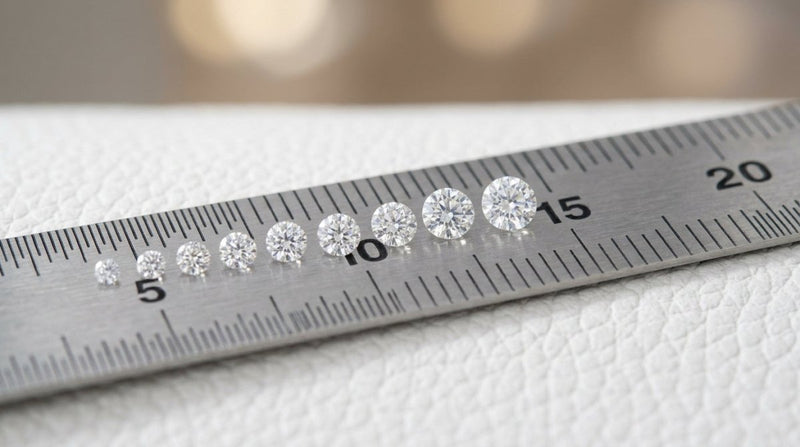
- Natural diamond: Expect a center stone in the 0.40 to 0.70 carat range at typical retail, in the smart-value grades: G-H color, SI clarity, good-to-excellent cut. That's a classic, honest engagement ring with the billion-year origin story, and a half-carat round in a slim band looks bigger on a hand than it sounds on paper.
- Lab-grown diamond: The same budget typically reaches 1 to 1.5 carats, often at high color and clarity grades, because lab-grown stones consistently reach grades that would be a rare purchase in natural. Same carbon, same hardness, same sparkle; the difference is the origin and the price.
- How to choose: If the story matters most, go natural and take the smaller stone proudly. If the look on the hand matters most, lab-grown buys the bigger, whiter stone. There's no wrong answer here, only a preference, and both lines deserve their own honest case.
Engagement Rings Under $1,000: Where Does the Budget Bend?
Cut the budget in half and the same logic holds, just tighter. Under $1,000 at typical retail, a natural center lands around a quarter to a third of a carat, and lab-grown reaches roughly half a carat to three quarters. The trade-offs that protect the look don't change: keep the cut grade high, accept SI clarity that's clean to the eye, stay in G-H color, and use 14K gold. What you should drop at this level is complexity, not quality. A simple solitaire in a slim band spends every dollar on the stone, while a complicated setting at this price usually means the diamonds got cheaper to pay for the metalwork. Small and bright beats wide and dim.
Engagement Rings Under $3,000: What Does the Extra $1,000 Add?
Going the other way, an extra thousand mostly buys carat weight and grade headroom. In natural stones, the center moves toward the three-quarter carat mark, one of the quiet value sizes because it sits just below the heavily premium-priced 1 carat line. In lab-grown, under $3,000 starts reaching 2 carat territory. It also opens the door to detail work: side stones, a pavé band (a band lined with tiny diamonds), or a two-tone design. The honest question to ask before stretching: will the extra $1,000 be visible from across a dinner table? Between 0.50ct and 0.75ct, yes. Between well-cut and poorly cut, absolutely. Between SI1 and VS2 clarity, no, and that's money the finished ring will never show you.
Which Settings Stretch a $2,000 Budget?
The setting decides how big the stone reads, and at this budget that's leverage worth using.
- Solitaire: One stone, minimal metal, every dollar in the diamond. A slim band makes the center look bigger by contrast, and the style never dates. Our solitaire rings guide covers the variations.
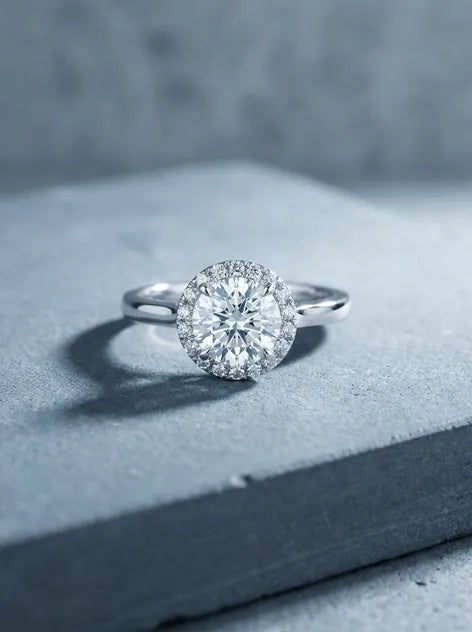
- Halo: A circle of small diamonds around the center makes the whole face of the ring read a half carat bigger than it is, and small diamonds cost a fraction per carat of what center stones cost. It's the highest-impact move per dollar at this price point; our halo rings guide goes deep on it.
- Three-stone: Two side stones widen the ring's presence and split the budget across three cheaper stones instead of one expensive one. It also carries the past-present-future meaning, which lands well in a proposal.
- White metal head: A white gold head (the claws gripping the stone) on any band color blends into the diamond and makes it look slightly larger and whiter. Old bench trick, still works.
Why Is the Year 2000 Engagement Ring Style Back?
A surprising number of people search for a "year 2000 engagement ring" or a "2001 engagement ring," and the Y2K look they mean is specific: white gold everything, princess cut centers, channel-set bands (small square stones set flush in a groove along the band), and cathedral settings that lift the stone high. Twenty-five years is exactly the distance at which a style stops being dated and starts being vintage, and this one is making that turn now. It's also a value play. Princess cuts cost less per carat than rounds because the square shape wastes less rough diamond in cutting, and channel-set bands add sparkle with inexpensive small stones. If the early-2000s ring you remember from a parent's hand is the look you love, you can build it new, under budget, and it won't read as a throwback for long.
When you're ready to put real prices against these numbers, browse our diamond rings under $2,000: factory-direct real diamond rings, with the trade-offs in this guide already working in your favor.
FAQ
Is $2,000 too cheap for an engagement ring?
No. At $2,000 you're buying a real diamond in real gold, around a half carat natural or a carat-plus lab-grown at typical retail. The old salary rules were invented by advertising, not by jewelers, and no one can price a relationship from across the table.
What is the 3 month ring rule?
It says to spend three months' salary on the ring, and it's a marketing invention from mid-century diamond advertising, escalated from the original "one month" version. Ignore it. The right budget is the one that doesn't follow the couple into debt.
What is the 2:1:1 rule in jewelry?
It's an informal budget split you'll see online: roughly two parts for the engagement ring and one part each for the two wedding bands. Treat it as a loose planning sketch, not a rule; plenty of couples put more into the bands they'll wear daily and less into the stone.
What is the least expensive engagement ring?
A plain gold or platinum band is the true minimum, and it's a completely legitimate engagement ring. For a diamond ring, small natural solitaires and lab-grown designs typically begin around a few hundred dollars at retail.