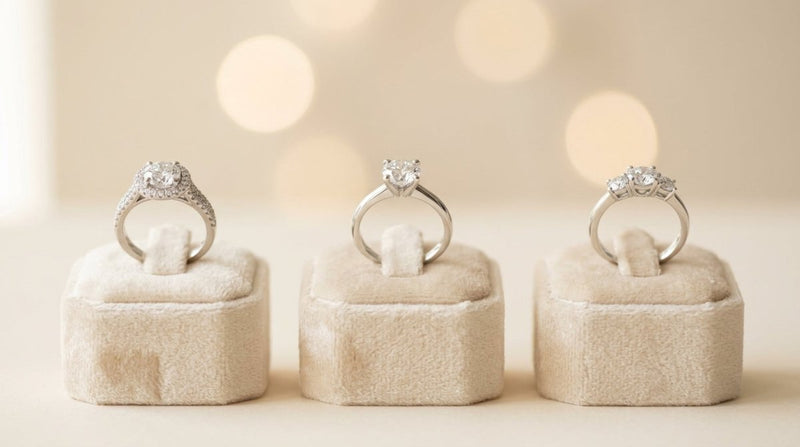


Diamond price per carat in 2026 typically runs $3,000 to $5,500 for a well-cut 1 carat natural diamond in the popular G-H color, SI-VS clarity range at retail, while a comparable 1 carat lab-grown diamond often sells for under $1,000 total. Those two numbers frame the whole market, and everything else in diamond pricing is a variation on them.
One thing to fix before the chart: "per carat" is a rate, not a price. A carat is a unit of weight, exactly 0.2 grams, and the per-carat rate climbs as stones get bigger. So a 2 carat diamond doesn't cost twice what a 1 carat costs; it costs three to four times as much, because big rough diamonds are far rarer than small ones. That's also why "1 kg of diamond price" is a fun search with no real answer: a kilogram is 5,000 carats, and nobody prices diamonds by the bag.
What Does the Natural Diamond Price Per Carat Chart Show for 2026?
These are honest retail ranges for well-cut natural rounds in the G-H color, SI1-VS2 clarity band, the middle of the market where most engagement rings live. Top grades (D-F color, flawless clarity) can run multiples of these numbers; the ranges are a map, not a quote.
- 0.10 carat: Roughly $700 to $1,500 per carat, so around $70 to $150 for the stone. At this size you're pricing something close to a commodity.
- 0.25 carat: Roughly $1,200 to $2,400 per carat, so about $300 to $600 per stone.
- 0.50 carat: Roughly $1,800 to $3,600 per carat, so about $900 to $1,800. This is where a diamond starts reading as a real center stone.
- 0.75 carat: Roughly $2,400 to $4,000 per carat, so about $1,800 to $3,000. One of the best value sizes on the whole chart.
- 1.00 carat: Roughly $3,000 to $5,500 per carat, and here the rate and the price are the same number. There's a prestige premium built into the 1 carat mark.
- 1.50 carats: Roughly $4,500 to $8,000 per carat, so about $7,000 to $12,000 per stone.
- 2.00 carats: Roughly $6,000 to $11,000 per carat, so about $12,000 to $22,000. Rarity is now doing most of the pricing.
Remember what these ranges price: the loose stone at typical retail. The setting, the metal, and the seller's markup all sit on top, which is why the same stone can wear very different price tags in different stores.
What Is the Lab-Grown Diamond Price Per Carat in 2026?
Lab-grown diamonds are real diamonds, same carbon structure, same hardness, same sparkle, grown in weeks instead of formed over a billion years. Per-carat prices haven't stopped falling for a decade as growing technology scaled, and in 2026 the gap to natural is dramatic: a 1 carat lab-grown stone often retails between $400 and $900 loose, a 2 carat between roughly $900 and $2,000, and 3 carats can come in under what a 1 carat natural costs. The quality story is genuinely strong too: lab-grown stones consistently reach very high color and clarity grades, so this budget buys grades that are rare purchases in natural. Larger lab-grown center stones commonly come with an IGI grading report (IGI is one of the major diamond grading labs), which pins down the 4Cs in writing. If that's your route, our lab-grown rings guide walks the whole decision.
Why Do Prices Jump at the Magic Sizes?
A 0.90 carat diamond and a 1.00 carat diamond look almost identical face-up; the difference in diameter is a fraction of a millimeter. The price difference can be 10 to 20 percent. That's the magic-size effect: demand piles up at round numbers, so per-carat rates step up sharply at 0.50, 0.75, 1.00, 1.50, and 2.00 carats.
- Buy just shy: A 0.90ct instead of a 1.00ct, or a 1.40ct instead of a 1.50ct, gets you the same look for meaningfully less money. It's the most reliable pricing quirk in the trade.
- Spend the savings on cut: Cut grade decides how much light the stone returns, and it's the only one of the GIA 4Cs your eyes score from across the table. A well-cut 0.90ct will out-sparkle a mediocre 1.00ct.
- Don't chase paper grades: Between two stones that both look clean and white on the hand, the one with the lower certificate grades is the better buy. You wear the diamond, not the report.
What Does the 10-Year Diamond Price Chart Show, in Plain English?
Search "diamond price chart 10 years" and you'll find two very different lines. Natural diamond prices climbed into a pandemic-era peak around 2021 to 2022, then softened for several years; over the full decade, mid-market natural stones have been roughly flat to modestly down, with the largest, rarest stones holding up best. Lab-grown is the dramatic line: per-carat prices are down on the order of 80 percent or more from the mid-2010s as production scaled worldwide. Two practical takeaways. First, a diamond isn't an investment, it's a purchase; buy it to be worn, and any long-term value is a bonus. Second, falling lab prices are a buyer's gift: the same budget buys a bigger, higher-grade stone every year, and there's no penalty for enjoying that.
How Does a Diamond Value Calculator Actually Work?
Every "value of diamond ring calculator" online runs the same logic: start from a per-carat base rate for the stone's size, then adjust for the other three Cs. Color and clarity move the base up or down band by band, and cut acts as a multiplier on everything, because a poorly cut stone wastes its weight in depth nobody sees. Add the metal value of the setting and you've got a retail estimate. Two honest warnings. The calculators estimate replacement price, not what you'd get selling: resale on any diamond ring runs well below retail because the original markup doesn't come back. And no calculator sees the individual stone; two diamonds with identical grades can differ in beauty, and that's why the trade prices diamonds one by one. For how the 4Cs translate into an actual ring choice, our engagement rings guide takes it from here.
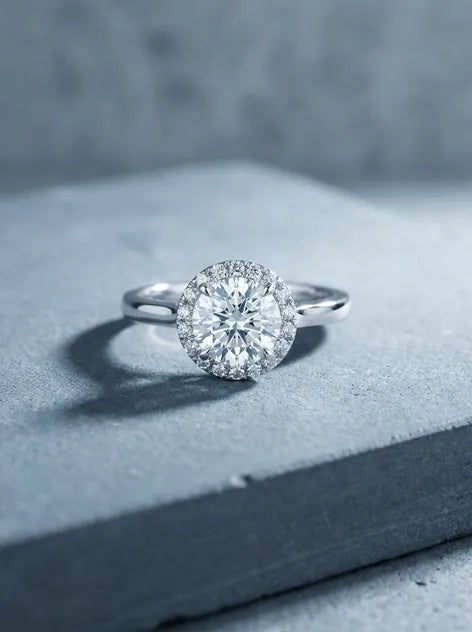
To see what these per-carat numbers become when the middleman is removed, browse our diamond rings under $2,000: factory-direct pricing on real diamond rings, made in our own US factory since 2001.
FAQ
How much is a 1 carat diamond worth?
A well-cut natural 1 carat diamond in the G-H color, SI-VS clarity range typically retails between $3,000 and $5,500 loose; top D-flawless grades run far higher. A comparable 1 carat lab-grown stone is often under $1,000.
How much is a 0.25 carat diamond worth?
Typically $300 to $600 at retail for decent mid-range quality. Small diamonds carry much lower per-carat rates than large ones because small rough is plentiful.
How many carats is a $20,000 diamond?
In natural stones at good mid-range quality, $20,000 typically buys around 2 carats, give or take depending on cut, color, and clarity. In lab-grown, the same money reaches dramatically larger sizes, well past where most people would wear daily.
Are diamonds worth more now than 10 years ago?
Mid-market natural diamonds are roughly where they were a decade ago after a rise and a correction, so no meaningful gain for typical stones. Lab-grown diamonds are worth far less per carat than 10 years ago; that's bad news for resale and great news for buyers.