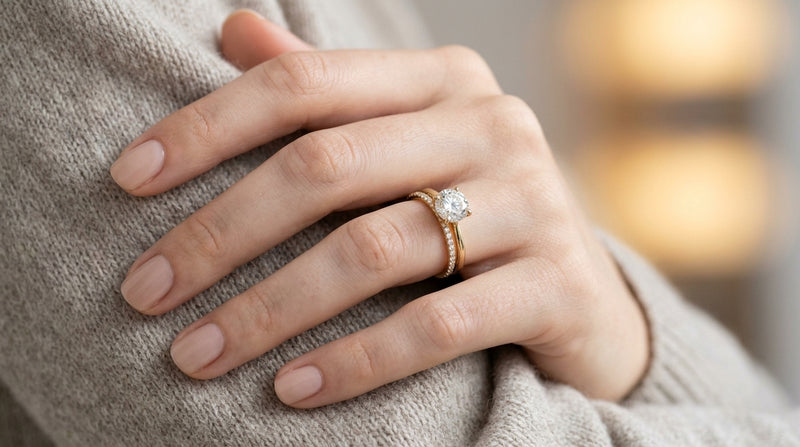


A marquise cut ring carries a long, boat-shaped diamond with pointed ends, a silhouette with royal origins and a graceful, dramatic presence. The shape spreads its weight across a large surface, so a marquise looks bigger than almost any other cut of the same carat, and its length makes fingers appear longer and slimmer.
Marquise Cut Rings use 58 facets to throw strong sparkle and fire across that stretched outline. The pointed tips are the shape's one vulnerability, which is why protective prongs matter more here than on most cuts, secure settings are standard practice for fancy-shaped diamonds.

What Are the Different Variations of Marquise Cut Diamonds?
Marquise cut diamonds come in four variations: classic, long and narrow, wide, and east-west set.
- Classic Marquise: Balanced proportions give this version its timeless, graceful look. The smooth taper from center to points has flattered hands for centuries and still anchors most marquise rings.
- Long & Narrow Marquise: Slimmer than the classic, this cut stretches the finger dramatically. It suits anyone who wants a ring that reads striking from across the room.
- Wide Marquise: Fuller through the middle, the wide version feels bolder and more contemporary. Its larger top surface admits more light, which adds noticeable sparkle.
- East-West Marquise: Turned sideways on the band, the stone takes on a fresh, unconventional attitude. This setting suits modern tastes and instantly separates the ring from tradition.
Which Ring Settings Work Best with Marquise Cut Stones?
Solitaire, halo, vintage, three-stone, and protective bezel settings work best with a marquise cut diamond:
- Solitaire Setting: One marquise stone on a clean band shows the full outline and sparkle without distraction. The look is refined and quietly vintage.
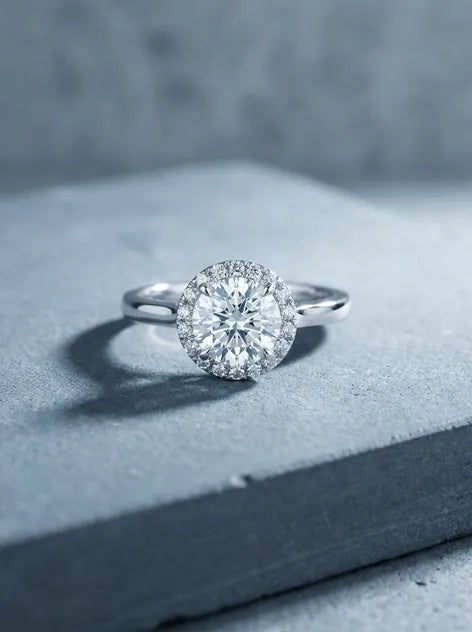
- Halo Setting: Small diamonds surround the marquise, adding brightness and apparent size. The border also visually softens the sharp points at each end.
- Vintage and Art Deco Styles: Filigree metalwork and milgrain beading suit the marquise's old-world pedigree. The fine detail turns the ring into an antique-feeling statement piece.
- Three-Stone Rings: A marquise center with a stone on each side balances the elongated shape. Well-chosen side stones add sparkle and give the design width and symmetry.
- Bezel or Prong Protection: Wrapping the stone in a metal rim shields the fragile tips completely, while V-shaped prongs do the same job at the points alone and show more of the diamond. Either approach keeps the ends safe from chipping.
What Metals Complement the Marquise Cut Best?
White gold, platinum, yellow gold, rose gold, and mixed metals all complement the marquise cut:
- White Gold, Platinum: These white metals give the marquise a bright, polished stage. Their cool surfaces make the stone look sharper and whiter, vintage in spirit, contemporary in finish.
- Yellow Gold: Warm, classic, and quietly luxurious, yellow gold contrasts handsomely with a white diamond. The pairing gives the marquise a traditional, old-world richness.
- Rose Gold: Soft pink tones ease the severity of the pointed ends. Rose gold gives the ring an intimate, romantic character with a gentle antique cast.
- Mixed Metals: Blending two tones, white with rose gold, for instance, creates a modern, personal contrast. The combination makes the ring's shape all the more recognizable and yours alone.
How Can You Choose the Perfect Marquise Cut Ring?
Choose a marquise cut ring by checking symmetry, ratio, metal, setting protection, and cut quality:
- Check Symmetry: Both halves of the marquise should mirror each other exactly, with the two points in a straight line. Even symmetry keeps light moving cleanly through the stone and the outline pleasing to the eye.
- Length-to-Width Ratio: Ratios between 1.75 and 2.25 flatter most hands. Within that range, let personal taste and finger size decide the final number.
- Pick the Right Metal: White gold or platinum reads crisp and new, while yellow or rose gold reads warm and classic. Match the metal to the wearer, not the trend.
- Plan for Point Protection: Halos or small side stones guard the delicate tips while adding extra glitter. Built-in protection means the ring looks good and survives daily life.
- Insist on Cut Quality: Sparkle lives or dies in the cut. A well-cut marquise shows strong fire, bright light return, and an elegant elongated face, the qualities that make this shape turn heads.
How to Care for and Maintain Your Marquise Cut Ring?
Wash a marquise ring weekly with mild soap and a soft brush to lift away skin oils and dirt. Give the two points special attention: they are the most fragile part of the stone, so confirm the setting holds them in sturdy prongs or a guarding bezel to prevent chipping. Have a jeweler check the ring every six months to make sure the mounts are tight and the diamond sits secure. Between wearings, keep it in its own soft or fabric-lined pouch so other pieces cannot scratch the metal or the stone. Consistent care keeps a marquise beautiful for decades.