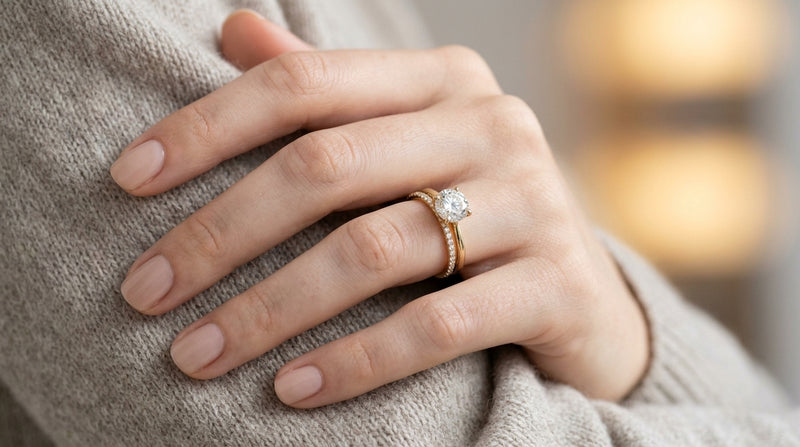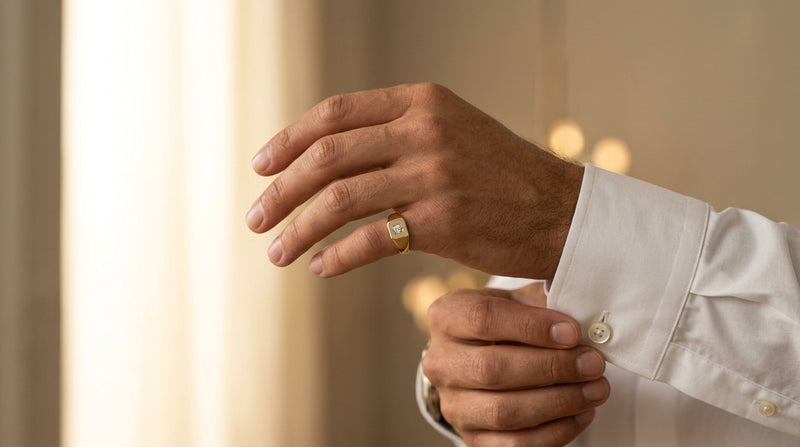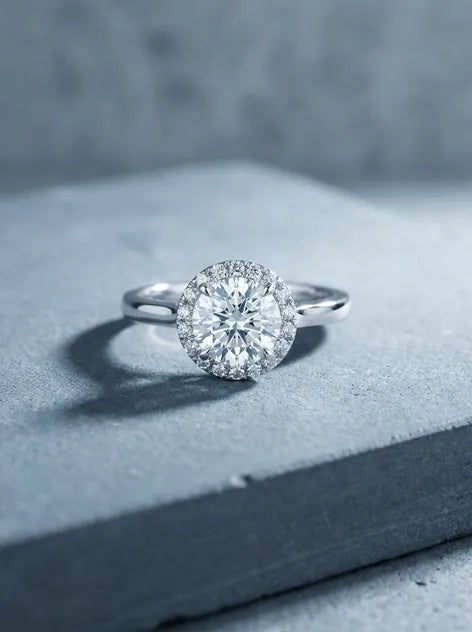
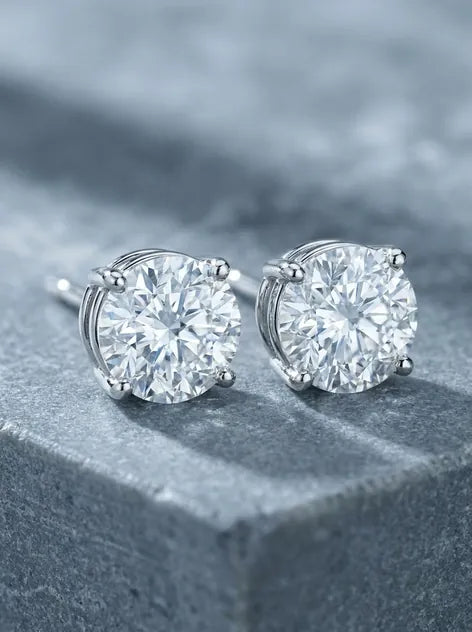
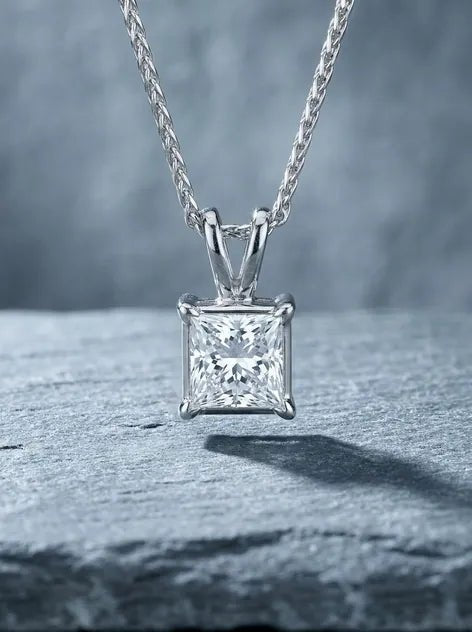


Asscher cut rings hold a square, step-cut diamond with cropped corners that creates a deep “hall of mirrors” effect. The geometry is pure Art Deco, bold, symmetrical, and elegant, and it sits comfortably between vintage and modern taste. Because the facets are broad and open, clarity matters more here than in brilliant cuts: inclusions have nowhere to hide. Interest in the shape keeps climbing among buyers who want something distinctive.
An Asscher reads luxurious and classic at the same time. It suits a minimalist solitaire as naturally as an ornate antique-style band, and it typically costs less per carat than a round cut without giving up any elegance or style.

What Ring Settings Best Complement an Asscher Cut?
Solitaire, halo, vintage, three-stone, and east-west settings complement an Asscher cut best:
- Solitaire Setting: One Asscher diamond on a simple band puts the cut's clean lines front and center. The stone carries the whole design, quiet, beautiful, and easy to wear every day.
- Halo Setting: Small diamonds encircling the Asscher add glitter and make the center look larger. The extra light suits the cut's reflective personality and lends a soft, luxurious glow.
- Vintage/Art Deco Settings: Filigree, milgrain, and geometric metalwork echo the Asscher's 1920s roots. These fine details give the ring a romantic, antique presence with real refinement.
- Three-Stone Setting: Two smaller diamonds flank the Asscher, giving the center stone depth and balance. Couples often choose it to stand for the past, present, and future of a relationship.
- East-West Position: Laid sideways across the band, the square takes on a modern edge. The turn is subtle, but it makes the whole ring feel fresh and bold at once.
How to Choose the Ideal Diamond for an Asscher Cut Ring?
Choose an Asscher diamond by putting clarity first, then color, cut precision, and a slightly generous carat weight:
- Clarity: Open step facets reveal everything inside the stone. Hold out for VS1 or better, a clean Asscher looks like clear glass and bounces light beautifully.
- Color: Step cuts also show body color more than brilliants do. Near-colorless grades in the G–H range look white and icy, especially set in platinum or white gold.
- Cut Quality: The signature mirror effect depends on precision. Look for exact symmetry, well-formed corners, and balanced proportions, a properly cut Asscher shows a distinct X pattern at its center.
- Carat Weight: Depth makes an Asscher look smaller face-up than a round of equal weight. Size up slightly to get the presence you want, then balance carat against cut and clarity.
What are the Popular Metal Options for Asscher Cut Rings?
Platinum, white gold, yellow gold, and rose gold are the popular metal options for Asscher cut rings:
- Platinum: Naturally white, firm, and durable, platinum sharpens the Asscher's shine and shrugs off daily wear. It is the workhorse choice for a ring worn constantly.
- White Gold: Similar brightness at a lighter weight and lower cost makes white gold the practical alternative. Periodic rhodium re-plating keeps the finish crisp and white.
- Yellow Gold: Warm color gives the Asscher's strict geometry an antique, almost regal cast. Step-cut diamonds have paired with yellow gold since the Art Deco era, and the match still works.
- Rose Gold: Blush-pink tones read modern and vintage at once. Rose gold flatters colorless and lightly tinted stones alike, adding a warm contrast that suits every skin tone.
How Can You Choose the Perfect Asscher Cut Ring?
Pick the perfect Asscher cut ring by checking clarity, ratio, metal, setting, and cut precision, in that order:
- Pay Attention to Clarity: Large open facets show every internal detail, so clarity is non-negotiable. VS1 or higher keeps the stone looking glassy, with no inclusions catching the eye.
- Confirm the Ratio: An ideal Asscher sits at a length-to-width ratio of about 1.00, a true square. Even proportions are what let the famous step pattern line up cleanly.
- Choose a Complementary Metal: Platinum and white gold amplify brilliance, while yellow or rose gold adds warmth and a vintage note. Take the tone that suits the wearer's skin and style.
- Weigh the Setting: Halos, vintage details, and three-stone layouts each change the ring's personality. The right setting adds sparkle and presence without crowding the center stone.
- Check Cut Precision: Crisp edges, deep facets, and exact symmetry are the marks of a well-made Asscher. Look for the clean X pattern at the center, it signals careful cutting and lasting beauty.
What are the Current Trends & Styling Ideas for Asscher Cut Rings?
Double halos, mixed metals, and east-west settings are the current styling trends for Asscher cut rings:
- Double Halo Designs: Two rows of tiny diamonds frame the Asscher for a red-carpet level of sparkle. The layered border also makes the center stone look substantially bigger.
- Mixed Metals: Combining platinum with rose or yellow gold adds contrast and a contemporary edge. The two-tone approach highlights the cut's geometric lines while feeling personal and current.
- East-West Orientation: Rotating the Asscher sideways across the band turns a traditional diamond into a conversation piece. The look is smooth, modern, and pleasantly unexpected.
How to Care for and Maintain an Asscher Cut Ring?
Keep an Asscher cut ring bright with simple, regular care. Wash it weekly in mild soap and warm water, brush it gently with a soft brush, and dry it with a lint-free cloth. Have a professional inspect the ring every six to twelve months to confirm the prongs and setting are tight. Try not to knock the diamond against hard surfaces or rough edges, cropped corners resist chips better than sharp points do, but no stone is immune. Store the ring in its own soft, fabric-lined box so it never rubs against other jewelry, and the hall-of-mirrors depth will hold up for decades.