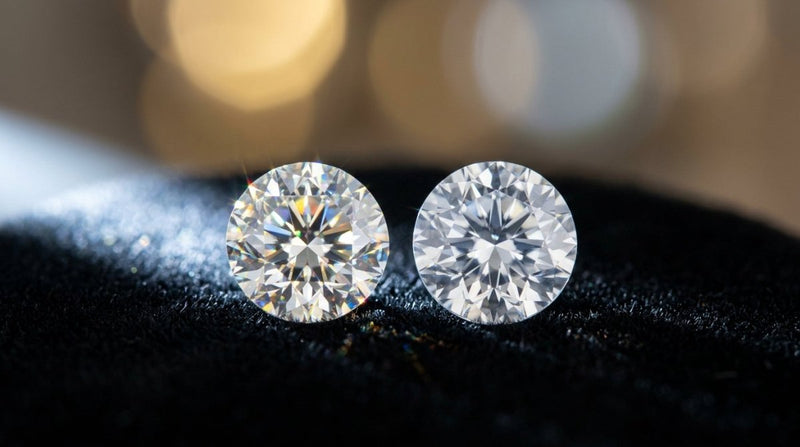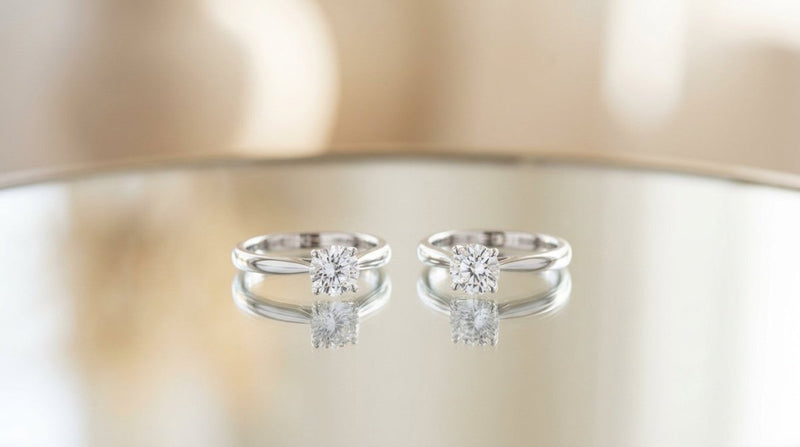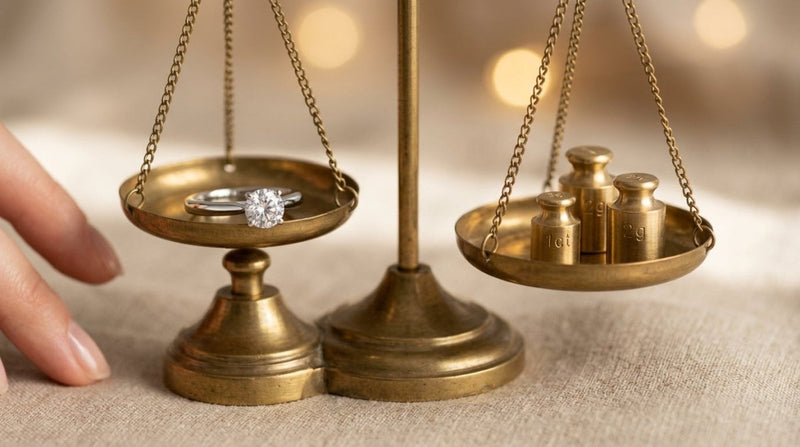
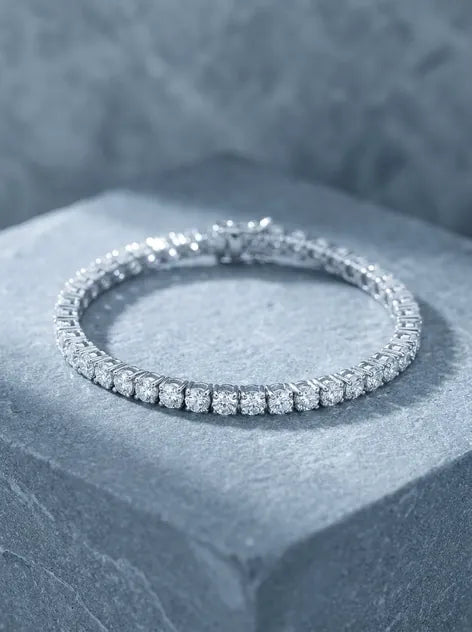
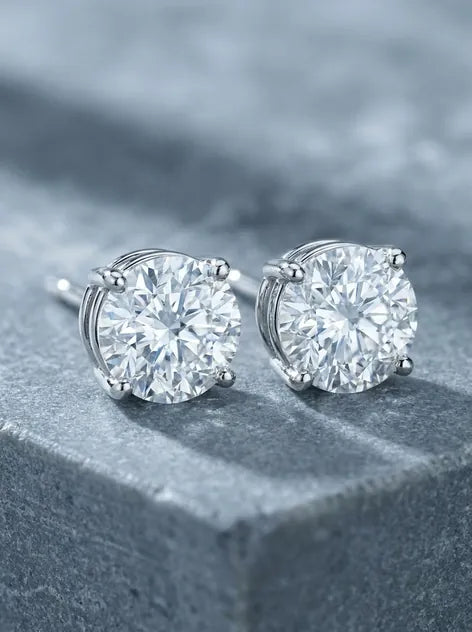
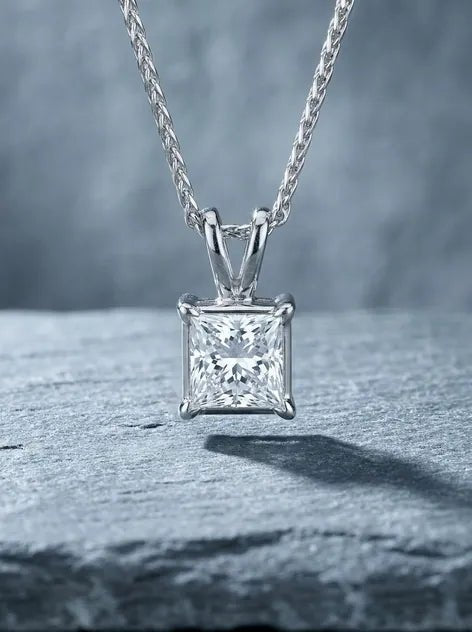


Wedding ring sets for her pair an engagement ring with a matching wedding band, designed and made together so the two rings sit flush and share the same pattern. Both rings are hers: the engagement ring she wears from the proposal, and the band that joins it at the ceremony. Buy them as a set and you skip the most common bridal headache, which is hunting for a band that actually fits against a ring that was never designed for one.
This guide covers the terms (they're used sloppily everywhere), the styles that work best as pairs, the metal choice, what sets honestly cost, and how to pick one.
Bridal Ring Sets vs Trio Sets: What Are You Actually Buying?
The terms overlap in search results, so let's fix them before you spend money on the wrong number of rings.
- Bridal ring set (2 rings, both hers): her engagement ring plus her matching wedding band. This is what "wedding ring sets for her" means, and it's what this guide is about.
- Trio set (3 rings): a bridal set plus a coordinating men's band. When listings say "wedding ring sets his and hers" or "3 piece wedding ring sets," this is the product: her two rings and his one.
- A single band sold alone: not a set at all, no matter what the listing title says. If a page shows one ring and says "set," read it twice.
One more thing worth knowing: the rings in a set can be bought separately. If the budget only covers the engagement ring today, the matching band is cut to the same pattern whenever you come back for it.
Why Buy a Set Instead of Two Separate Rings?
Three practical reasons, and they're about fit and color, not romance.
- The rings actually sit together. A halo or cathedral engagement ring often leaves a gap against a straight band. A set's band is shaped to its engagement ring, contoured or notched where it needs to be, so there's no daylight between them on the finger.
- The metal matches exactly. Two white gold rings from two different makers can read as two slightly different whites. Rings made together come from the same alloy and finish, so the pair looks like one piece.
- The pattern continues. If the engagement ring carries pave diamonds (small stones set in rows along the band), the matching band picks up the same stone size and spacing instead of approximating it.
Which Set Styles Work Best?
Four pairings cover most of what brides actually wear.
- Solitaire plus plain band: the most popular set there is, a single center stone with a clean band beside it. It never dates, and it's the easiest to wear daily.
- Solitaire plus pave band: keeps the center stone as the focus while the band adds a low line of sparkle. The most common upgrade from the plain band.
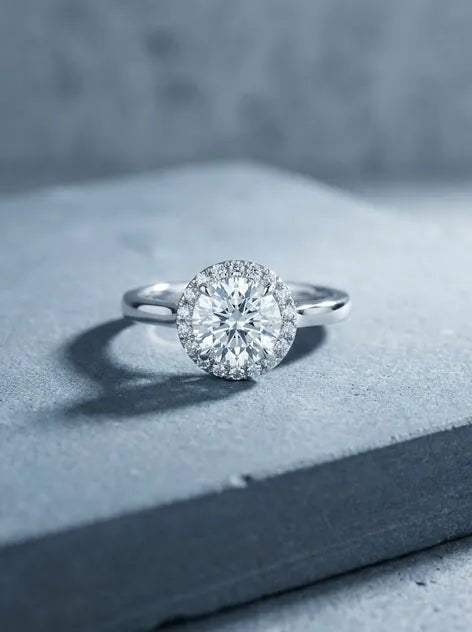
- Halo plus contour band: a halo (the circle of small diamonds around the center stone) makes the center look bigger, and the contour band curves to hug it. Bought separately, this pairing is the hardest to get right; bought as a set, it's solved.
- Three-stone plus curved band: the past-present-future design with a band shaped to its profile. More presence on the hand, still comfortable to stack.
Some brides later swap or add a full circle of stones for anniversaries; our eternity rings guide covers when that upgrade makes sense. For the band decision on its own, the wedding rings guide goes deeper on widths and profiles.
How Do You Choose the Metal for a Wedding Ring Set?
Because the two rings live pressed together for decades, pick one metal and buy both rings in it at the same time.
- 14k gold: the workhorse. More alloy makes it harder-wearing than 18k, and it's the standard for rings worn daily. Available in white, yellow, and rose.
- 18k gold: richer color, a bit softer, a bit more money. Worth it if the deeper gold tone is the point.
- White gold: rhodium-plated for its bright silvery finish; the plating gets refreshed every few years. The most popular bridal choice because it makes white diamonds read whiter.
- Yellow and rose gold: warm tones that have come back hard in bridal. Rose gold's copper content also makes it slightly tougher than yellow.
- Platinum: naturally white with no plating to maintain, denser and heavier on the hand, at a premium over gold.
What Does an Affordable Bridal Set Really Cost?
At typical retail, natural diamond bridal sets mostly run $2,000 to $6,000, and lab-grown diamond sets commonly run $1,000 to $3,000 for the same look, because the center stone is where most of the money sits. That's the honest reason lab-grown has taken over the affordable end of bridal: it's the same crystallized carbon graded on the same GIA scale, at a fraction of natural pricing.
A word on "wedding ring sets under $500": at that price with a full-size center stone, you're almost always looking at plated metal, simulant stones, or both. Nothing wrong with that if you know what you're buying, but the listings rarely say it plainly. Solid gold and real diamonds have a floor, and it's above $500 for a two-ring set with meaningful carat weight.
How Do You Choose Your Set?
- Set the budget first, then pick the stone type. Lab-grown stretches the same money into a bigger, better-graded center; natural buys rarity and tradition. Both are legitimate; decide which matters to you.
- Match her existing jewelry. If everything she wears is yellow gold, don't guess white. The metal is the least reversible choice in the set.
- Think about her hands and her days. Active work and high-set halos don't mix well. A lower profile and a snug contour band survive real life better.
- Confirm the ring size before ordering, not after. Resizing a contoured or pave band is harder than resizing a plain one.
- Buy the pair together if you can. Matched alloy, matched pattern, one decision instead of two. And if you can't, remember the band can follow later, cut to the same pattern.
When you're ready to look at real options, browse our lab-grown bridal sets: engagement ring and matching band made together in our own US factory since 2001, factory-direct without the middleman markups built into the retail ranges above.
FAQ
What is the difference between a bridal set and a wedding ring set?
In practice the terms are used interchangeably for her two rings: engagement ring plus matching band. Strictly, "bridal set" always means those two rings for her, while "wedding ring set" sometimes gets stretched to cover trio sets that add a men's band. Count the rings in the listing, not the words in the title.
What is the average cost of a bridal ring set?
At retail, most diamond bridal sets fall between $1,500 and $6,000, with lab-grown sets clustered toward the lower half of that range and natural sets toward the upper. The center stone's carat weight and grades drive most of the difference.
What is the most popular wedding ring set?
The solitaire engagement ring with a matching plain or pave band, usually in white gold with a round center stone. It's the pairing that never goes out of style and the easiest to wear every day.
What is the 3 month ring rule?
An old guideline that says to spend three months' salary on the ring. It started as diamond-industry advertising, not financial advice, and you can ignore it. Spend what fits your life; a well-chosen set at your real budget beats a stretched one at someone else's.