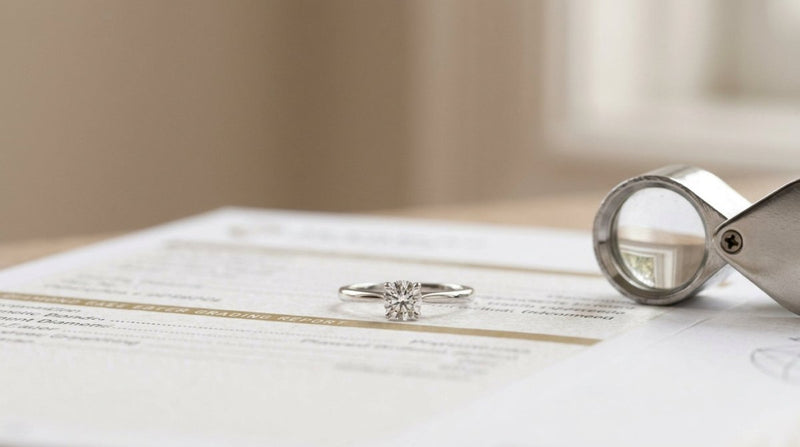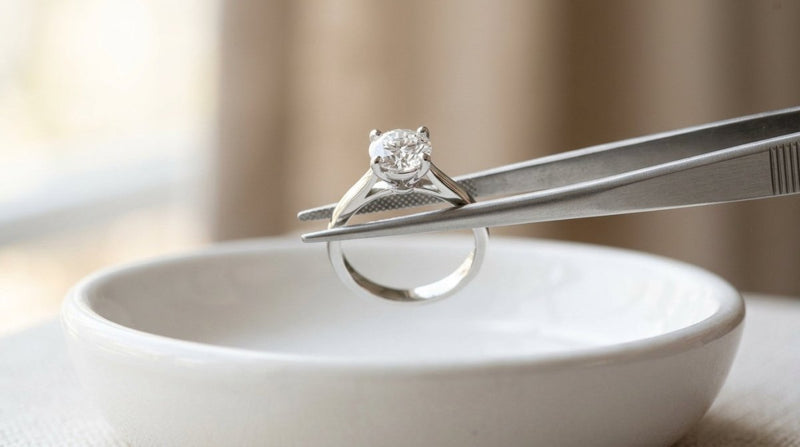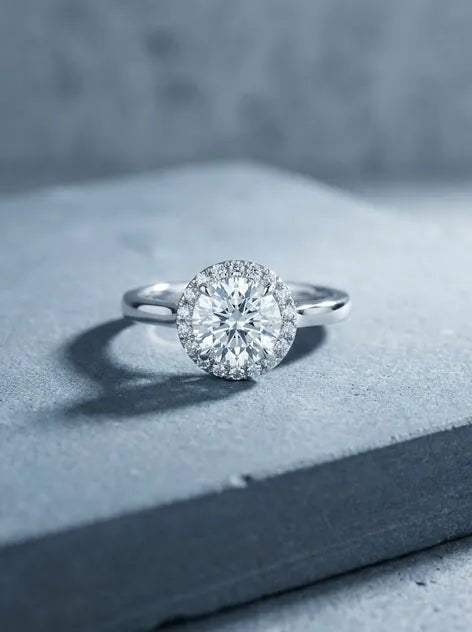
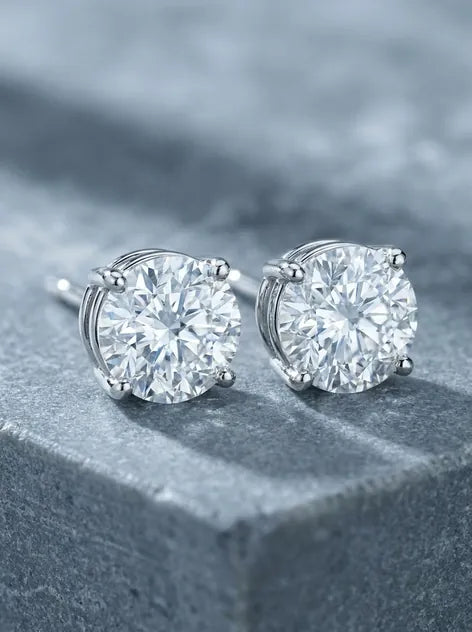
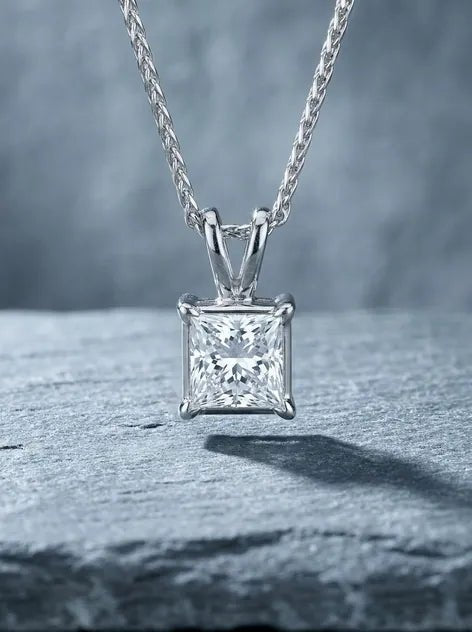


A solitaire ring with a wedding band is the easiest pairing in jewelry, because a single center stone leaves room for almost anything beside it. The three matches that work best are a plain metal band for a clean, classic stack, a pavé diamond band for added sparkle that doesn't compete with the center, and a curved band when the solitaire sits low and the two rings need to nest. That's the short answer; the rest of this guide is how to pick between them without guessing.
One thing worth saying up front: this is the solitaire's whole advantage. A halo or three-stone ring narrows your band options because the design is already busy. A solitaire, one stone on a clean band, pairs with practically everything, which means the wedding band becomes a real choice instead of a constraint.
What Are the Best Wedding Band Styles for a Solitaire Engagement Ring?
- Plain metal band: The most popular pairing in jewelry, and for a reason. A 2mm to 3mm plain band in the same metal frames the solitaire without pulling any attention from it. It's also the most comfortable and the most durable option, with nothing to snag and no small stones to check.
- Pavé or shared-prong diamond band: A row of small diamonds adds sparkle at the base of the stack while the center stone stays the headline. Keep the band's diamonds noticeably smaller than the center and the hierarchy takes care of itself.
- Curved or contour band: Shaped to trace around the center stone, so the two rings sit flush with no gap. The right answer when the solitaire is set low, and worth seeing on the hand before deciding, since a curve reads more distinctive than a straight line.
- Eternity band: Diamonds all the way around. Maximum sparkle and a favorite anniversary upgrade, with one honest caveat: a full eternity band can't be resized, only remade, so the fit needs to be right the first time.
- Twisted or milgrain band: Texture instead of stones. A rope twist or milgrain edge gives the stack character while keeping the budget where it belongs, in the center diamond.
Curved Wedding Band or Straight: How Do You Solve the Gap?
Put a straight band next to some solitaires and you'll see daylight between the two rings. That gap is geometry, not a flaw. A solitaire's head, the part gripping the stone, can extend over the finger, and if it sits low, a straight band bumps into it and gets pushed away.
Here's the concrete test: slide a plain band up against the engagement ring. If they sit flush, a straight band of any style works and you have the full menu. If they don't, you have three fixes. A curved wedding band for a round diamond is the purpose-built answer, tracing the head so the stack closes tight. A thinner straight band, 1.5mm to 2mm, often tucks under the head where a wider one won't. Or you accept a small gap on purpose; plenty of people do, and on the hand it reads as two rings rather than a broken set. High-set cathedral and Tiffany-style solitaires usually clear a straight band entirely, which is one quiet argument for a higher setting if you already know you want a straight stack.
How Do You Match Metal, Width, and Finish?
- Metal: Matching metals, white gold with white gold, yellow with yellow, gives the stack a one-piece look, and it's the safe default. Deliberate mixing works too and photographs beautifully, with one practical note: a yellow gold band against a white gold solitaire reads intentional, while two slightly different whites, platinum against white gold, can read like a near miss.
- Width: Bands within about half a millimeter of each other stack cleanest. A 1.8mm solitaire band with a 2mm wedding band looks like a set; the same solitaire with a 4mm band looks top-light, like the engagement ring is balancing on a shelf.
- Finish: Polished with polished, matte with matte. Finish is the detail nobody thinks about at the counter and everybody notices in photos.
- Profile: Comfort-fit interiors matter more in a stack than on a single ring, because two rings worn together press on each other all day. It's the difference you feel at hour ten, not minute one.
Should You Get a Diamond Band Engagement Ring, or Add the Diamonds Later?
Some shoppers flip the whole question: instead of a plain solitaire plus a diamond wedding band, they want a diamond band engagement ring, a solitaire whose own band carries pavé stones. Both routes end in a similar look. The difference is where the sparkle lives and what it costs.
A pavé solitaire puts the extra diamonds on the engagement ring, so it shines alone, before the wedding, with no second ring needed. The trade-off is that it pairs best with a plainer wedding band, or the stack gets busy. A plain solitaire keeps the engagement ring simple and lets the wedding band bring the diamonds later, which spreads the spending across two moments and keeps every option open. Neither is wrong. If the engagement photos matter most, pavé now; if you'd rather build the stack over time, plain now and diamonds at the wedding.
What Proportions Work: Bands for a 1 Carat vs a 2 Carat Solitaire?
A 1 carat diamond solitaire ring, about 6.5mm of stone in a round, balances beautifully over slim bands. Keep both rings in the 1.6mm to 2.5mm range and the center stone stays the clear focus; this is the pairing that made the thin-band solitaire the defining engagement look of the past decade.
A 2 carat diamond solitaire ring is a different animal. At roughly 8.1mm across, the stone can overwhelm a whisper-thin stack, so bands from about 2mm to 3mm carry it with better proportion, and a pavé band holds its own beside the bigger center where it might disappear next to a 1 carat. Larger centers are also where lab-grown changed this decision: a 2 carat lab-grown center costs a fraction of its natural twin, which frees real budget for the band. For the numbers, our 2 carat lab-grown price guide lays out the honest ranges.
If you're starting the stack from the center stone out, browse our lab-grown solitaire rings and picture each one with the band styles above. For deeper background, the solitaire rings guide covers settings and metals, and the wedding rings guide covers the band side of the equation.
FAQ
Can a solitaire ring be a wedding ring?
Yes. Nothing about a wedding ring is required to be plain; a solitaire worn as the single wedding ring is a long-standing choice, and plenty of people skip the two-ring stack entirely. If you might add a band later, just check the solitaire's setting height now so your future options stay open.
What wedding band goes well with solitaire?
A plain metal band in the matching metal is the classic answer and the hardest to get wrong. A thin pavé band is the step up in sparkle, and a curved band is the fix when a low-set solitaire leaves a gap. Match the metal and keep the widths close, and all three work.
What is the 3 month ring rule?
It's the old idea that an engagement ring should cost three months of salary, and it isn't a rule at all; it started as diamond-industry advertising decades ago. Spend what fits your life. A well-cut lab-grown solitaire makes that easier, since the same budget buys a much larger, higher-grade stone than it would in a natural diamond.
Is a 2 carat ring too flashy?
That's taste, not fact. On most hands a 2 carat reads bold but not costume, and the setting decides much of the impression: a simple solitaire mounting keeps even a big stone looking clean. If you're unsure, look at the stone size in millimeters against the wearer's finger width rather than the carat number on paper.