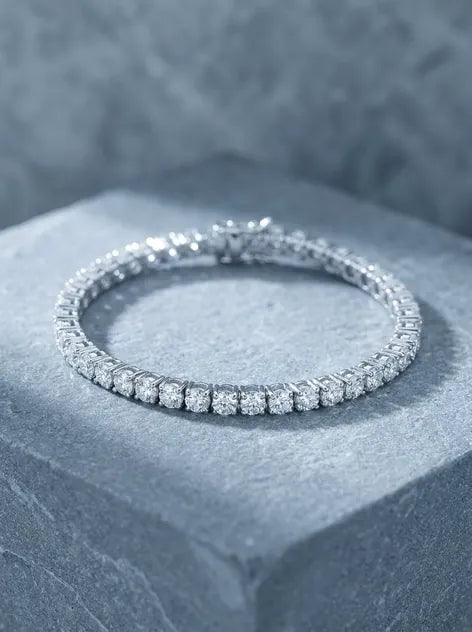
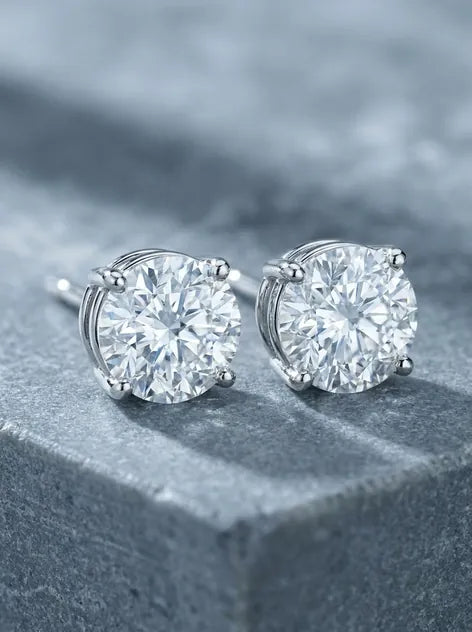
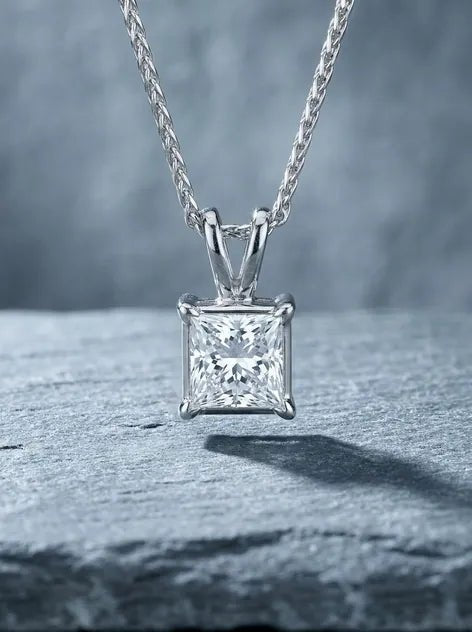


A 2 carat lab-grown diamond typically costs $800 to $2,500 loose at retail in 2026, and a finished 2 carat solitaire ring usually lands between $1,500 and $4,000 depending on grades and setting. Put that next to a natural 2 carat round, which runs $15,000 to $30,000 at retail for comparable grades, and you see why the 2 carat lab-grown diamond price is the number that's changing what people propose with.
Here's the part most shoppers don't expect: the jump from 1 carat to 2 carats costs far less in lab-grown than the same jump costs in natural. That's not a discount or a promotion. It's how the two markets price size, and it's worth two minutes to understand before you set a budget.
Why Does 2 Carats Cost Less Than You Think?
Natural diamond prices climb exponentially with size because big, clean rough is rare. A natural 2 carat isn't twice the price of a natural 1 carat; it's often four to five times the price, because nature produces far fewer large crystals worth cutting. Rarity is the product, and you pay for it at every step up.
Lab-grown pricing doesn't work that way. Growers can produce larger stones reliably, so a 2 carat costs more than a 1 carat mostly because it takes more time and material to grow and cut, not because it's a lottery ticket. The result: the price curve stays nearly flat where the natural curve goes vertical. A 6.5mm stone becomes an 8.1mm stone, the look on the hand changes completely, and the bill doesn't multiply.
What Is the Price Ladder for 1, 2, 3, and 3.5 Carats?
Typical 2026 retail ranges for loose lab-grown stones, so you can see the whole ladder at once.
- 1 carat, $400 to $1,200: The classic starting point, 6.5mm across in a round. We cover it grade by grade in our 1 carat lab-grown price guide.
- 2 carats, $800 to $2,500: 8.1mm across. The stone reads unmistakably big on most hands, and it's the size this guide is about.
- 3 carats, $1,500 to $4,500 loose: 9.3mm across. A 3 carat lab-grown diamond ring price typically runs $2,500 to $6,000 finished at retail. In natural, 3 carats is often a six-figure stone at top grades.
- 3.5 carats, $2,000 to $5,500: Past this size, setting choice matters as much as the stone. A heavy stone needs a properly built head, which is a manufacturing question, not a marketing one.
Notice what the ladder tells you: for the price of the top of one tier, you can often reach the bottom of the next size up. That's a real decision, not a sales line, and it's why so many shoppers walk in planning on 1 carat and walk out at 2.
2 Carat Lab-Grown vs Natural: How Does the Comparison Hold at Every Size?
The lab versus natural price gap widens as the stones get bigger. Typical retail comparisons in 2026:
- 1 carat lab-grown vs natural: Roughly $400-$1,200 against $3,500-$8,000. The natural costs several times more.
- 2 carat lab-grown vs natural: Roughly $800-$2,500 against $15,000-$30,000. The multiple grows to ten times or more.
- 3 carat lab-grown vs natural: Roughly $1,500-$4,500 against $40,000 and up. At this size the two products serve different buyers entirely.
To be clear about what you're comparing: a lab-grown diamond is a real diamond, chemically, physically, and optically identical to a mined one under the same GIA 4Cs grading framework. What the natural stone carries is rarity, and rarity has genuine value to many buyers. Both are honest purchases. The question is only which one you're paying for, size and grades, or size, grades, and scarcity.
Which Grades Matter Most on a 2 Carat Stone?
A bigger diamond is a bigger window. Color and inclusions that hide in a 1 carat can show in a 2 carat, so the grade advice shifts slightly as the stone grows.
- Cut, still first: An Excellent or Ideal cut is non-negotiable at this size. A 2 carat with a poor cut is a big dull stone, and nobody wants to explain that.
- Color, one step tighter: Larger stones show warmth more readily. G color or better keeps a 2 carat facing up white in platinum and white gold. Lab-grown makes this easy, since high-color stones are the consistent norm rather than the expensive exception.
- Clarity, eye-clean is the test: An inclusion near the center of a 2 carat table is easier to spot than the same flaw in a smaller stone. VS2 and up is the safe zone; a specific SI1 can work if it's been checked as eye-clean. Grades above VVS remain invisible-money at any size.
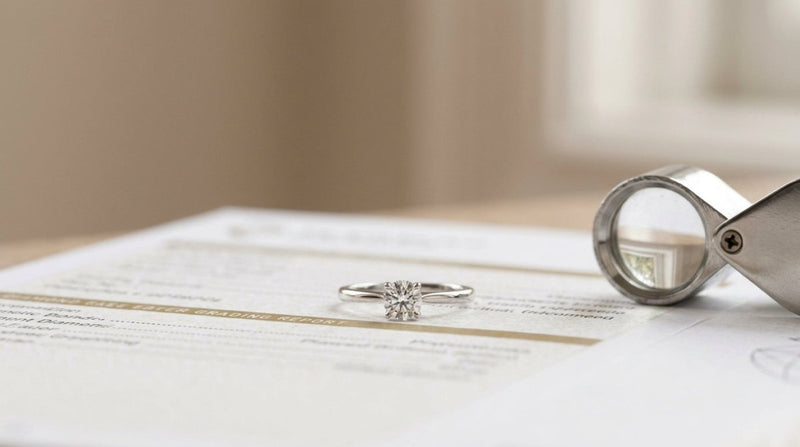
- Certificate, at this size, always: On a stone this valuable you want independent paper. Lab-grown diamonds of 1.00 ct and up ship from PrimeStyle with an IGI certificate, so a 2 carat center always arrives with its grades documented by an independent lab.
What Does a 2 Carat Look Like on the Hand?
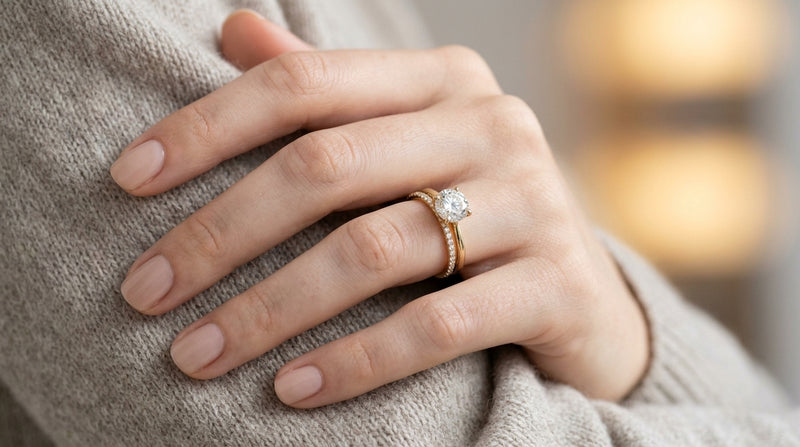
Numbers on a certificate don't answer the question people actually have, which is how it looks. A 2 carat round is about 8.1mm across, roughly the diameter of a standard pencil eraser, and it spans most of the width of an average ring finger. On slimmer fingers it reads bold; on wider hands it reads balanced rather than large.
Shape changes the story too. An oval or emerald cut of the same 2 carat weight carries more length, so it covers more finger than a round. If maximum spread per dollar is the goal, an elongated shape is the quiet cheat code: same weight, bigger look. It's the cut, not the carat.
When you're ready to compare real stones instead of ranges, browse our lab-grown solitaire rings and put a 2 carat next to a 1.5 on the same screen. For background reading, the lab-grown rings guide explains how the stones are grown, and the solitaire rings guide covers which settings carry a big center well.
FAQ
Is a 2 carat lab grown diamond good?
Yes. It's a real diamond graded on the same GIA 4Cs scale as a mined stone, and lab-grown stones consistently reach very high color and clarity grades. Judge it the way you'd judge any diamond: cut first, then color, then clarity, with the certificate to back it up.
What is the price of a 2 carat lab grown diamond?
Typically $800 to $2,500 loose at retail in 2026, with finished solitaire rings usually running $1,500 to $4,000. Where a specific stone lands in that range comes down to cut quality, color, and clarity.
What size lab grown diamond can you get for $2,000?
At typical retail prices, $2,000 covers a finished lab-grown solitaire ring around 1 to 1.5 carats at strong grades, or a loose stone up to about 2 carats if you relax color or clarity a step. Factory-direct pricing stretches that further because there's no middleman layer in the number.
Why do jewelers hate lab grown diamonds?
Most don't. The frustration you read about comes from retailers holding natural inventory while lab-grown prices fell, and from the fact that lab stones carry little resale value, which weakens the old trade-up sales pitch. A manufacturer that makes both, like us, doesn't need to hate either one; each has an honest case.
How many carats is a $10,000 engagement ring?
In natural diamonds, $10,000 typically buys around 1 to 1.5 carats at good grades once you include the setting. In lab-grown, the same budget can reach 3 carats and beyond, which is exactly why the 2 carat question stopped being hypothetical for most couples.