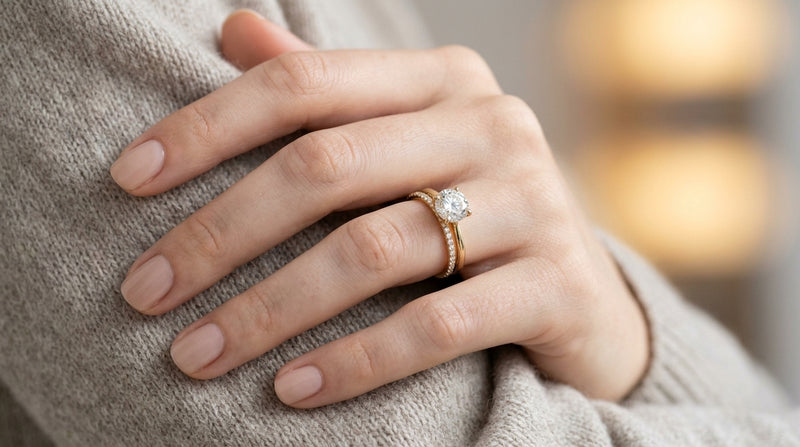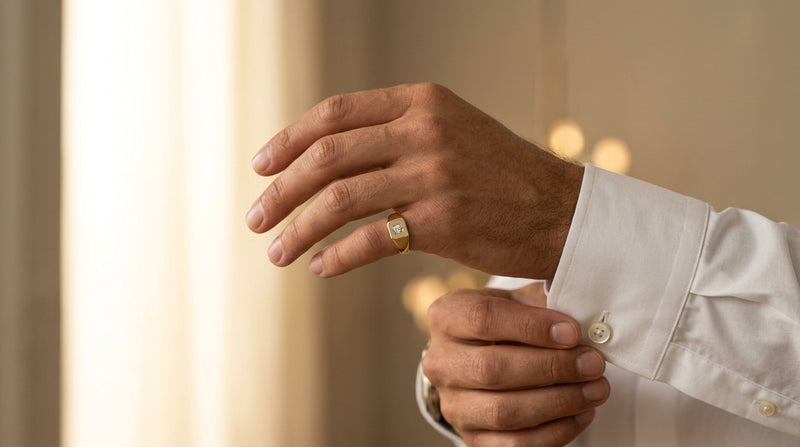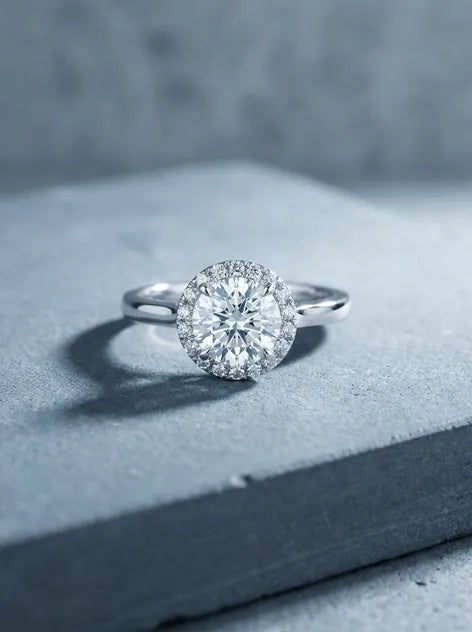
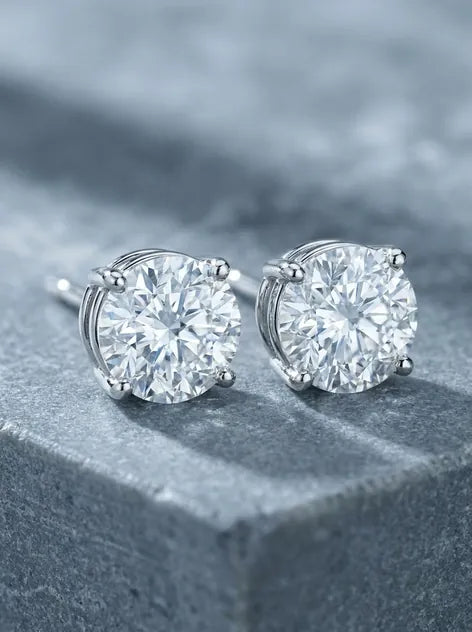
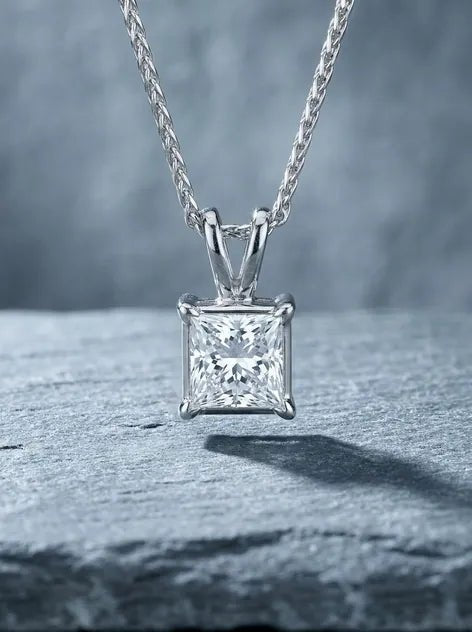


Illusion-set rings use a shaped metal collar around the center stone to make it look considerably larger than it is. Grooves, tiny cuts, and bright-polished edges in the surrounding metal catch light from every direction and add their own sparkle to the stone's. The payoff is value: an illusion setting delivers a luxurious, big-stone look from a modest stone, which has made the style a statement piece in its own right. Many modern versions add a halo setting to push the apparent size and brilliance further still.
What Are the Popular Styles of Illusion-Set Rings?
The popular illusion-set styles are classic solitaire, halo, twist or split shank, vintage-inspired, and modern minimalist designs.
- Classic Solitaire Illusion: A polished or textured metal plate surrounds the center stone to mimic a single large solitaire. The metalwork takes a bright, reflective finish, often called a sparkle or diamond cut, that reads as extra stone.
- Halo Illusion Rings: Small pavé or micro-pavé diamonds or colored stones circle the illusion-set center, stretching the sparkling surface dramatically. The two tricks stack: collar plus halo equals a much bigger presence on the hand.
- Twist or Split Shank Illusions: The band divides in two on its way to the center stone, either staying open or twisting around itself. The open space adds complexity to the design and lets more light reach the stone.
- Vintage-Inspired Illusions: Filigree, antique patterns, and intricate detailing give these rings a nostalgic feel with roots in the mid-20th century. They suit estate-jewelry collectors and anyone who wants a ring with a story behind it.
- Modern Minimalist Illusions: Sleek, polished metal bands and restrained metalwork keep the focus on the setting's shape and the stone's sparkle. Simpler than the vintage style, and quietly confident.
Which Gemstones Work Best in Illusion-Set Rings?
Diamonds work best in illusion settings, followed by colored stones, lab-grown stones, multi-stone combinations, and, with extra protection, softer gems.
- Diamonds: The hardest gemstone at 10 on the Mohs scale, and the sparkliest, exactly what an illusion setting is built to amplify. The setting was invented to make small diamonds look bigger back when large ones were scarce and out of reach.
- Colored Stones: Rubies, sapphires, and emeralds bring contrast and visual punch. Rubies and sapphires are hard enough for daily wear, while emeralds are beautiful but softer, so they need gentler treatment.
- Lab-Grown Stones: Identical to mined gems in composition, at a lower cost. Lab-grown stones appeal to buyers who want a verifiable origin and more room to customize.
- Multi-Stone Combinations: Grouping smaller stones around the center multiplies the brilliance. Mixing colors and shapes lets the jeweler tailor the ring to its wearer.
- Soft Gemstones: Emeralds, opals, and pearls damage easily and need shielding. They belong in a low-profile design or a protective bezel setting that guards their edges from impact.

How to Choose the Perfect Illusion-Set Ring?
Choose an illusion-set ring by weighing five factors: purpose, metal, stone type and size, overall design, and fit.
- Purpose of Ring: Decide what the ring must survive. An engagement or wedding ring needs to take daily wear, which argues for platinum and diamond, the most durable metal and stone.
- Metal Selection: White gold and platinum flatter white and colored stones alike, and white gold costs less, though it needs periodic replating. Yellow and rose gold, the warm-toned options, give the ring a classic, romantic cast.
- Stone Type & Size: Pick a stone that flatters the illusion work. Cut and clarity matter more than sheer size here, because a clean, well-cut stone returns the most light for the setting to multiply.
- Ring Design & Shank Style: Halo, split shank, and twisted styles each change the ring's character. A tight halo adds security along with sparkle, while a split or twisted shank draws the eye straight to the center stone.
- Fit & Comfort: Prong-heavy designs can snag, so match the setting to your routine. Illusion-set rings are hard to resize, get the size right the first time and check that the interior feels smooth.
Who Should Wear Illusion-Set Rings?
Illusion-set rings are made for buyers who want maximum sparkle and apparent size without the cost of a large stone. The dramatic effect makes them genuinely eye-catching, and their mid-20th-century roots appeal to anyone who loves vintage design. They are also the natural pick for anyone who finds standard solitaire rings a little too predictable.
How to Care For and Maintain Illusion-Set Rings?
Maintain an illusion-set ring with regular cleaning, frequent setting checks, no harsh chemicals, careful storage, and a yearly professional inspection.
- Regular Cleaning: Soak the ring in warm water with a little mild soap for 15–20 minutes, then go over it with a soft-bristle brush. The grooves in the metalwork trap oil quickly, so clean often.
- Check Settings Frequently: Illusion settings loosen more readily over time than simpler ones. If a stone moves at all, stop wearing the ring and have a jeweler tighten it.
- Avoid Abrasives: Harsh cleaners and perfume dull both the stone and the bright-cut metal that creates the illusion. Keep chemicals away from the ring entirely.
- Safe Storage: Give the ring its own box or compartment, away from other jewelry. Separation keeps harder stones from scratching softer ones, and protects the polished metalwork that does the ring's visual heavy lifting.
- Professional Inspection: A yearly visit covers steam cleaning, prong checks, polishing, and small repairs. Catching a worn prong early costs far less than replacing a lost stone.