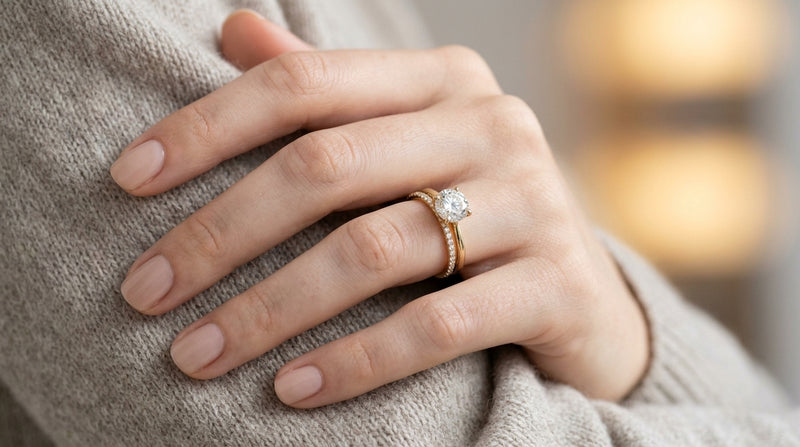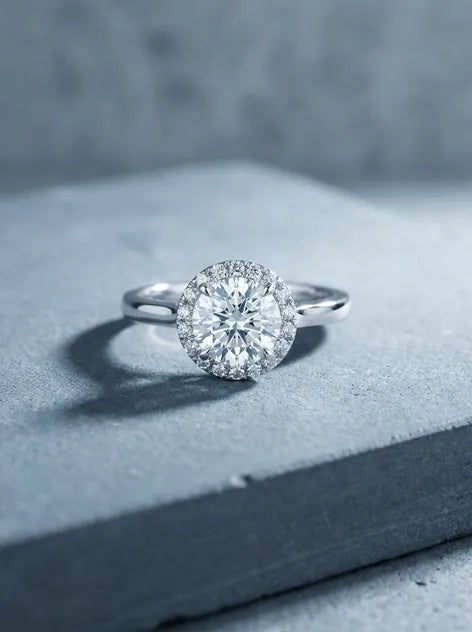


Ballerina rings surround a central gemstone with a fanned halo of smaller stones, usually tapered baguettes, so the ring resembles a ballerina's tutu mid-spin. The center stone stays the focal point, and jewelers traditionally mount it in platinum or white gold to sharpen the brilliance of the diamonds; modern versions use yellow and rose gold as well. Many designs finish the shoulders of the band with pavé-set diamonds or delicate filigree. The style hit its stride in the 1950s and 60s, an era that rewarded jewelry built to catch the eye.
What Are the Popular Styles of Ballerina Rings?
The five popular ballerina ring styles are the classic solitaire halo, colored gemstone centers, vintage-inspired designs, double halos, and modern minimalist halos.
- Classic Solitaire Halo: A brilliant-cut center stone sits inside a fan of tapered baguettes, which amplify its sparkle and keep the design perfectly symmetrical. Platinum or white gold is the usual frame, chosen for strength and a clean white backdrop.
- Colored Gemstone Center: Setting a sapphire, ruby, or emerald in the middle of a diamond halo makes the color impossible to miss. A blue or red center ringed by baguettes reads like a cocktail ring, vivid, confident, and built for attention.
- Vintage-Inspired Designs: These draw directly on the 1940s and 1950s, when filigree work and geometrically placed baguettes defined fine jewelry. Some take on distinct silhouettes, a kite shape, an inverted square, that give the ring an antique character with modern polish.
- Double Halo Rings: A second ring of stones around the center multiplies the light return, creating a crushed-ice or firework effect from every angle. The look traces back to the opulence of the Art Deco period and remains the boldest version of the style.
- Modern Minimalist Halo: Contemporary designs vary the center-stone shape and slip in a slim inner halo for extra sparkle without bulk. Alternative stones such as morganite and black diamond give these rings a distinctive edge.
Which Gemstones Work Best in Ballerina Rings?
Diamonds, sapphires, rubies, and emeralds work best in ballerina rings, along with lab-grown stones and multi-stone combinations.
- Diamonds: The traditional choice, and the most practical one. Diamonds rank 10 on the Mohs hardness scale, so they take daily wear without complaint, as an all-white center stone or as the baguettes framing a colored gem.
- Sapphires & Rubies: Blue sapphire stands for trust, red ruby for love, and either one commands the center of a ballerina setting. Surrounded by baguette-cut diamonds, a colored center stone gains contrast it could never get on its own.
- Emeralds & Other Colored Gems: An emerald's lush green suggests new beginnings and prosperity, and it makes a striking center stone. At 7.5 to 8 on the Mohs scale, though, emeralds are softer than diamonds and need a protective setting.
- Lab-Grown Stones: Grown stones deliver the brilliance, durability, and color range of their natural counterparts at a lower cost. They also bring ethical sourcing and wide customization, which suits the precise geometry a ballerina halo demands.
- Multi-Stone Combinations: Pairing a vivid center, ruby or sapphire, with a halo of clear baguette diamonds is the classic ballerina formula. Mixing geometric and brilliant cuts in one ring adds texture and makes the piece unmistakably yours.

How to Choose the Perfect Ballerina Ring?
Choose the perfect ballerina ring by working through five decisions: the occasion, the center stone, the metal, the halo style, and the fit.
- Identify the Occasion: The event shapes the ring. Ballerina rings are often given for anniversaries and milestones, and they make a distinctive engagement choice for anyone who finds standard wedding rings too predictable.
- Select the Center Stone: The center is the whole show, so settle its shape, size, and color first, judging it on the 4Cs, cut, color, clarity, and carat weight. Elongated shapes like marquise, pear, and oval flatter the finger, and harder stones suit an active life.
- Metal Preference: Weigh durability alongside skin tone. Platinum is hypoallergenic, naturally white, and the toughest of the options; with gold, remember that higher karat means softer metal, so 14k outlasts 18k in daily wear.
- Halo Style & Design: The tutu effect comes from tapered baguettes, but the details are yours to customize. A double halo setting pushes the brilliance as far as it will go.
- Ring Size & Comfort: A tight ring ruins daily wear, so confirm the size before buying or make sure the jeweler offers resizing. A smooth interior surface matters more than most buyers expect.
Who Should Wear Ballerina Rings?
Ballerina rings suit anyone who wants classic, eye-catching jewelry for life's bigger occasions, and they work as engagement or anniversary rings for wearers who want more sparkle than a plain solitaire delivers. Because the style dates to the mid-20th century, it appeals naturally to lovers of vintage design. There is also a craftsmanship angle: fanning a halo of tapered baguettes around a center stone takes real skill, so these rings tend to attract people who appreciate expert gem-setting and design that isn't mass-produced.
How to Care for and Maintain Ballerina Rings?
Ballerina rings stay brilliant with regular cleaning, routine setting checks, gentle products, safe storage, and periodic professional inspection.
- Regular Cleaning: Soak the ring in lukewarm water with mild soap for 15 to 20 minutes, then work a soft-bristle brush around the halo. Baguettes sit close together and trap oil, so take your time between the stones.
- Check Settings: A halo packs many stones into a small area, and settings that dense can loosen with wear. Test the stones regularly; if any shift, set the ring aside and have a jeweler tighten it.
- Avoid Harsh Chemicals: Skip abrasive cleaners such as toothpaste, baking soda, and scouring powders. They scratch the metal and can permanently dull the gemstones.
- Safe Storage: Store the ring in its own compartment, away from harder pieces that could scratch it, and keep it somewhere cool and dry. Prolonged sunlight and moisture do neither the metal nor the stones any favors.
- Professional Inspection: The small prongs holding each baguette bend and loosen gradually with daily use. A jeweler examines them under magnification and corrects problems long before a stone goes missing.