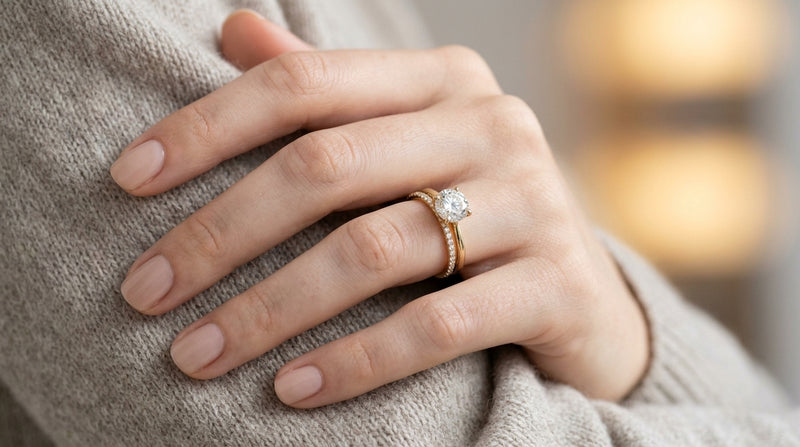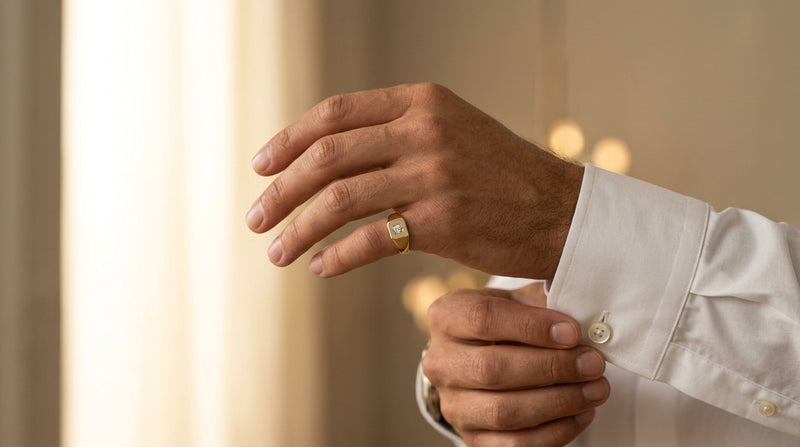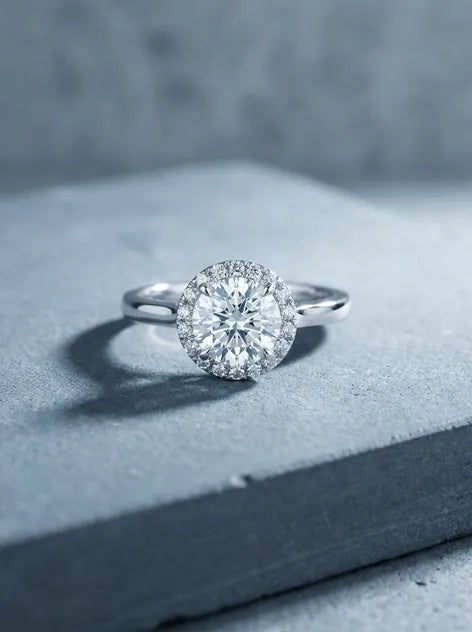
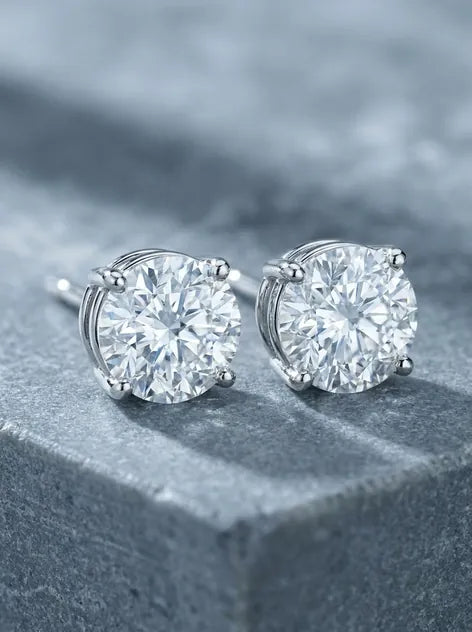
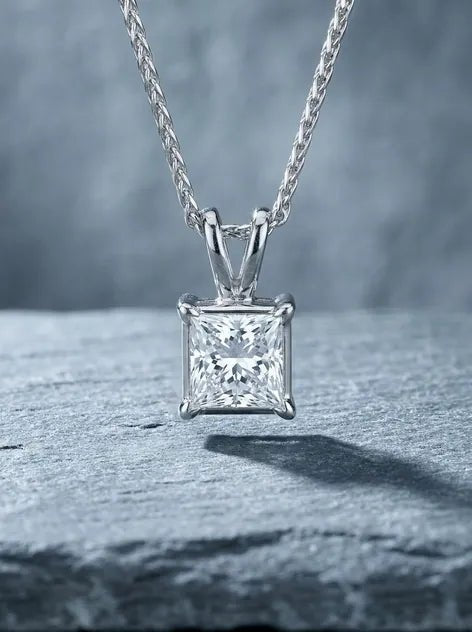


Radiant cut rings combine the rectangular outline of an emerald cut with the brilliant faceting of a round stone, a hybrid that packs about 70 facets into a shape with trimmed corners. The result is a stone that flashes like a round brilliant while keeping the clean geometry of a rectangle, and those beveled corners resist chipping far better than sharp ones. Radiants come in both square and rectangular proportions, so the shape can be tuned to the hand. Halo and prong settings are the usual choices for protecting the stone, and a durable metal ring base in platinum, white gold, or yellow gold keeps the design timeless. When comparing stones, pay attention to the length-to-width ratio and, in elongated rectangles, check for the bow-tie effect, a dark shadow across the center that weakens the sparkle. Try several proportions on your own hand before deciding; the right ratio is the one that flatters your fingers.
Master diamond cutter Henry Grossbard developed the radiant cut in 1977, blending the sparkle of a round brilliant with the stately outline of an emerald cut. The cut took off in the 1980s, and it remains a popular engagement choice for buyers who want traditional shape with modern fire.

What Are the Popular Variations of Radiant Cut Rings?
The four popular variations of radiant cut rings are the square radiant, the rectangular radiant, truncated-corner styles, and custom proportions. They differ in ratio, orientation, and faceting:
- Square Radiant Cut: A near-equal outline with a length-to-width ratio of 1.00 to 1.05 and clipped corners. The even proportions read clean and architectural on the hand. It suits buyers who like the look of a princess cut but want softer, safer corners.
- Rectangular Radiant Cut: The more popular of the two proportions, typically running a 1.15 to 1.35 length-to-width ratio. The longer outline stretches visually along the finger and makes it look slimmer. It can be set upright or turned east-west across the band.
- Truncated Corners: Every true radiant has clipped, beveled corners rather than sharp points. Beyond their geometric look, those corners are the cut's practical advantage, there is no fragile tip to catch or chip. The degree of cropping varies from stone to stone and changes the character of the outline.
- Custom Proportions: Cutters also vary the faceting pattern itself. Crushed-ice faceting uses many small, interlocking facets for a glittering, snow-like sparkle, while traditional brilliant faceting uses fewer, larger facets with more distinct flashes. Brilliant-patterned radiants are more prone to a bow-tie shadow, so inspect them carefully.
Which Gemstones Work Best in Radiant Cut Rings?
Diamonds, sapphires, emeralds, rubies, and morganite all work well in radiant cut rings. Here is what each brings:
- Diamonds: The stone the cut was designed for, and the default choice for engagements. The dense faceting hides small inclusions well and delivers exceptional fire, which is why diamond radiants are so often chosen for engagements and given at weddings.
- Sapphires: Famous for deep blue but available in nearly every color except red. Sapphire rates 9 on the Mohs scale, so it shrugs off scratches in daily wear. The stone's long association with royalty gives a radiant sapphire a formal, classic character.
- Emeralds: A rich green stone that is softer and more brittle than sapphire or diamond. The radiant's clipped corners actually help here, removing the sharp points where an emerald would be most likely to chip. Treat it as an occasional-wear stone rather than a daily one.
- Rubies: Deep red with strong light return, and a traditional symbol of love and passion. A radiant-cut ruby makes a bold anniversary or wedding stone. Its hardness also makes it practical for regular wear.
- Morganite: A peachy-pink stone that pairs naturally with a rose gold metal base for a soft, warm look. It costs far less than diamond, which makes a larger radiant realistic. Many women wear morganite radiants daily.
What Metals Complement Radiant Cut Rings Best?
Platinum, white gold, yellow gold, and rose gold complement radiant cut rings best, with mixed metals as a fifth path:
- Platinum & White Gold: Platinum is a naturally grayish-white, hypoallergenic metal that needs little upkeep, which suits an everyday ring. White gold gives nearly the same color for less, but it relies on rhodium plating that typically needs renewing every 12 to 18 months. Choose based on how much maintenance you are willing to schedule.
- Yellow Gold: Warm, traditional, and low-maintenance, the color is the metal itself, so there is no plating to renew. Against a radiant diamond it creates a pleasing contrast between warm band and icy stone.
- Rose Gold: A pink-toned alloy that gets its color from copper, which also makes it slightly harder than yellow gold. It flatters most skin tones and is the natural partner for morganite. On a radiant diamond it gives the whole ring a softer, romantic cast.
- Mixed Metals: The practical compromise for anyone torn between colors, platinum prongs holding the stone, with a gold metal band beneath. You get warm color on the hand and the most secure white metal at the setting.
Which Ring Settings Best Complement Radiant Cut Stones?
Solitaire, halo, three-stone, bezel or prong, and vintage settings complement radiant cut stones best:
- Solitaire Setting: One radiant stone held by prongs, claws, or a bezel, with nothing to compete for attention. The clean geometry of the cut carries the whole design.
- Halo Setting: A border of small pavé diamonds traces the rectangular outline of the center stone. It adds sparkle on every side and makes the radiant look a size larger.
- Three-Stone or Side Stones: A stone on each side of the radiant frames it and pulls the eye to the center. The flanking stones also take some of the daily knocks that would otherwise reach the main diamond.
- Bezel or Prong Settings: Corner prongs grip the four clipped corners exactly where the stone is strongest, while a bezel wraps a slim metal rim around the entire outline. Either approach keeps a radiant secure through daily wear.
- Vintage & Modern Styles: A vintage ring setting adds filigree and milgrain detail to the band, softening the radiant's sharp geometry with old-world texture. The mix of a modern cut and antique metalwork is a look few other shapes pull off.
How Can You Choose the Perfect Radiant Cut Ring?
Choose a radiant cut ring by weighing the 4Cs, the length-to-width ratio, the metal, the setting, and the precision of the cut:
- Check Clarity & Color: Start with the 4Cs, cut, color, clarity, and carat. A G color grade or better suits platinum and white gold, while warmer H-J stones blend well with yellow or rose gold bands. An eye-clean SI1 or VS2 stone is the value sweet spot, and any stone with a dark bow-tie should be passed over.
- Length-to-Width Ratio: Compare square and rectangular proportions on your own hand, not just on paper. The ratio changes how long your fingers look, and only trying rings on settles it.
- Select Appropriate Metal: Balance budget against upkeep. Platinum costs more but needs little care, white gold needs periodic replating, and yellow or rose gold offers low maintenance at a friendlier price.
- Consider Halo or Side Stones: Decide between solitaire, halo, and three-stone designs based on how much sparkle and security you want. A halo or side stones both protect the center and enlarge its presence.
- Assess Cut Precision: Look for even, symmetrical corners and a uniform facet pattern across the stone. Sloppy corner cropping or lopsided faceting shows up immediately in a radiant.
How to Care for and Maintain a Radiant Cut Ring?
Maintain a radiant cut ring by washing it in warm water with mild soap, checking the prongs regularly, and having a jeweler inspect it every six months. Corner prongs do the critical work on this cut, so have any loose one tightened or replaced promptly, a lifted prong is how stones get lost. Between cleanings, store the ring separately from other jewelry so nothing scratches the table or the band.