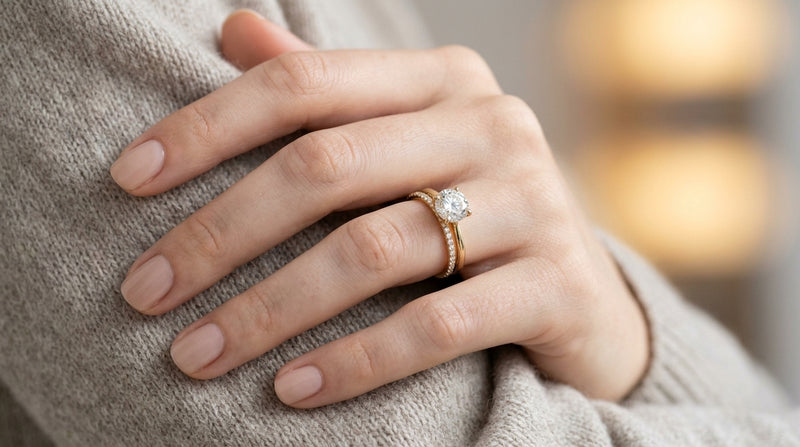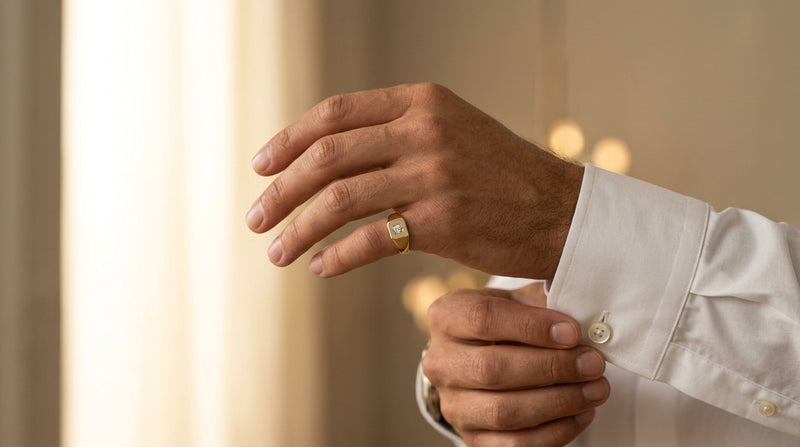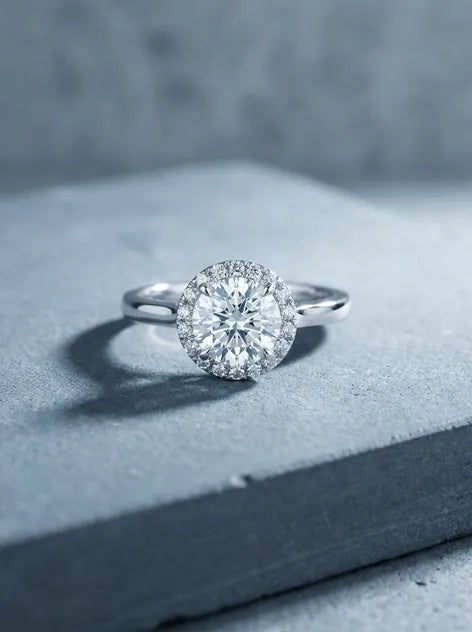
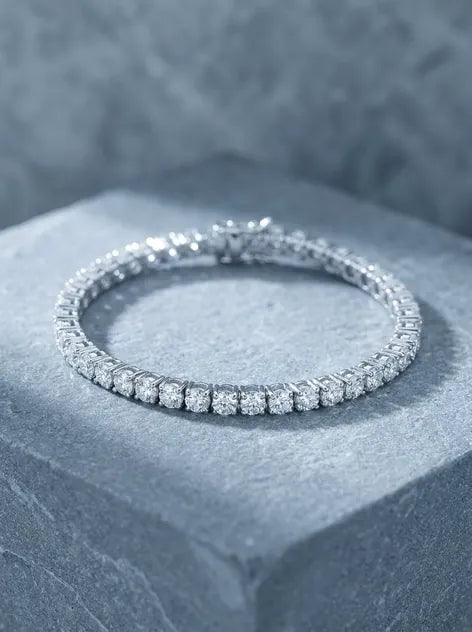


Pavé rings take their name from the French word for "paved": rows of tiny stones set with small metal beads until the surface looks paved with diamonds. That continuous line of stones catches light from every direction, producing maximum brilliance with almost no visible metal. The style stands for unity, everlasting love, and craftsmanship at its most precise. Pavé work often frames the center gem in solitaire rings and halo rings. The technique dates to 1700s France, where jewelers developed it for exactly the effect it still delivers: minimal metal, maximum sparkle.

What Are the Different Types of Pavé Rings?
The six different types of pavé rings are classic, micro, French, U-cut, scallop, and channel pavé.
- Classic Pavé: Small diamonds, typically 0.01 to 0.02 carats each, sit close together, held by small metal beads. Up close, the slightly raised beads give the surface a cobblestone texture, which is exactly where the "paved" name comes from.
- Micro Pavé: Even smaller stones set under a microscope, with the metal work nearly invisible. The band appears to be made entirely of diamonds, a continuous, shimmering surface with no interruptions.
- French Pavé: Also called a fishtail setting. V-shaped cuts in the band cradle each stone, exposing more of the diamond and letting in more light for extra brilliance.
- U-Cut Pavé: The metal is carved into U-shaped scoops that each hold a stone. The rounded openings let light reach under the diamonds, boosting sparkle from below.
- Scallop Pavé: Closely related to the U-cut, with softly curved edges that create a scalloped, vintage-leaning effect while keeping visible metal to a minimum.
- Channel Pavé: Often confused with a plain channel setting. Here the stones sit between metal walls but are still held by beads, not the walls themselves, and those bright walls bounce light back into the stones for a clean, durable, distinctly crisp look.
What Are the Best Metal Options for Pavé Rings?
Platinum, white gold, yellow gold, rose gold, and mixed metals are the five best options for a pavé ring.
- Platinum: Naturally silvery-white, strong, and dense enough to resist scratching. Because the color is the metal's own, platinum never needs replating, a real advantage for a ring holding dozens of tiny stones.
- White Gold: A blend of gold and palladium finished with rhodium plating, which gives it its bright white surface. That brightness flatters diamonds, though the plating needs renewing over time.
- Yellow Gold: A warm, classic, hypoallergenic choice. Higher gold content deepens the color but softens the metal, so purity is a trade-off worth discussing with your jeweler.
- Rose Gold: Copper makes it one of the most durable gold alloys and gives it a romantic pink hue that needs no plating. The copper content can bother very sensitive skin.
- Mixed Metals: Two-tone construction, a platinum base for durability paired with white or rose gold accents, for instance, adds a layer of luxury and lets the design play with contrast.
What Gemstones Are Commonly Used in Pavé Rings?
White diamonds, black diamonds, sapphires, emeralds, and colored diamonds are the five stones most commonly used in pavé rings.
- White Diamonds: The default for good reason, a diamond's high refractive index produces the strongest sparkle available. At 10 on the Mohs scale, diamonds also shrug off everyday wear.
- Black Diamonds: A bold, striking contrast to traditional white pavé. They work as a center stone or as a dark frame around white or colored gems.
- Sapphires: Blue stones symbolizing trust, loyalty, and royalty. A line of pavé sapphires gives a ring a classic, sophisticated color note.
- Emeralds: Green stones that stand for growth, harmony, and new beginnings. Softer than diamonds and sapphires, they need attentive care to avoid chipping.
- Colored Diamonds: Fancy-color stones make the design personal, yellow reads playful and warm, pink leans romantic. A few colored stones among white pavé can change the ring's whole character.
What Are the Popular Pavé Ring Styles?
The five popular pavé ring styles are pavé engagement rings, wedding bands, eternity rings, stackable rings, and split shank designs.
- Pavé Engagement Rings: Pavé work is the classic way to dress up a solitaire or halo engagement ring, adding sparkle along the band without competing with the center stone.
- Pavé Wedding Bands: When wedding bands carry pavé-set stones, the result is continuous brilliance around the finger rather than a single point of light.
- Eternity Pavé Rings: Stones cover the entire surface of the band, so the ring sparkles from every angle with no beginning and no end.
- Stackable Pavé Rings: Thin pavé bands layered with a thicker ring build a modern, personal look that can grow one band at a time.
- Split Shank Pavé Rings: The band divides as it reaches the center, opening a dramatic gap and adding surface area for even more pavé-set stones.
How Do You Choose the Perfect Pavé Ring?
Choose a pavé ring by deciding how it will be worn, judging diamond quality, weighing band width, selecting a setting style, and matching the ring to your lifestyle.
- Decide Your Purpose: A ring for daily wear needs robust construction and strong material. An occasional piece can afford more delicate settings.
- Select Diamond Quality: With small stones, clarity matters, a visible flaw stands out in a tightly packed pavé surface. Put budget toward quality before quantity.
- Consider Band Width: Width changes both look and feel. Slim bands read subtle and modern; wider bands wear tougher and carry more stones.
- Choose Setting Style: Channel pavé protects the stones best, while French and U-cut settings trade some protection for maximum brilliance. Pick the balance that fits the wearer.
- Match Your Lifestyle: Active hands do better with a half-pavé or bright-cut design that keeps the stones out of harm's way.
When Should You Gift or Wear a Pavé Ring?
Pavé rings suit five occasions especially well: engagements, anniversaries, milestone birthdays, formal events, and everyday wear.
- Engagements: The shimmer of a pavé band reflects light the way a shared future reflects possibility, dozens of small bright moments in one piece. It is a natural match for a proposal.
- Anniversaries: A pavé eternity ring speaks to accumulated love and strength, every stone another year in the circle.
- Milestone Birthdays: As a birthday gift, a pavé ring marks achievement and confidence with a piece that feels celebratory without being loud.
- Formal Events: The dense field of tiny diamonds catches every light in the room, complementing elegant attire with quiet sophistication.
- Everyday Luxury: A slim, durable pavé band adds gentle sparkle to a daily rotation without ever feeling flashy or dramatic.
How Do You Care for and Maintain a Pavé Ring?
Care for a pavé ring by cleaning it weekly with a soft brush, warm water, and gentle soap to clear the dust and oil that collect between the tiny stones. Take the ring off for physical work, snags are the main way pavé stones loosen. Check the settings and prongs regularly, since catching a loose stone early is the difference between a quick fix and a lost diamond. Schedule a professional cleaning once a year; a jeweler's solutions and tools reach deep into the pavé setting where home cleaning cannot. Store the ring on its own so the delicate beadwork stays free of scratches.