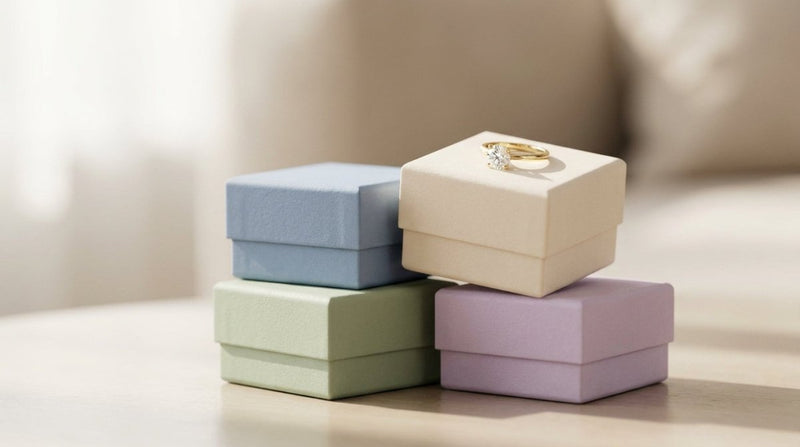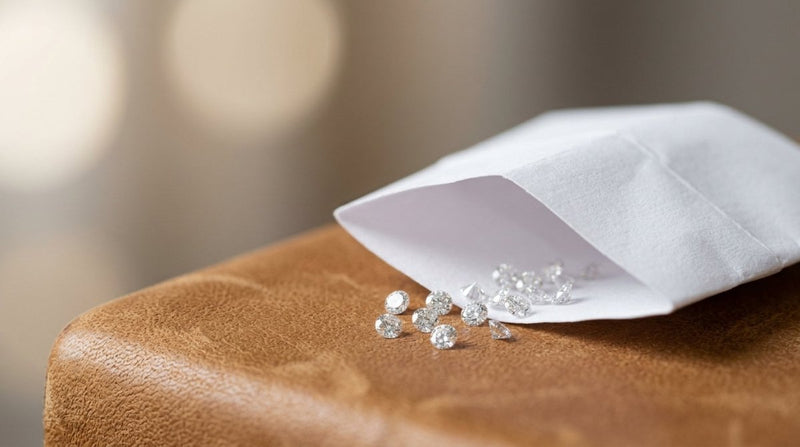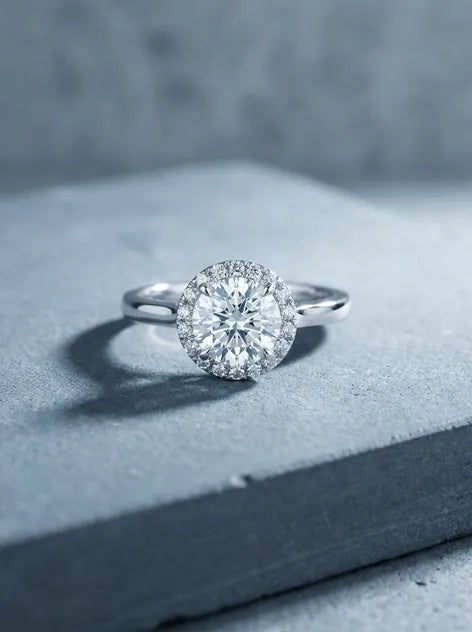
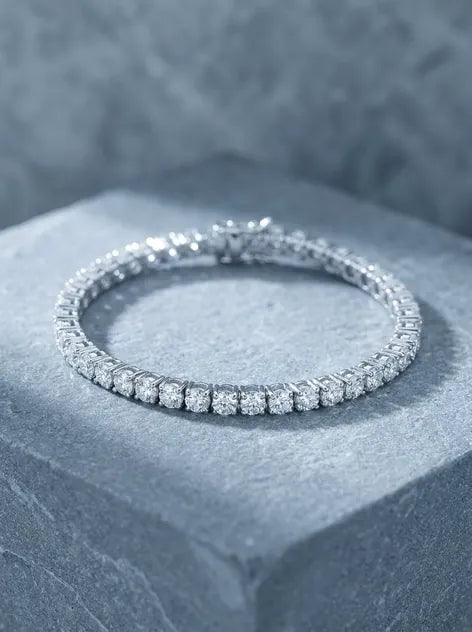
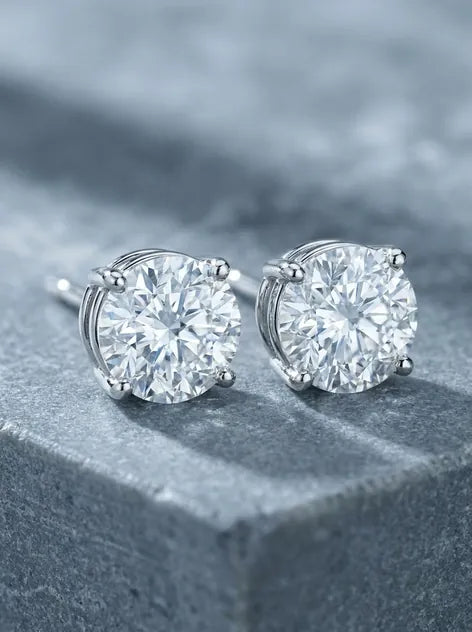
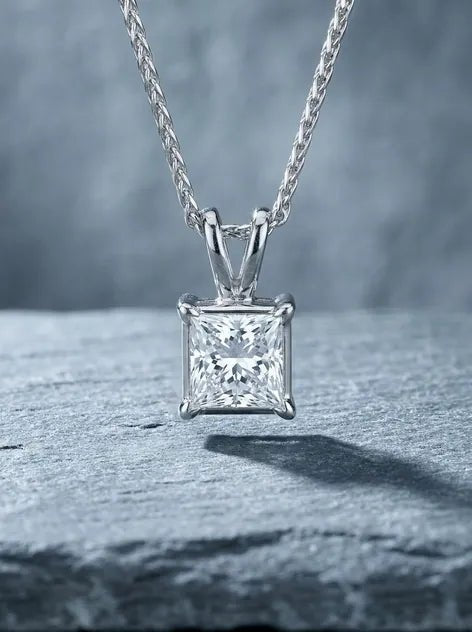


Lab-grown diamond earrings are real diamond earrings: the stones are carbon crystals grown above ground instead of mined, with the same hardness, the same sparkle, and the same GIA 4Cs grading as natural diamonds. On the ear the two are indistinguishable, because a lab-grown diamond isn't imitating a diamond; it is one. What changes is the price, and in earrings that change is bigger than anywhere else in jewelry.
Here's why: studs need two matched stones, so every dollar-per-carat you save gets saved twice. That's what makes earrings the category where lab-grown earns its keep fastest. This guide covers what the carat labels actually mean, what fair prices look like right now, and the quality rules that are different for ears than for hands.
What Are Lab-Grown Diamonds?
Lab-grown diamonds are made by two methods. HPHT (high pressure, high temperature) squeezes carbon around a diamond seed much the way the earth does, just faster. CVD (chemical vapor deposition) fills a chamber with carbon-rich gas and builds the crystal layer by layer. Either way the result is a diamond: chemically, optically, and physically identical to a mined stone, and graded on the same 4Cs by independent labs.
The practical differences are two. Lab-grown stones consistently reach very high color and clarity grades, because the growing process is controlled. And they cost far less per carat, because supply comes from production capacity rather than from what miners happen to find. Natural diamonds carry their own case, the rarity and story of a stone the earth made, which is why we make and sell both. If you're weighing a ring as well as earrings, our lab-grown rings guide covers that side of the decision.
What Do 1 Carat and 2 Carat Studs Actually Mean?
A pair of "1 carat" studs is not two 1 carat diamonds. It's two 0.50 carat diamonds, because earrings are labeled by total carat weight, the combined weight of both stones. Miss that and every price comparison you make will be off by half, so it's the first thing to check on any listing.
- 1 carat total weight: About 0.50 carats per ear, roughly 5mm across. The everyday classic; visible sparkle that doesn't announce itself.
- 2 carat total weight: A full 1.00 carat on each ear, roughly 6.5mm. This is the pair people notice from across a table, and it's where lab-grown pricing changes what's realistic for a normal budget.
- 3 carat total weight: About 1.50 carats per ear. Bold, occasion-level studs that used to be a five-figure natural purchase.
- Studs for men: Men's diamond studs sell singly or in pairs, and the same total-weight math applies, so read the listing carefully before comparing prices.
How Much Do Lab-Grown Diamond Earrings Cost?
At typical retail, as of this writing: 1 carat total weight lab-grown studs commonly run from a few hundred dollars up to around $1,000 depending on grades. 2 carat pairs typically land between $700 and $2,500. 3 carat pairs run wider still, because per-carat prices climb as the individual stones get bigger. Comparable natural pairs cost several times more at every size, which isn't a knock on natural; that gap is the rarity you'd be paying for, and for some buyers it's worth paying.
Those retail ranges include the usual chain of markups: grower to wholesaler to distributor to store. When the manufacturer sells to you directly, the same gold and the same stones land lower, which is how 2 carat lab-grown studs became a realistic under-$1,000 purchase instead of a someday one. Within any range, cut quality, color grade, and the weight of the gold setting still move the price, so always compare like for like.
How Do the Quality Rules Change for Earrings?
Nobody studies an earlobe from six inches away. A ring gets held, tilted, and inspected; earrings get glanced at from conversation distance, usually in motion, often past hair. That changes which of the 4Cs deserve your money.
- Cut still comes first: Sparkle is what registers at a distance, and cut is what makes sparkle. This is the one C you don't relax.
- Color can relax: A near-colorless G to H pair faces just as white on the ear as a D to E pair, at a real saving. Yellow gold settings and warm skin tones hide even more.
- Clarity can relax further: Eye-clean is the whole standard for earrings. An SI inclusion that's hard to find at arm's length on a hand is truly invisible on an ear.
- Matching beats grades: Here's the bench secret: the two stones matching each other matters more than either stone's paper grade. One icy stone next to one slightly warm stone is what the eye catches. A well-matched H pair looks better than a mismatched D and G.
What Certificates and Paperwork Should You Expect?
Every PrimeStyle order ships with the PrimeStyle Jewelry Report, which documents the piece for insurance: the metal, the stones, and their 4Cs specs, with a stated insurance value. Lab-grown diamonds of 1.00 carat and up also include an IGI certificate, the independent grading document for the stone itself. For studs, remember the total-weight math: that threshold applies per stone, not per pair, so it's the 2 carat total weight pairs and up that cross it.
Are Lab-Grown Diamond Earrings Worth It?
For earrings, yes, and more clearly than for any other piece of jewelry. Earrings live a risky life: they get slept in, caught in sweaters, left on gym floors, and lost one at a time. Putting lab-grown stones in that role means everyday wear without everyday worry, at sizes that actually show from across the room.
My honest caveat is resale: lab-grown prices keep falling as production scales, so buy them to wear, not to store value. If long-term rarity is what you want from a stone, that's the natural diamond's case, and it's a fair one. Both are real diamonds; they're just answering different questions.
If studs are on your list, browse our lab diamond jewelry under $1,000: real lab-grown stones in solid gold, made in our own US factory and sold without the middleman markups.
FAQ
How much should I pay for lab-grown diamond earrings?
Judge by total carat weight and grades: at typical retail, a few hundred dollars for a well-cut 1 carat total weight pair, and roughly $700 to $2,500 for 2 carats, with factory-direct pricing landing under those numbers. If a quote sits far above those ranges for mid grades, you're paying markup, not diamond.
Do lab diamonds lose their sparkle over time?
No. A lab-grown diamond is a diamond, a 10 on the Mohs hardness scale, and nothing in daily life dulls the stone itself. What dulls any diamond is skin oil and soap film sitting on the surface; warm water, mild soap, and a soft brush bring the sparkle back completely.
Are laboratory diamonds worth anything?
They hold modest resale value, and it's shrinking as production grows. But honestly, almost no jewelry bought at retail resells anywhere near its purchase price, natural included. Buy diamonds to wear them; if you want a store of value, that's a different purchase entirely.
Why do jewelers hate lab-grown diamonds?
Most don't; we make and sell both lines happily. The grumbling in the trade is about margins and resale economics, not about the stones, which are real diamonds by every physical measure. A jeweler who dismisses lab-grown outright is usually protecting an inventory position, not educating you.