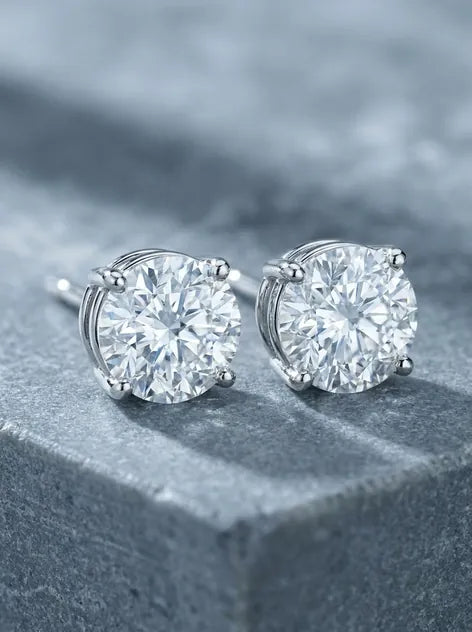
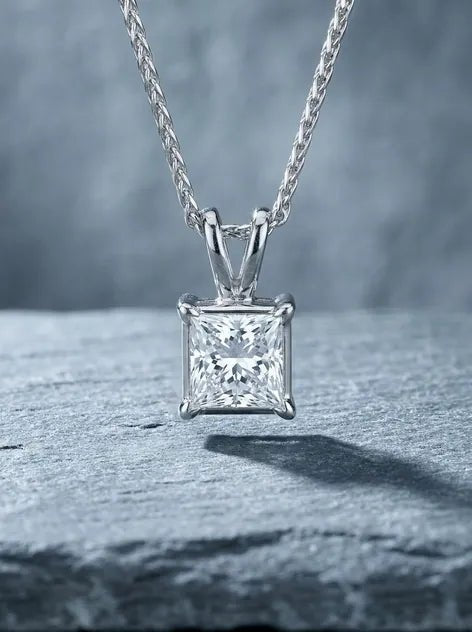


Cheap lab-grown diamonds are real diamonds, and most of them are honest buys: prices fell because growing technology scaled up, not because quality collapsed. A 1 carat lab-grown stone that cost thousands a decade ago now commonly sells for a few hundred dollars at retail. But there is a floor, and below it "cheap" stops meaning smart and starts meaning stuck with a dull stone.
After 25 years making diamond jewelry in our own US factory, the question I hear about lab-grown isn't "is it real" anymore; it's "how cheap is too cheap?" So here's the honest map: why prices dropped, where the bargains genuinely live, and the specific problems a too-low price is sometimes hiding.
Why Did Lab-Grown Diamonds Get So Cheap?
Supply. A natural diamond's price is anchored by rarity: miners find what they find, and no factory can make more of it. A lab-grown diamond's price is anchored by production capacity, and capacity has exploded. The two growing methods, HPHT (pressure-cooking carbon around a seed crystal) and CVD (building the crystal from carbon gas, layer by layer), both matured at the same time, growers multiplied worldwide, and competition did what competition does to prices.
None of that makes the stones lesser. They're graded on the same GIA 4Cs framework as natural diamonds, and because the process is controlled, lab-grown stones consistently reach very high color and clarity grades. Cheap describes the price. It doesn't describe the diamond.
Are Loose Lab-Grown Diamonds the Bargain Route?
The cleanest cheap way into a lab-grown stone is buying it loose, then setting it. Loose lab-grown diamonds are easy to compare per carat, grade for grade, which keeps sellers honest; a finished piece hides the stone's price inside the ring's price. Buy the stone on its numbers first, then spend on the setting separately.
Two rules for the loose route. First, insist on an independent grading report; a loose stone with no report is priced on the seller's word alone. Second, compare stones at the same cut grade before anything else, because cut is where cheap stones usually give their savings back. If the stone is headed for a ring, our lab-grown rings guide covers the setting side of the job.
Where Is the Quality Floor, and What Does Too Cheap Look Like?
Every category has a price under which the product quietly changes, and lab-grown diamonds are no exception. When a stone is priced far below others of the same stated size and grades, one of these is usually the reason:
- Poor cut: Deep, steep stones keep their carat weight but kill light return. It's the most common trick in budget diamonds, because carat sits on the label while cut quality sits in the fine print. A badly cut stone of any origin looks dim no matter what the paper says.
- Undertones: Some budget stones carry brown, gray, or blue undertones from the growing process, and a letter grade doesn't always capture how the stone faces up. A bargain that reads tinted in daylight isn't a bargain. Ask how the stone looks face-up, not just what grade it holds.
- Haze: Some inexpensive material shows a milky or cloudy cast that clarity grades don't fully describe. Video of the actual stone, not a stock render, is your defense here.
- No report: An ungraded stone at a great price is a story, not a spec. Independent grading costs the seller very little; when it's missing, ask yourself why.
What Do the Best Lab-Grown Diamond Companies Have in Common?
Shoppers spend hours on forum threads arguing about which seller is best, but the good ones share four visible habits, and you can check all four before spending a dollar:
- Independent grading on the stones, not just the house's own descriptions. The report is what makes a price comparable.
- Imagery of the actual product, so you're judging the stone you'll receive, not a render that flatters every listing equally.
- A real return window, with the terms written in plain language you can read before you pay.
- A short supply chain. Every middleman between the grower and you adds margin without adding diamond. This is where manufacturers who sell direct, ourselves included, hold the structural advantage: the price gap isn't a discount, it's an absence of markups.
What Should You Check Before You Buy a Cheap Lab-Grown Diamond?
Run any tempting listing through these five checks. A stone that passes all five is a genuine bargain; a stone that fails two of them is cheap for a reason.
- Get the report: Confirm there's an independent grading report and that its numbers match the listing exactly, carat, color, clarity, and cut.
- Prioritize cut: Take the best cut grade you can afford before adding size. It's the difference between a stone that performs and a stone that merely weighs.
- Ask for video: A short clip of the actual stone in normal light tells you more than every adjective in the listing.
- Compare per carat at matching grades: Price per carat is only meaningful between stones of the same cut, color, and clarity. Comparing across grades is how sellers make a mediocre stone look like a steal.
- Read the return terms before paying: The floor under any online diamond purchase is your ability to send it back. Know the window and the conditions first.
If you'd rather skip the loose-stone homework and buy finished pieces at the same short-chain pricing, browse our lab diamond jewelry under $1,000: lab-grown stones already set in solid gold, made in our own US factory since 2001.
FAQ
What size lab grown diamond can you get for $2000?
As of this writing, typically around 2 carats at retail for a well-cut, near-colorless stone, and sometimes more. The same budget bought roughly half that a few years ago. Grades move the number, so compare cut-first rather than size-first.
What is the average price of a 2.5 carat lab-grown diamond?
The honest answer is a wide range, roughly $1,000 to $3,500 at typical retail, because cut, color, and clarity swing hard at that size. Cut quality moves the price most and is the last thing you should sacrifice to hit a number.
Is it considered cheap to get a lab-grown diamond?
No. It's considered informed. The stone is a real diamond at a price set by production instead of rarity. Some buyers still want the rarity of a natural stone, and that's a legitimate choice too; they're different purchases answering different wants.
Can a jeweler tell if a diamond is lab or natural?
Not by eye, and usually not with a loupe; the two are the same material. Origin gets identified with specialized lab instruments, which is exactly why grading reports state it. On a hand, nobody can tell, and that includes jewelers.