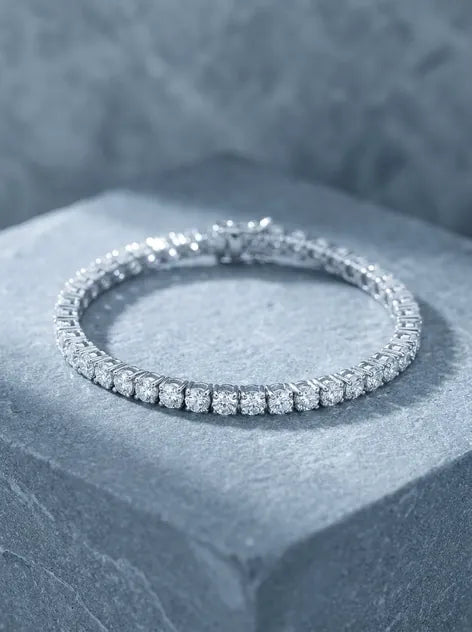
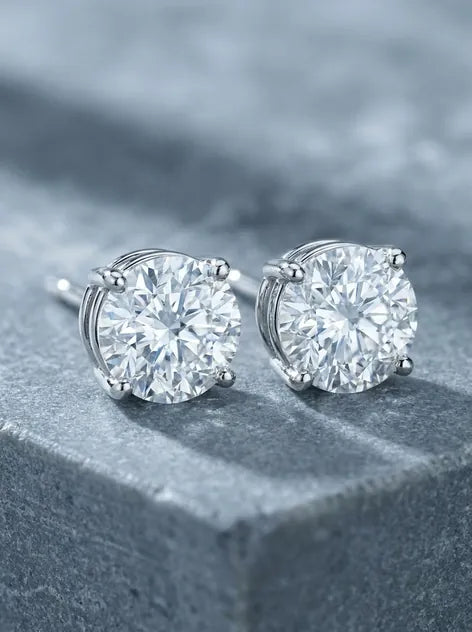
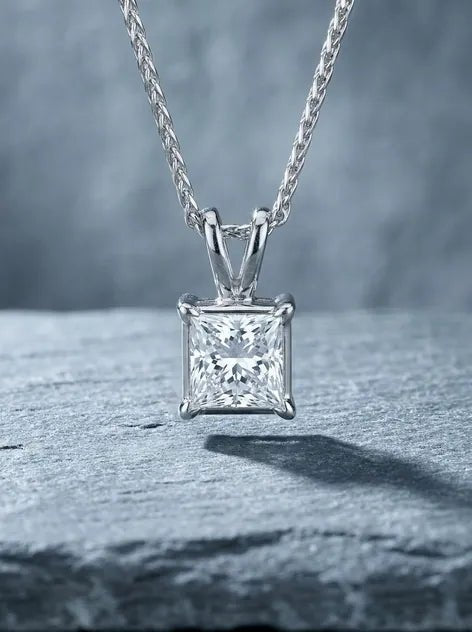


Affordable lab-grown diamond jewelry is the rare case where the budget option and the smart option are the same piece. Under $1,000, lab-grown diamonds deliver real sparkle at sizes natural stones can't reach for that money, and the best gifts in jewelry, studs, solitaire pendants, and stackable rings, all live comfortably inside that number.
The word "affordable" scares people in this category because it usually signals plated metal and simulated stones. That's not what this is. We're talking about real diamonds in solid gold; the affordability comes from how the stone was made and how few hands the piece passed through on its way to you, not from what it's made of.
What Does Affordable Really Mean with Lab-Grown Diamonds?
Two forces set the price of any diamond piece: the stone and the supply chain. Lab-grown wins on both. The stones cost far less per carat than natural because supply comes from production capacity instead of mining, and they're graded on the same GIA 4Cs framework, with the growing process consistently producing very high color and clarity grades. Natural diamonds hold their own case, the rarity of a stone the earth made, and we sell both; but for gift budgets, lab-grown is where the math smiles.
The supply chain is the half most shoppers never see. A piece that passes from cutter to wholesaler to distributor to store collects a markup at every step. When the manufacturer sells to you directly, those markups never happen. So "affordable" here means the middlemen are missing, not the quality. Same gold, same real stones, shorter path.
What Are the Best Gift Ideas Under $1,000: Studs, Pendants, or Stackable Rings?
If you're gifting, these four are the reliable bets, roughly in order of how rarely they miss:
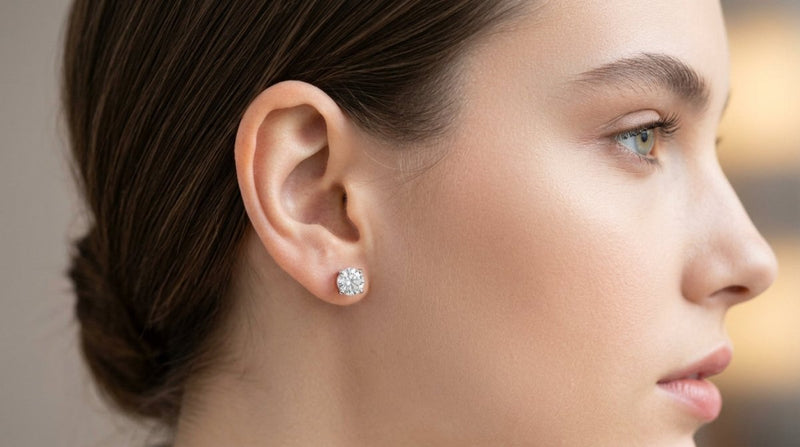
- Diamond studs: The safest gift in jewelry. No ring sizing to guess, no style risk, and they go with everything from a t-shirt to a gown. Lab-grown pricing means real presence on the ear, not a token sparkle, at this budget.
- A solitaire pendant: One stone on a chain, sitting at the collarbone where everyone sees it. Nearly as safe as studs, and because a single pendant stone gets viewed from conversation distance, a modest carat weight reads generously.
- Stackable rings: Thin bands with small stones, designed to be worn together and collected over years. That makes them a gift that quietly plans your next three gifts. Our stackable rings guide covers how the sets build.
- A birthstone piece: Personal without the sizing risk of a statement ring, and it shows you thought about her specifically. Our birthstone rings guide walks through the stones month by month.
Two reading tips before you compare listings anywhere. Earrings and multi-stone pieces are labeled by total carat weight, the combined weight of every stone, so a "1 carat" pair of studs is two 0.50 carat diamonds; miss that and every comparison skews. And check the gold: 14K solid gold is the everyday standard, harder than 18K and built for daily wear. If a listing says "gold plated" or "vermeil," you're not comparing the same product anymore, whatever the stones are.
Can You Find Lab-Grown Diamond Rings Under $500?
Under $500, honesty matters more than anywhere else. You're looking at smaller total carat weights, cluster designs, and diamond-accented bands, not a big single center stone. That's not a problem if you shop the right styles: a cluster of small stones set close together reads as one larger sparkle from normal viewing distance, and a thin band with a row of diamonds looks deliberate and modern rather than stretched.
This is a strong lane for promise rings, first-diamond gifts, and everyday pieces, the rings that get worn hard rather than saved for occasions. What to avoid at this price is anything claiming a large solo stone; below $500, a big center stone means either a simulant or a stone whose cut and clarity gave everything away. Better a smaller real thing than a bigger illusion.
When Should You Stretch to 1.5, 2, and 3 Carat Lab-Grown Ring Prices?
Sometimes the occasion outranks the budget cap, so here's the honest price context. At typical retail as of this writing, a well-cut 1.5 carat lab-grown ring commonly lands roughly between $1,000 and $2,500; a 2 carat lab-grown ring roughly $1,500 to $3,500; and 3 carats runs wider still, since per-carat prices climb as stones get bigger. Comparable natural rings cost several times more at each size; that gap is the rarity premium, and buyers who want it aren't wrong to pay it. The two stones are answering different questions, and only one of them is about the budget.
My rule of thumb from the bench: stretch past $1,000 when the piece is the point, an engagement ring, a milestone anniversary. Stay under $1,000 when the moment is the point, birthdays, holidays, thank-yous. A gift doesn't get better by straining the giver, and the under-$1,000 shelf is deep enough now that it doesn't have to.
How Do You Match the Gift to the Occasion?
- Birthdays: Studs or a birthstone piece. Personal beats big on a birthday, and a birthstone says you know the date without a card.
- Anniversaries: A stackable band, one for each milestone. It's a tradition that builds into something visible on her hand over the years.
- Graduations and first jobs: A solitaire pendant. It reads grown-up and gets worn to every interview afterward.
- Just because: The smallest real thing beats the largest fake thing, every time. A modest pair of lab-grown studs given on a Tuesday lands harder than most planned gifts do.
Every piece in our lab diamond jewelry under $1,000 collection fits the brief above: real lab-grown diamonds in solid gold, made in our own US factory since 2001 and priced without the retail chain's markups.
FAQ
Is it worth buying lab grown diamond jewelry?
For pieces you'll actually wear, yes. You get a real diamond with consistently high color and clarity grades at a fraction of the natural price. The honest caveat is resale: lab-grown values keep falling as production scales, so buy it to wear, not to store value.
How much should I pay for a 1 carat lab grown diamond?
At typical retail, roughly $300 to $900 for a well-cut, near-colorless stone as of this writing, more if you push to top grades. If you're quoted far above that range for mid grades, you're paying someone's markup rather than for the diamond.
Who has the most affordable lab grown diamonds?
Structurally, sellers with the shortest supply chains: the fewer hands between the grower and you, the lower the price for identical stones. Judge any seller by grading transparency and return terms, not by whoever shouts "affordable" loudest in the banner.
What is the best place to buy lab-grown diamonds?
The best place is wherever you can verify four things: independent grading, imagery of the actual piece, plain-language return terms, and direct pricing. We make ours in our own US factory and sell direct, and we're glad to be compared on those exact points; contact us if you want help comparing a specific piece.