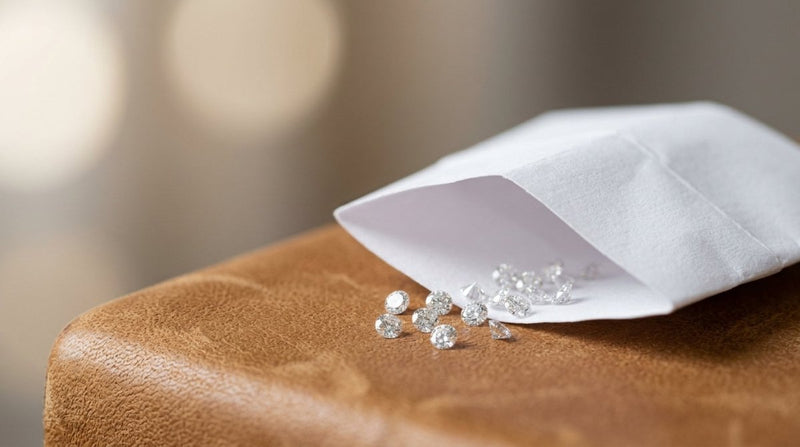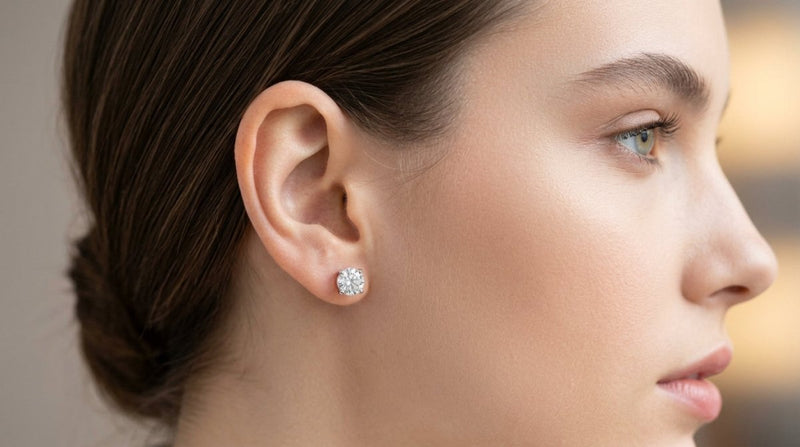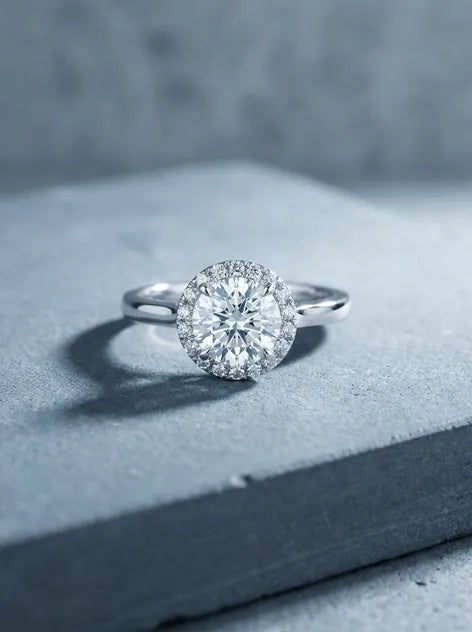
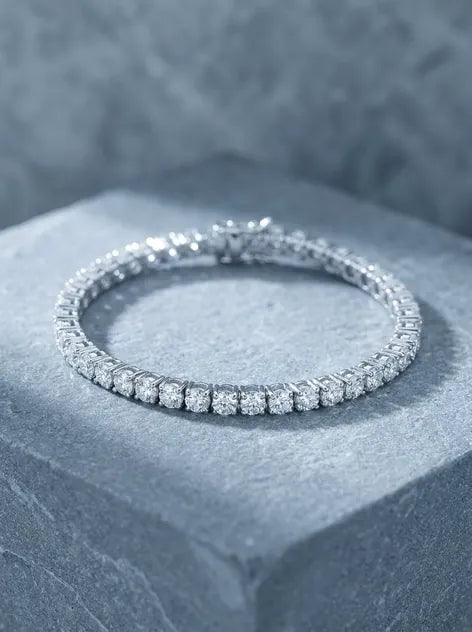
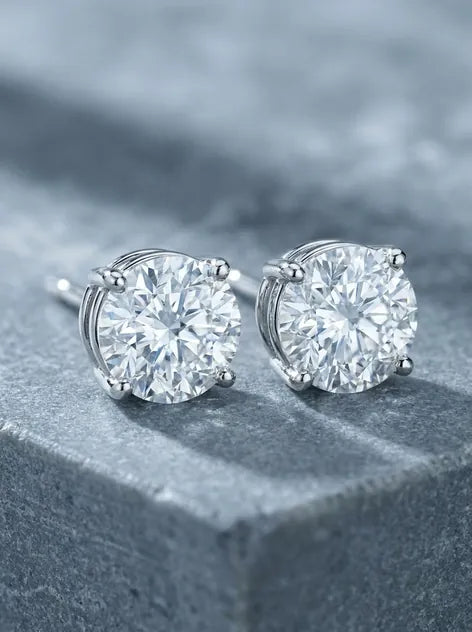


You can buy a real diamond engagement ring for under $1,000, and it doesn't have to look like a compromise. Engagement rings under $1,000 come down to two honest lanes: a smaller natural diamond, usually 0.20 to 0.50 carats, or a noticeably larger lab-grown diamond, often 0.75 carats and up. Both are real diamonds with real sparkle. The difference is where the crystal formed, and that difference is exactly what your budget is buying.
We've manufactured diamond jewelry in our own US factory since 2001, and rings at this price get built at the same bench, with the same solid 14K gold, as rings at ten times the price. What changes is the stone, not the standards. Here's what $1,000 really gets you, where the trade-offs hide, and how to put the money where it actually shows on the hand.
What Does $1,000 Actually Buy in an Engagement Ring?
Split the budget before you shop: on a $1,000 ring, expect roughly 60 to 80 percent to go into the center stone and the rest into the setting. That ratio separates a good buy from a disappointing one, because a well-cut smaller diamond in a simple setting beats a bigger, badly cut stone in a fancy one every time.
- The center stone: At typical retail, a natural round of 0.25 to 0.40 carats fits this budget. Go lab-grown and the same money commonly reaches 0.75 to 1.00 carats. That's not a rounding error; it's a visibly different ring.
- The setting: A 14K gold solitaire setting is the budget's best friend. It uses the least metal and labor, so more of your money sits in the stone where everyone looks. Our solitaire rings guide walks through every style.
- What to skip: Double halos, heavy pave, and thick sculpted bands eat budget fast. At this price, one clean stone carries the ring better than a crowd of tiny ones.
Can You Get Lab-Grown Diamond Engagement Rings Under $1,000?
A lab-grown diamond is a real diamond: the same carbon crystal, the same hardness, the same fire, grown in a machine instead of mined. It's graded on the same GIA 4Cs framework (cut, color, clarity, carat weight) that grades natural stones, by the same kind of independent labs.
What makes lab-grown the strongest play under $1,000 is size and grade together. Because growers control the process, lab-grown stones consistently reach very high color and clarity grades, and the price per carat runs well below natural. Put a 0.40 carat natural next to a 1.00 carat lab-grown at the same price and the difference isn't subtle; it's the first thing anyone sees. If a full-looking stone matters most to her, this is how you get there without touching $2,000.
Gold Engagement Rings Under $1,000: Which Metal Should You Pick?
14K gold is the right call at this budget, and it isn't a downgrade. The extra alloy that takes gold from 18K to 14K actually makes the metal harder, which is what you want on a hand that types, lifts, and does dishes for the next fifty years. White, yellow, and rose gold generally price about the same, so pick by her skin tone and the jewelry she already wears, not by cost.
One trick from the bench: white metal prongs on any color of band make the diamond face whiter and slightly larger, because the eye reads the bright prong tips as part of the stone. It's a free upgrade, and it works on every budget.
Can Engagement Rings Under $1,000 Have Real Natural Diamonds?
If natural matters to you, and for plenty of couples the rarity of a stone the earth made is the whole point, the budget still works. You just have to read the 4Cs like a jeweler instead of a brochure.
- Cut comes first: Cut is the only C your eye actually sees as sparkle. A well-cut 0.30 carat stone throws more light than a badly cut 0.50. Never trade cut for size.
- Color: G to J: On the GIA scale that runs D to Z, G through J stones face white to the naked eye, especially once they're set in gold. The premium for D to F grades mostly pays for a difference you'd need lab lighting to spot.
- Clarity: eye-clean SI: SI1 and many SI2 stones carry inclusions you can't find without a loupe (a jeweler's magnifier). If you can't see it, don't pay to remove it.
- Carat: buy shy of the mark: A 0.45 looks like a 0.50 on the hand, and prices step up hard at the round numbers. Buying just under the mark is the oldest honest trick in diamond buying.
What Unique and Princess Cut Options Work on a Budget?
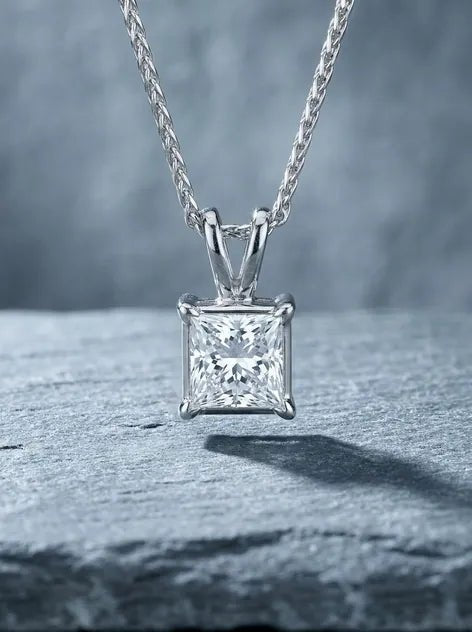
A princess cut stretches this budget further than a round. Cutting a square shape keeps more of the rough crystal, so princess cuts cost less per carat than rounds at the same grades, and that saving goes straight into a bigger stone. The sharp-cornered look reads modern, and it hides a budget beautifully.
For something unique without extra cost, change the setting instead of the stone: an east-west set oval, a bezel (a metal rim around the stone instead of prongs), or a twisted band all add character for setting-level money. And if you're marking the commitment before the proposal itself, a promise ring does that job at an even friendlier price.
Why Does the Same Ring Cost Less Factory-Direct?
A traditional retail ring passes through several hands before it reaches a counter: cutter, wholesaler, distributor, store, and each hand adds a markup. Buying from the manufacturer skips those steps. That's the unglamorous reason an under-$1,000 budget goes further factory-direct; it isn't magic, just fewer people getting paid between the bench and your pocket. It's also why the maker doesn't need to quietly swap in lower-grade materials to hit the price. The savings come out of the chain, not out of the ring.
If you want to see what this looks like in real inventory, browse our lab diamond jewelry under $1,000: real stones and real gold at the below-retail pricing you get when the maker sells to you directly.
FAQ
Is $1000 too cheap for an engagement ring?
No. The "three months' salary" line was a mid-century ad campaign, not a rule. A well-cut real diamond in solid 14K gold is a real engagement ring at any price, and the marriage never checks the receipt. Spend what fits your life.
What kind of engagement ring can I get for $1000?
At typical retail, a natural diamond solitaire around 0.25 to 0.40 carats, or a lab-grown diamond solitaire around 0.75 to 1.00 carats, both in solid 14K gold. Factory-direct pricing pushes both of those sizes up for the same money.
What is the cheapest engagement ring?
The cheapest ring worth buying is a small natural or lab-grown diamond in a plain solitaire setting, and there's no shame in it. Skip plated metals and simulants if the ring is meant to last; solid gold and a real diamond survive decades of daily wear, and cheap substitutes don't.
What are some good engagement rings under $1000?
Look for a round or princess cut, near-colorless (G to J), eye-clean clarity, in a 14K solitaire or a simple side-stone setting. Those grades read white and bright to the naked eye, and the simple setting keeps the money in the stone.