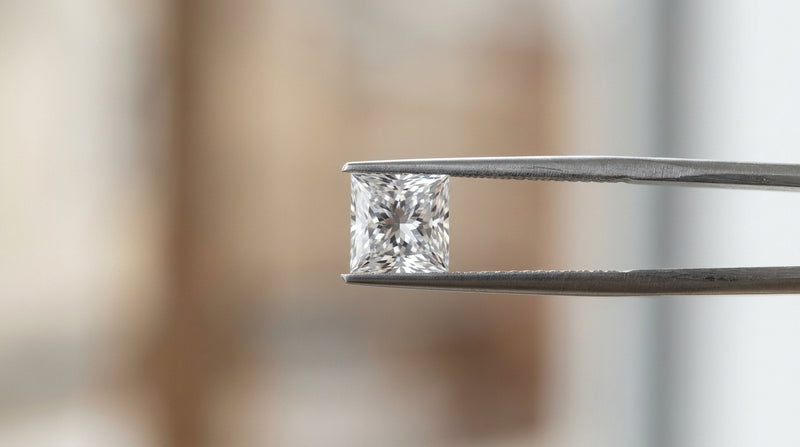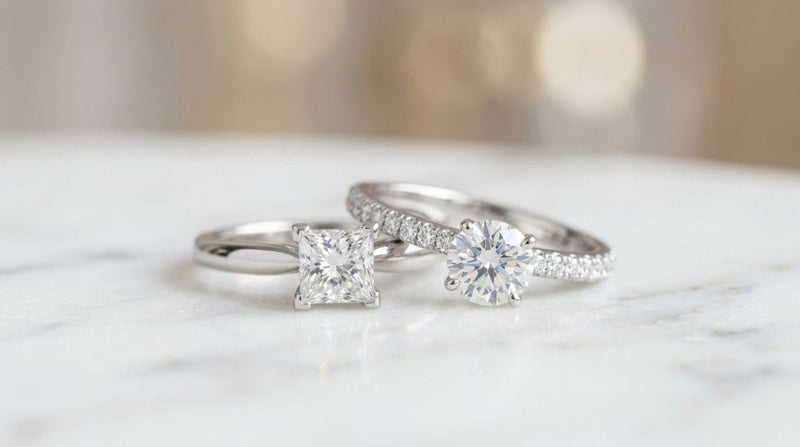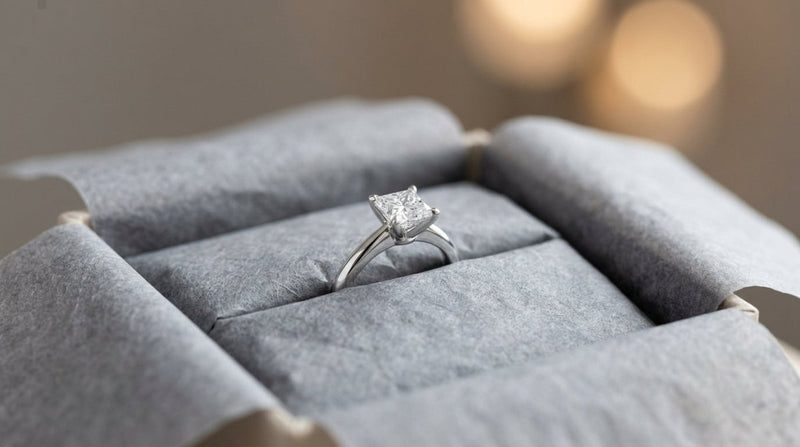



Princess cut and cushion cut are both squarish diamonds at similar prices, but they don't handle light the same way. Put a 1.00 ct princess next to a 1.00 ct cushion under store lighting and you'll see it immediately: the princess throws fast, crisp white flashes, while the cushion glows slower and warmer, with bigger bursts of colored fire. That difference, plus sharp corners versus rounded ones, is most of the princess cut vs cushion cut decision.
We've cut and set both shapes in our own US factory since 2001, and in my experience the choice rarely comes down to price. They cost about the same. It comes down to how you want the diamond to behave on the hand, and how hard you're going to be on the ring. Here's the honest comparison.
Princess Cut vs Cushion Cut: How Do They Compare at a Glance?
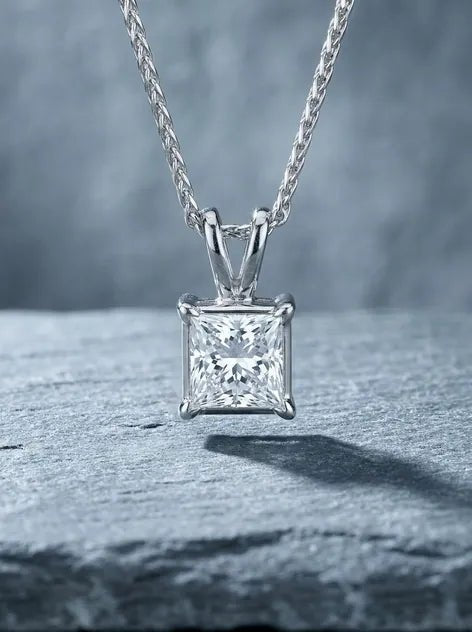
- Outline: A princess cut is a true square with four sharp, pointed corners. A cushion cut is a square or slightly rectangular pillow shape with rounded corners and softly curved sides.
- Sparkle: The princess gives crisp white-light brilliance, close to a round. The cushion gives more fire, the colored flashes, in a softer overall glow.
- Price: Both sit among the least expensive diamond shapes per carat, typically 20 to 30 percent below a comparable round at retail. The cushion sometimes runs a touch less.
- Durability: Diamond is diamond, a 10 on the Mohs hardness scale either way. But the princess has four exposed corners that need protection; the cushion has no corners to chip.
- Style read: The princess reads modern and geometric. The cushion reads soft and vintage, since it descends from the old mine cuts of the 1800s.
How Does the Sparkle Differ: Crisp White Flashes vs Slow Colored Fire?
The princess cut is a square modified brilliant, usually 57 to 76 facets arranged in chevron patterns under the table. That faceting is built for brilliance, the white light a diamond returns to your eye, and it's why a well-cut princess sparkles nearly like a round while keeping a square outline. The flashes are quick and sharp, like light off shattered glass.
The cushion cut uses larger facets, and larger facets separate light into color. So a cushion shows more fire: those rainbow flashes that read as a warm glow rather than a strobe. Cushions also come in two facet styles worth knowing. A "chunky" cushion shows big, distinct flashes you can follow with your eye. A "crushed ice" cushion breaks light into a glittery sparkle with no clear pattern, which some people love and others find glassy. If you're shopping cushions, look at both before you decide; the difference on the hand is bigger than any spec sheet suggests. Our cushion cut rings guide goes deeper on the shape's setting styles.
Price per Carat: Do Both Cost Less Than a Round?
Here's the part most shoppers don't hear at the counter: cut shape moves price more than most quality grades do. When a cutter shapes a round brilliant, roughly half the rough diamond ends up as dust and offcuts. A princess cut keeps around 80 percent of the rough, because its square outline follows the natural shape of the crystal. Less waste means a lower price per carat, and the cushion benefits from similar efficiency.
In practice, a well-graded 1.00 ct princess or cushion typically lands 20 to 30 percent below a comparable round at retail. Between the two shapes themselves, prices run close; the cushion is sometimes slightly cheaper because demand for it swings with fashion. One caveat on the cushion: it tends to be cut deep, so more of its weight hides below the surface where you can't see it. A 1.00 ct cushion often faces up smaller than a 1.00 ct princess. If size on the finger is the goal, that matters more than the price tag.
Which Is More Durable: Sharp Corners or Rounded Corners?
A diamond's corners are its weak points. The princess cut has four of them, and they're the exact spots where internal strain can concentrate. A hard knock against a door frame at the wrong angle can chip a corner. That's not a reason to avoid the shape; it's a reason to set it correctly. A princess should sit in V-shaped prongs that wrap and shield each corner, or in a bezel or channel that covers the edges entirely. Set that way, it handles daily wear fine.
The cushion has no corners at all. The rounded outline is naturally resistant to chipping, which is why cushions survive from the 1800s in estate jewelry while sharp-cornered antique cuts often show damage. If the ring is going on a hand that works, lifts, gardens, or gets knocked around, the cushion is the lower-maintenance choice, and it's the one I'd steer an active wearer toward.
How Do They Stack Up Against Radiant and Emerald Cuts?
Two other shapes come up in every princess vs cushion conversation, so here's the quick map:
- Radiant cut: The middle ground. It has a square-to-rectangular outline like a princess but with clipped corners like a cushion, and brilliant-style faceting underneath. You get near-princess sparkle without the vulnerable points. Its crushed-ice look is closer to a cushion's.
- Emerald cut: A different animal entirely. It's a step cut, long parallel facets instead of chevrons, so it doesn't sparkle so much as flash, a hall-of-mirrors effect. It shows inclusions and body color more honestly than any brilliant cut, so clarity and color grades matter more. Pick it for elegance, not fire.
Between radiant and princess, the princess keeps a cleaner, sharper square outline; the radiant trades the corners for durability. Between radiant and cushion, they sparkle similarly and the choice is mostly outline: clipped corners or curves.
Which One Should You Pick?
When a customer can't decide, I ask one question: do you want the diamond to flash or to glow? People answer that fast, and it settles the whole thing.
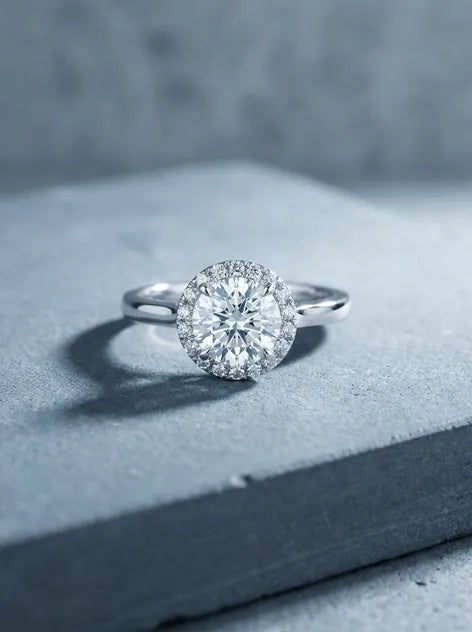
Pick the princess cut if you want maximum sparkle in a square, a modern geometric look, and the most visible diamond for your budget. It faces up well for its weight and its brilliance hides small inclusions, so you don't need to overpay on clarity. Just insist on protected corners. Pick the cushion cut if you want a softer, romantic, vintage feel, if the wearer is hard on jewelry, or if you're building a halo design, where the cushion's curves sit naturally inside a frame of small stones. Neither answer is wrong; they're two different personalities at the same price.
If the square is winning, browse our princess cut collection: every piece is made factory-direct in our own US factory, so you're not paying the middleman markups built into mall pricing. And for setting styles that flatter the shape, the princess cut rings guide walks through the options.
FAQ
Is cushion or princess cut better?
Neither is better; they're built for different tastes. The princess delivers sharper white sparkle and a crisp square outline, while the cushion delivers softer colored fire, rounded corners, and better durability against knocks. Price is close enough that it shouldn't drive the decision.
Why not buy a cushion cut diamond?
The honest downsides: cushions are often cut deep, so they face up smaller than their carat weight suggests, and they hold more body color, so a lower color grade shows sooner. Crushed-ice faceting can also read glassy rather than sparkly. None of these are dealbreakers if you see the stone's look before buying.
What cut is Taylor Swift's diamond?
Her engagement ring is reported to carry an old mine brilliant cut, the antique ancestor of the modern cushion. It's a hand-cut style from the 1800s with a high crown and soft glow, which is a big part of why cushion-style diamonds surged in searches after the announcement.
What is the classiest cut of diamond?
That's taste, not gemology, but the traditional answers are the round brilliant for timelessness and the emerald cut for formal, understated elegance. The princess reads clean and modern, and the cushion reads romantic. Classy is whichever one suits the person wearing it.
What is the least popular diamond cut?
No lab publishes popularity rankings, but round dominates the market, with princess, oval, and cushion among the leading fancy shapes. The shapes that move slowest tend to be angular niche cuts like the trilliant, plus whichever fashion-driven shape is out of its cycle that year.